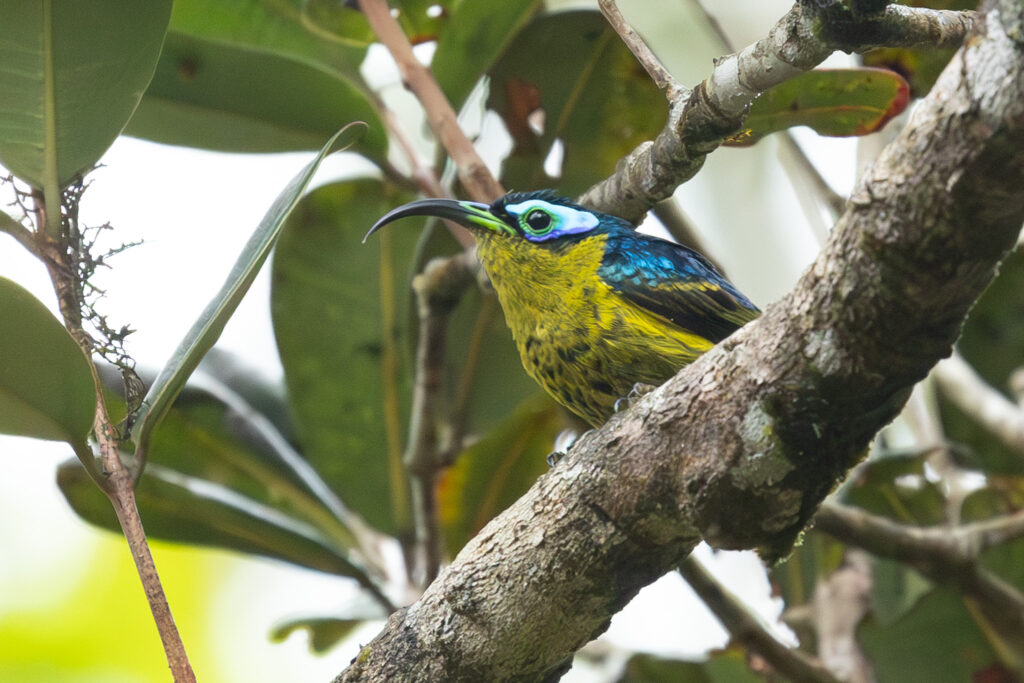
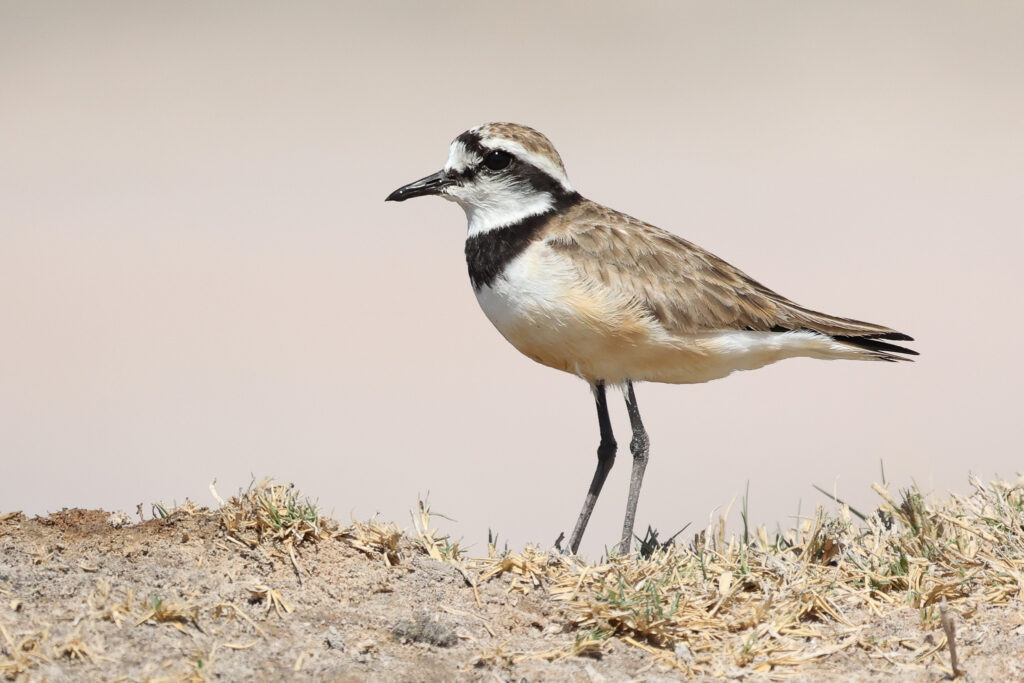
Of the countries in the southern African subregion, birding Mozambique is arguably the most challenging and is often treated with a hint of apprehension. Mozambique’s history of civil war, political unrest, poor infrastructure, and corrupt officials have given the country a reputation as the type of place you don’t really want to mess around in – I mean, the flag even features an AK-47.
The southern and central provinces (all those in the southern African subregion) are reasonably safe and have been so for quite some time now – allowing adventurous birders the opportunity to self-drive this under-birded part of southern Africa. In July (2023), I was on holiday in the Limpopo Province, and I started toying with the idea of a raid of the southern specials of Mozambique. Birds like Eurasian Bittern, Olive-headed Weaver, East Coast Akalat, and Green Tinkerbird were occupying my thoughts, and a week later, I found myself with a stamped passport in the border town of Ressano Garcia in Mozambique.
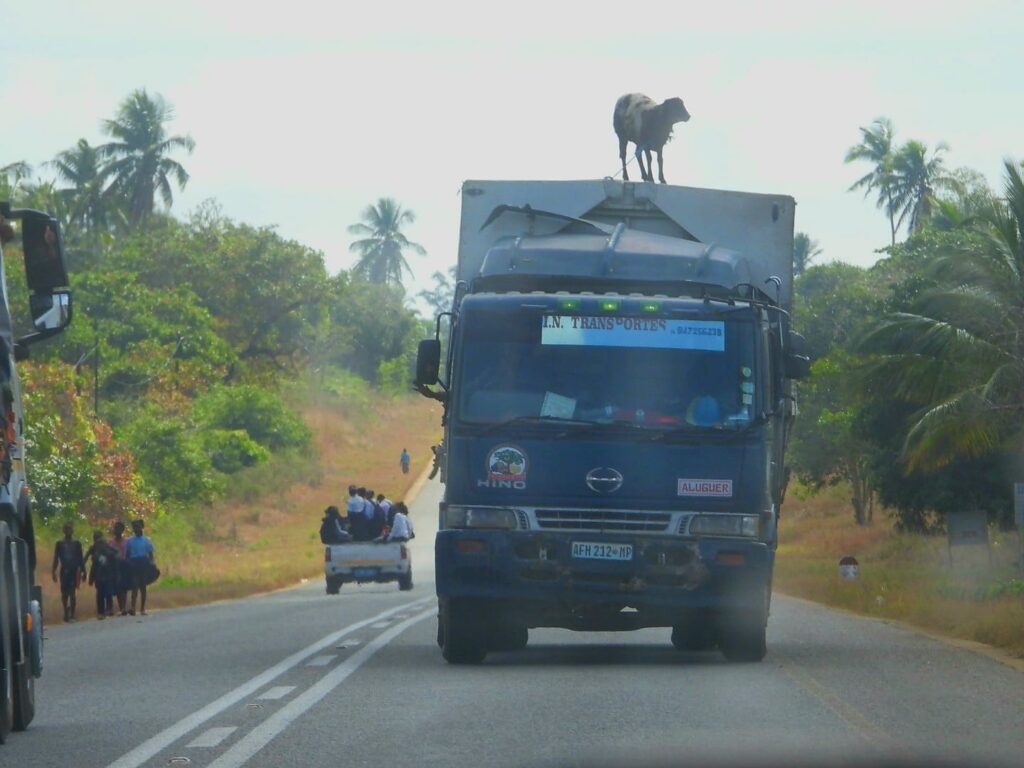
I didn’t have much time, so the trip would last only six days, and since I had a car with two non-birders, the birding half of the family had to indulge in beach requests, too. The first day saw us covering 453 km from Ressano Garcia to the lousy town of Inharrime. The route passed through the capital city, Maputo, where finding an ATM that accepted Mastercard proved to be nearly impossible; thankfully, however, the SimCard was a breeze – once we had cash, of course. Anyway, it was a long day in the car, passing through endless villages with next to no birding. We also had our first run-in with the feds, a plump man who wanted 1,000 meticals for some undetermined offense; after a lengthy back-and-forth, we wore him down without paying a bribe, and we were on our way. We arrived at our accommodation in Inharrime after dark and promptly checked in. We were surprised to see Etienne Marais, a South African birding guide who seems to spend more time finding megas in Mozambique than he does anywhere else, at our accommodation. He was leading a tour, and coincidentally, we had the same plan for the following day, and it was decided that we would join forces for our pre-dawn mission.
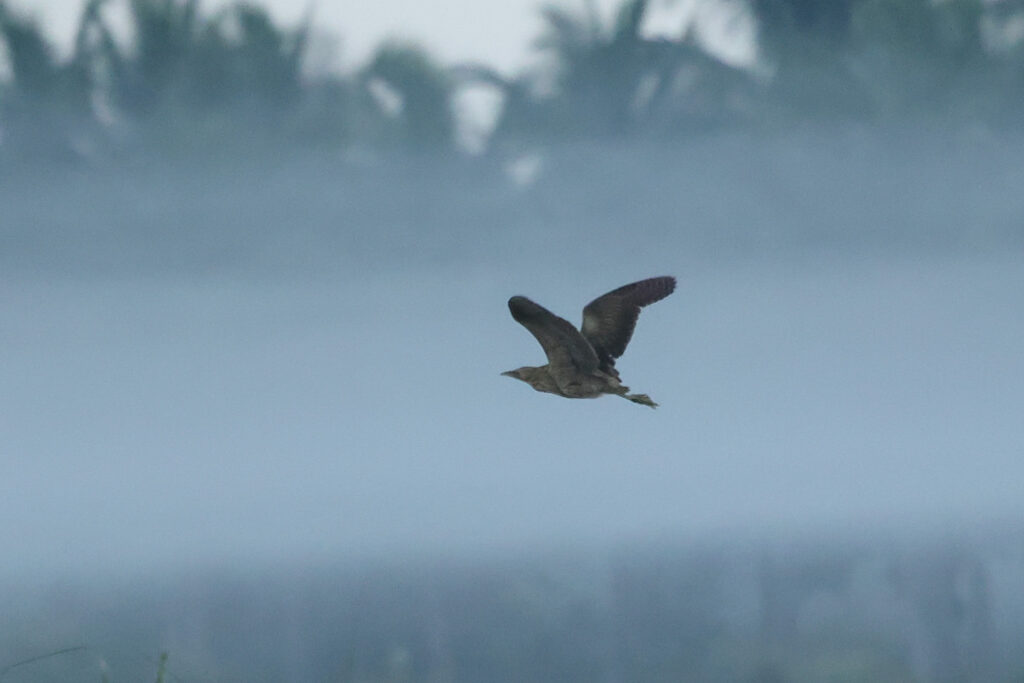
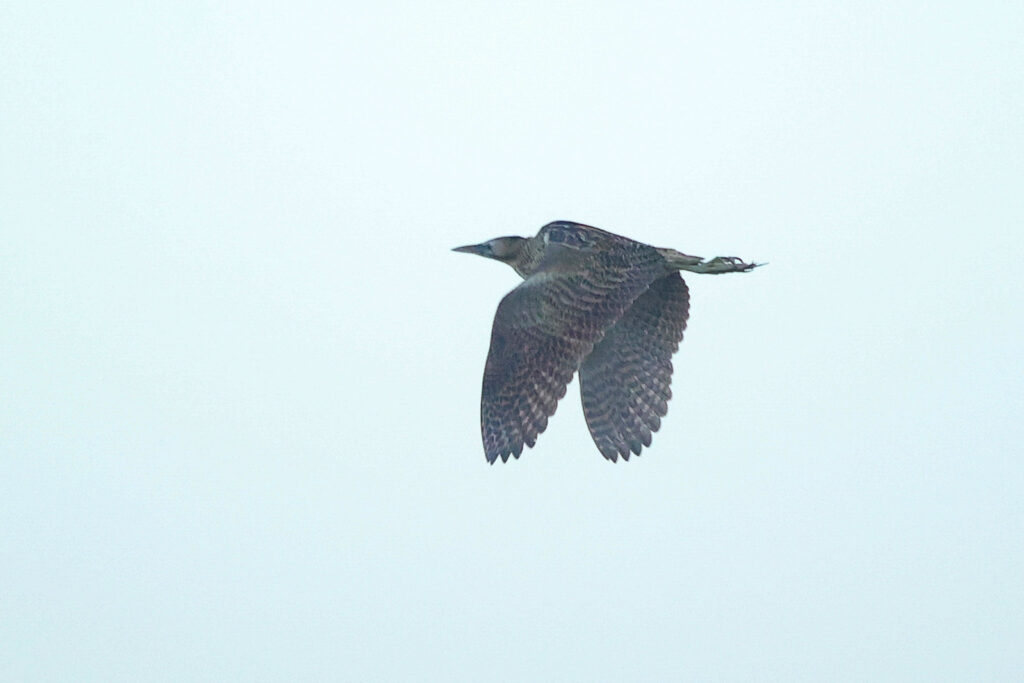
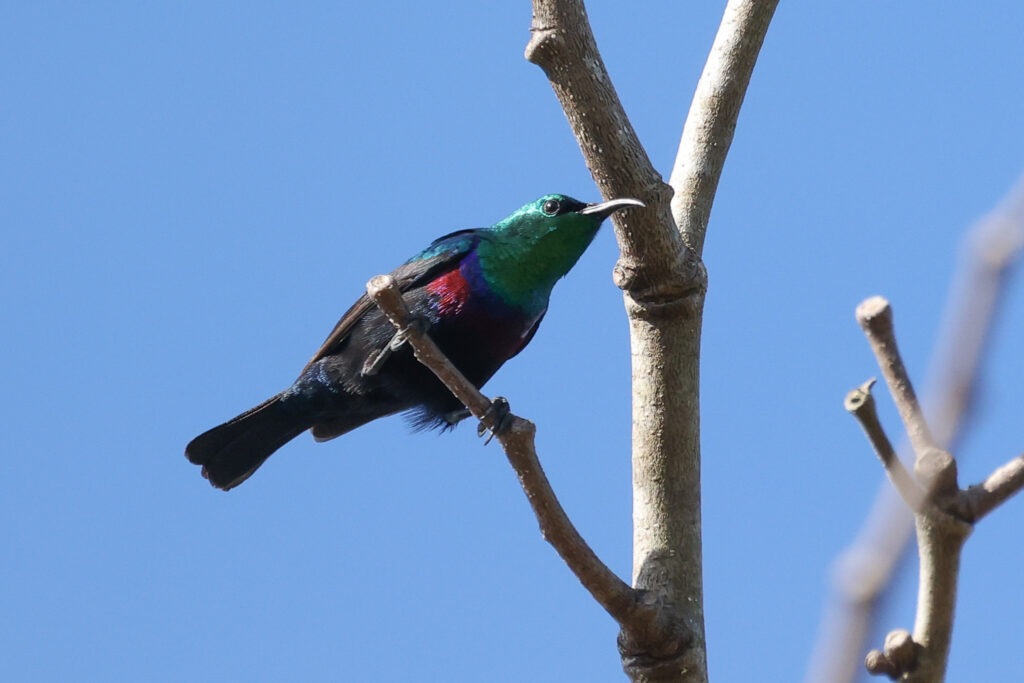
After what barely felt like sleep, we were off on a bumpy dirt track, following Etienne’s red brake lights through the dark. When we came to a halt, first light was upon us, and the dawn chorus was underway. A thick morning fog blanketed the large wetland in front of us. The calls of Shelley’s Francolins and Red-necked Spurfowls dominated the soundtrack while Purple-banded Sunbird, Striped Kingfisher, and Yellow-throated Longclaw chimed in. There was no time for distractions; we had come here for one bird. Then we heard it, a loud, deep, and unmistakable call – a booming bittern. We started traipsing through the shallow waters of the wetland, forming a flush line. I had been assigned the far left wing (the deep side), which meant I was soon beyond waist-deep in the water.
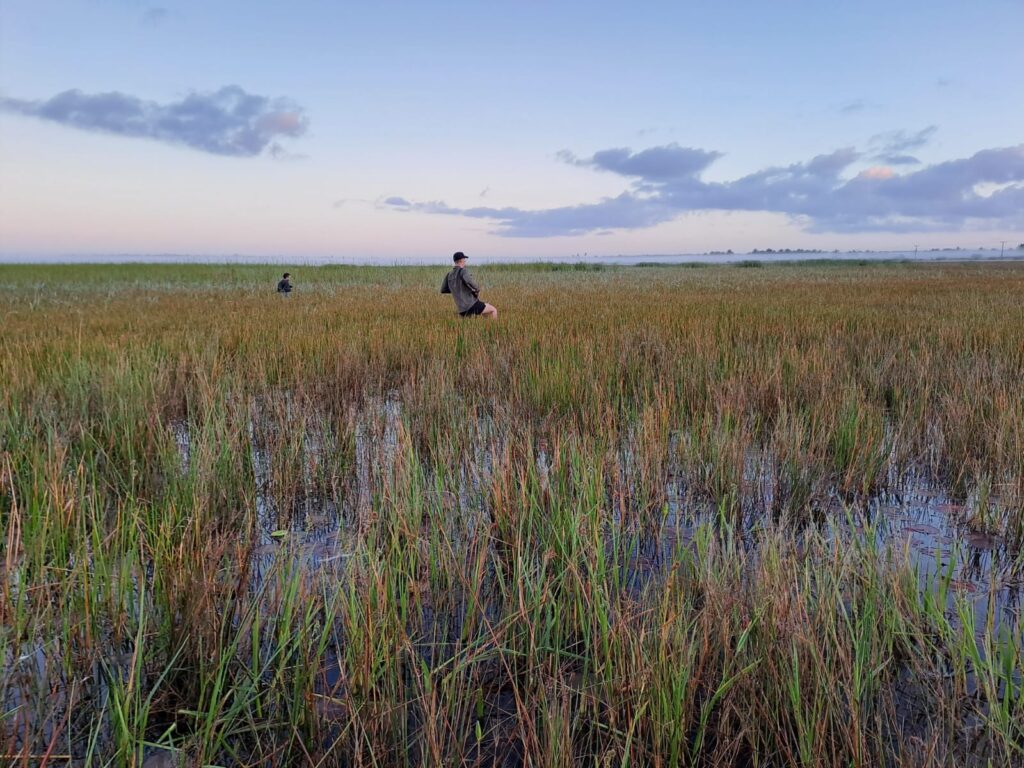
A large bird flushed, dammit, a Purple Heron. Then another one, and another, and then a much stockier bird – a Eurasian Bittern! I shot off a few lousy shots in the still-dark conditions. We continued for another 20 minutes and flushed another four individuals! This bird used to be a resident in South Africa but was driven to local extinction. These wetlands in Mozambique are the only reliable site in the subregion for this iconic bird, and it was a major target on this trip. The birding here was phenomenal with Lesser Jacanas, African Openbills, and many other tropical wetland species, but I couldn’t stay long; another big target was waiting – one of the most range-restricted species in the subregion.
We bid farewell to Etienne and his group and continued along the dirt road to the village of Panda. Once through Panda (probably 30 seconds after entering it), the vegetation changed from palm savanna to exquisite miombo woodland. For those who know a thing or two about southern African birding, you’ll know that this is the only site in the subregion for the globally rare Olive-headed Weaver. I had looked at this species in field guides for years, always illustrated alongside the Usnea old-man’s-beard lichens with which they are so closely associated. While doing my brief pre-trip planning, I heard that this was a potentially problematic species and recalled stories of birders spending hours in these woodlands without laying eyes on them.
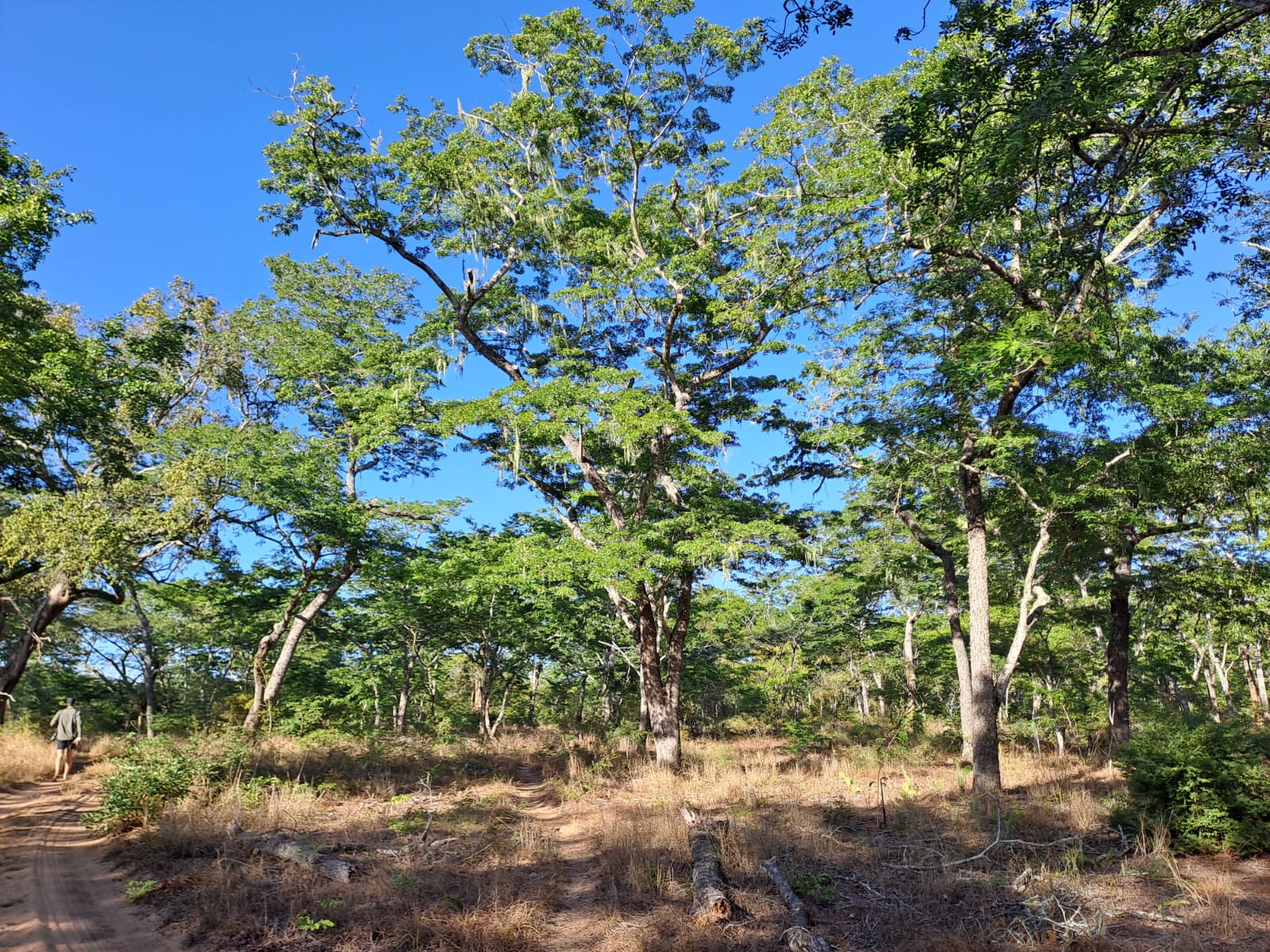
I alighted from the vehicle in a stunning patch of miombo woodland and prepared myself for a long day. A bird party happened to be making its way past the car as I was getting geared up and contained some cracking birds like White-breasted Cuckooshrike, Grey Penduline Tit, Southern Hyliota, Red-faced Crombec, and my second lifer for the trip, Pale Batis. “PZEEEE pzeee pzeee pzeee,” I swung around and cupped my ears—the same call again, about 20 meters off the track. My dad and I darted in, following the call. A small bird was hopping around high in the canopy, partially concealed by the Usnea lichens – I already knew what it was before lifting my binoculars – an Olive-headed Weaver. Not one, but a pair.
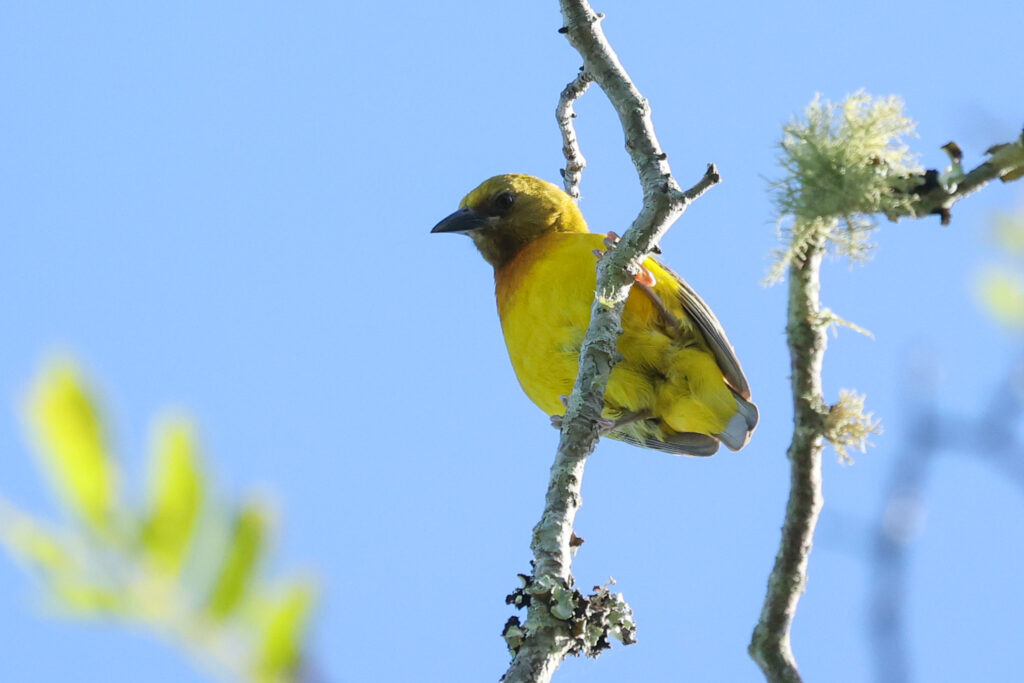
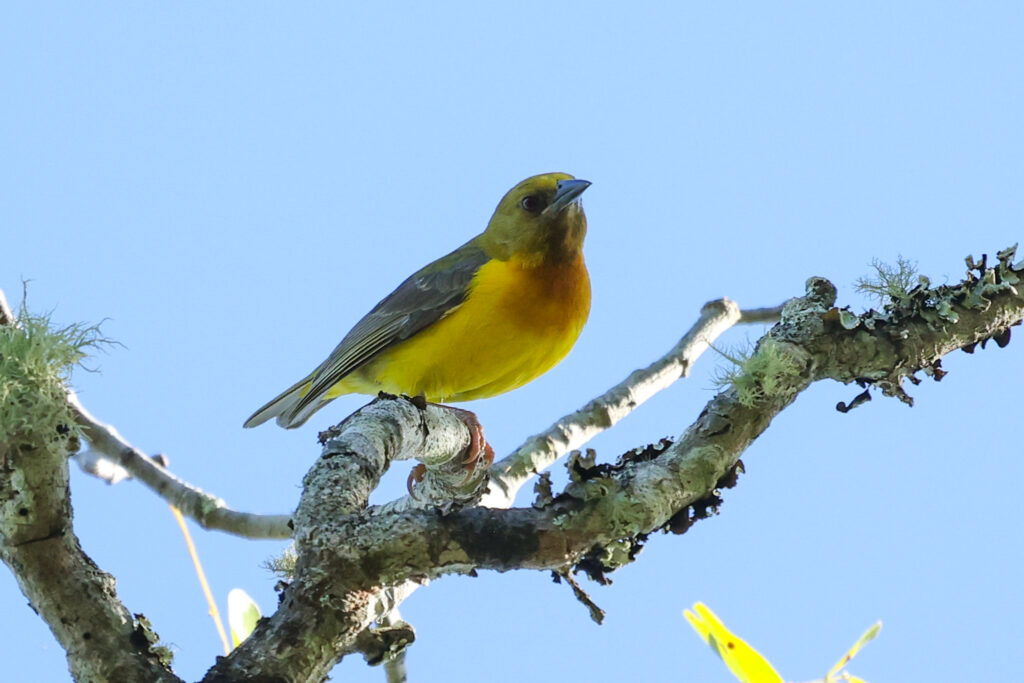
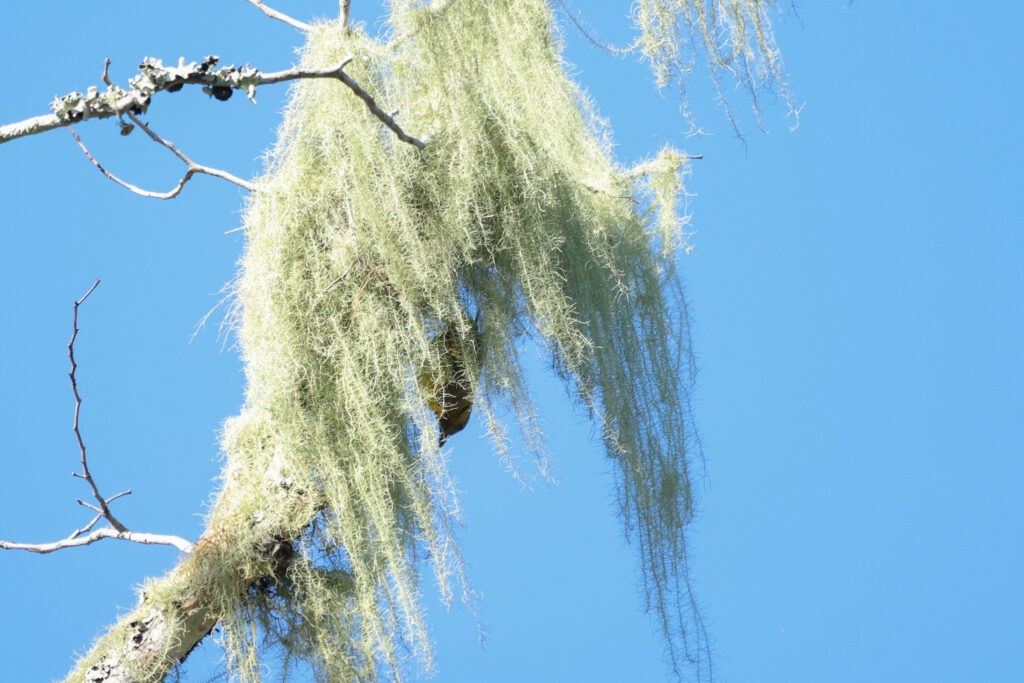
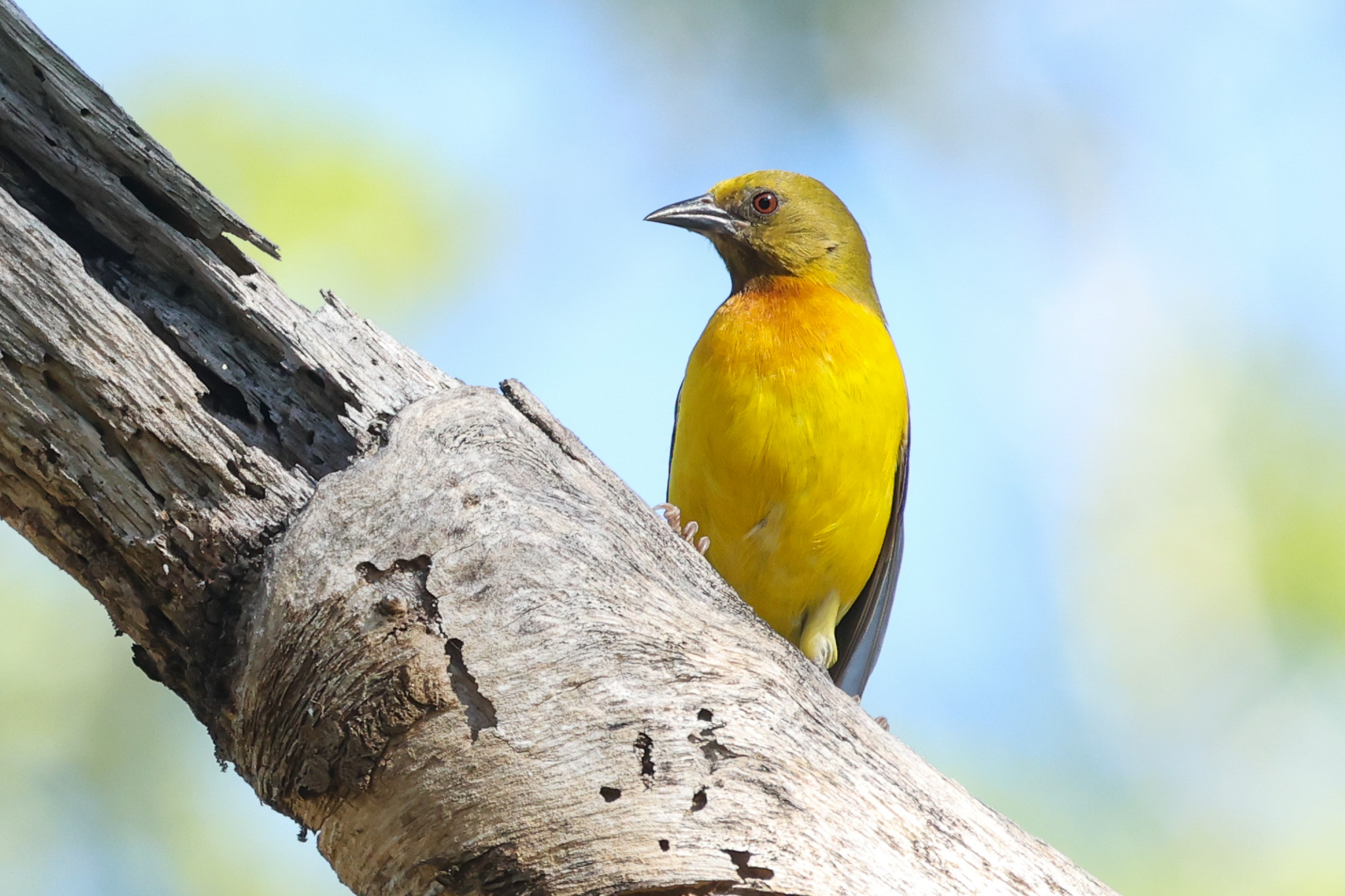
I spent the next half an hour following these birds as they foraged with the mixed species flock. My views were unbelievable, and I even managed to get the first audio recordings of the species on eBird. I was in disbelief; we had spent only a few minutes and had barely left the car before seeing this globally localised species. The future of Olive-headed Weavers in the subregion is uncertain; rampant clearing of their very specialised habitat for charcoal is an imminent threat to the perseverance of this population. We left the Panda woodlands and noticed the amount of habitat that had already been cleared. I don’t claim to have any solutions here, but poverty and lack of opportunities in Mozambique mean there are few ways to make a living out here.
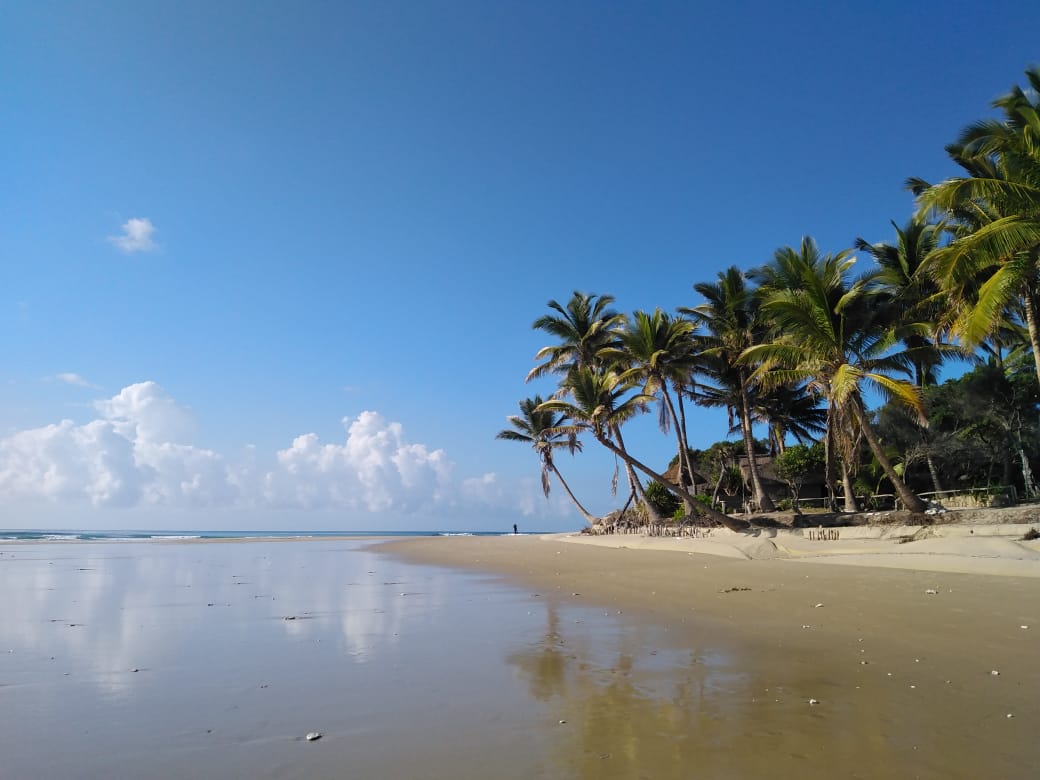
We passed through the coastal town of Maxixe before continuing north to the idyllic Morrungulo campgrounds. Palm trees lined the idyllic beaches here, and the campgrounds were quiet, allowing me to set up my tent on the beach. What a place. The reason for staying here was twofold: it would keep the non-birders happy, and it was located close to Unguana Forest – the location where Green Tinkerbird was rediscovered in the southern African subregion.
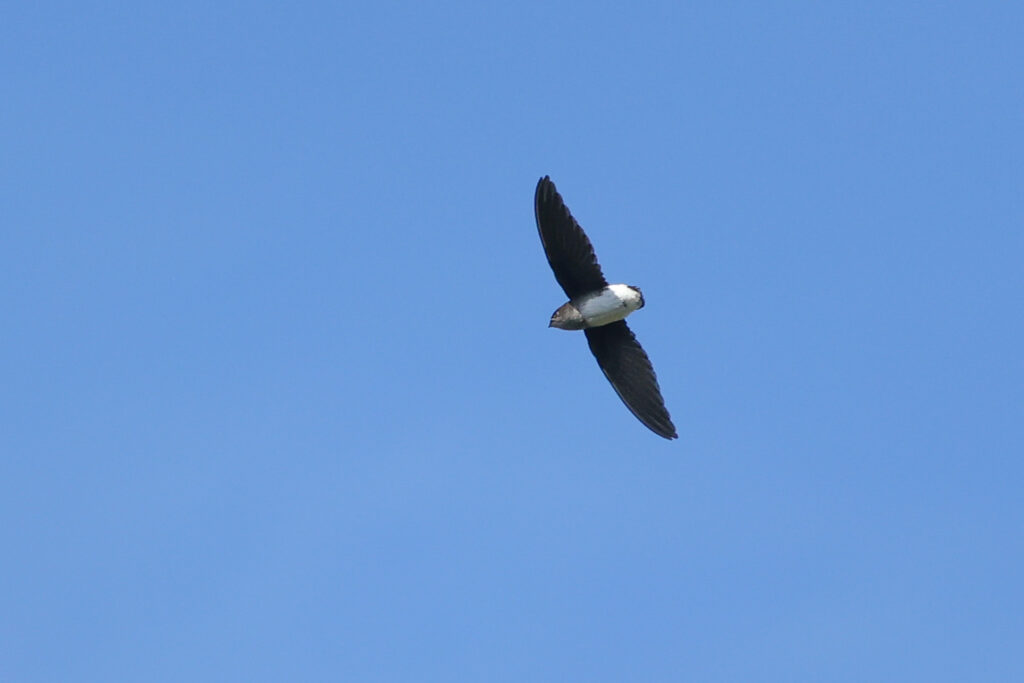
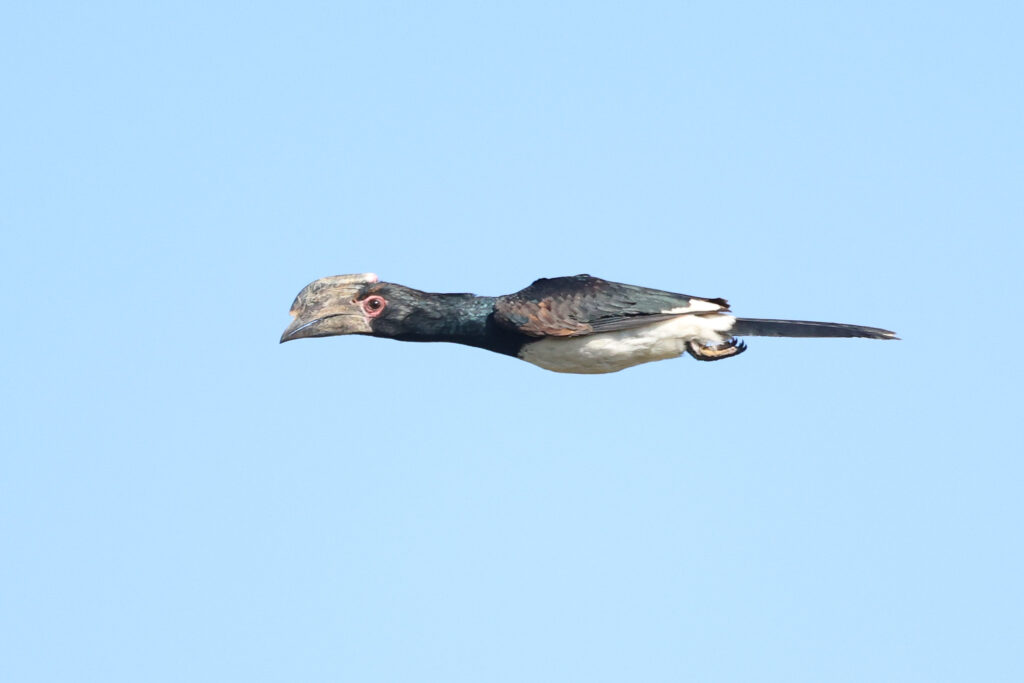
Another pre-dawn start, another dirt track at night. The sun was only just starting to rise as we walked down a small trail into the sand forest. It was a hive of activity with Gorgeous Bushshrike, Eastern Nicator, Green Malkoha, Livingstone’s Flycatcher, Purple-banded Sunbird, Rudd’s Apalis, and wailing Trumpeter Hornbills all making their way onto the list as early additions. We walked these forest tracks for hours, getting good views of Red-throated Twinspots and Grey Waxbills while Böhm’s and Mottled Spinetails foraged overhead. There was, however, a problem: no Green Tinkerbird. I had heard that this species was tough at this time of the year, and after eight hours, I decided to call it quits. There was a big surprise in store for us when an East Coast Akalat responded to its call; this species hadn’t been seen this far south in many years and was nearly 400 km south of the nearest record on eBird. It was a welcome consolation prize and an unexpected lifer.
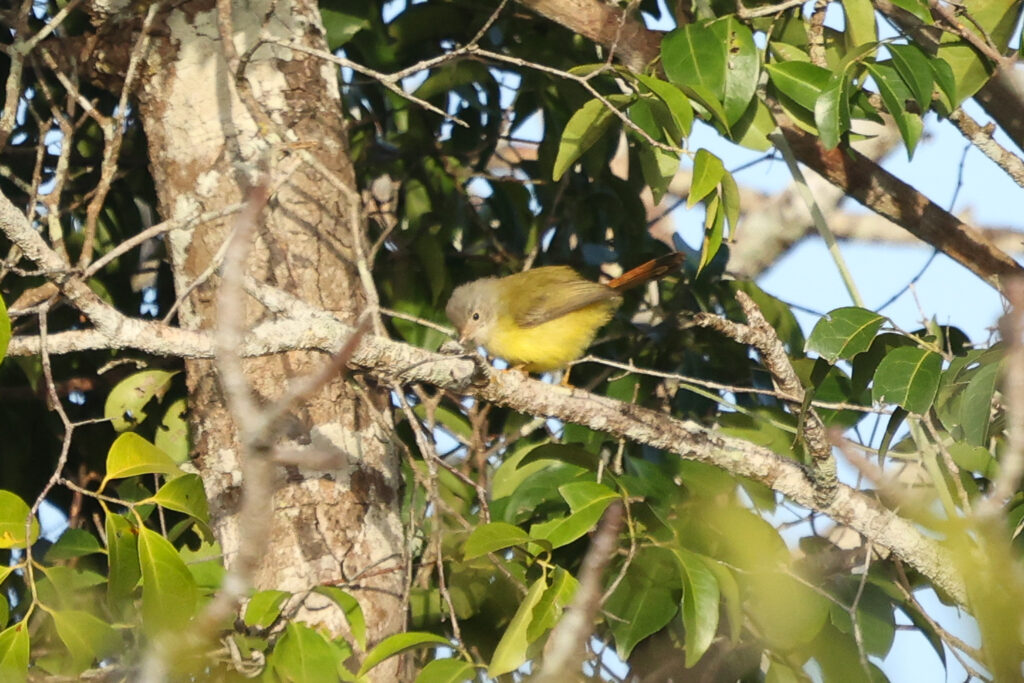
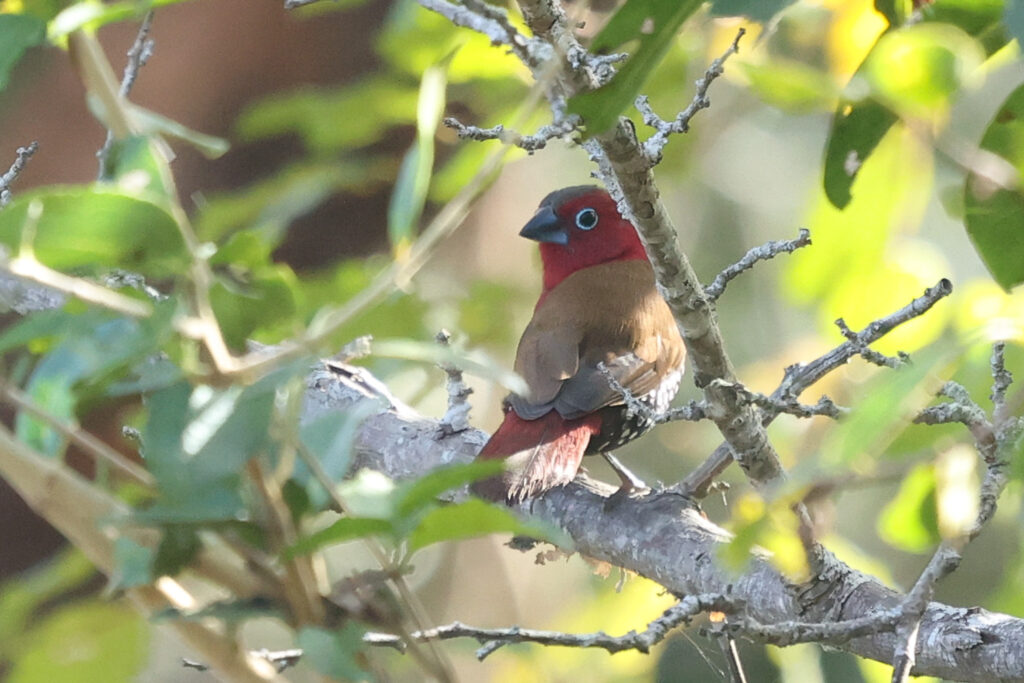
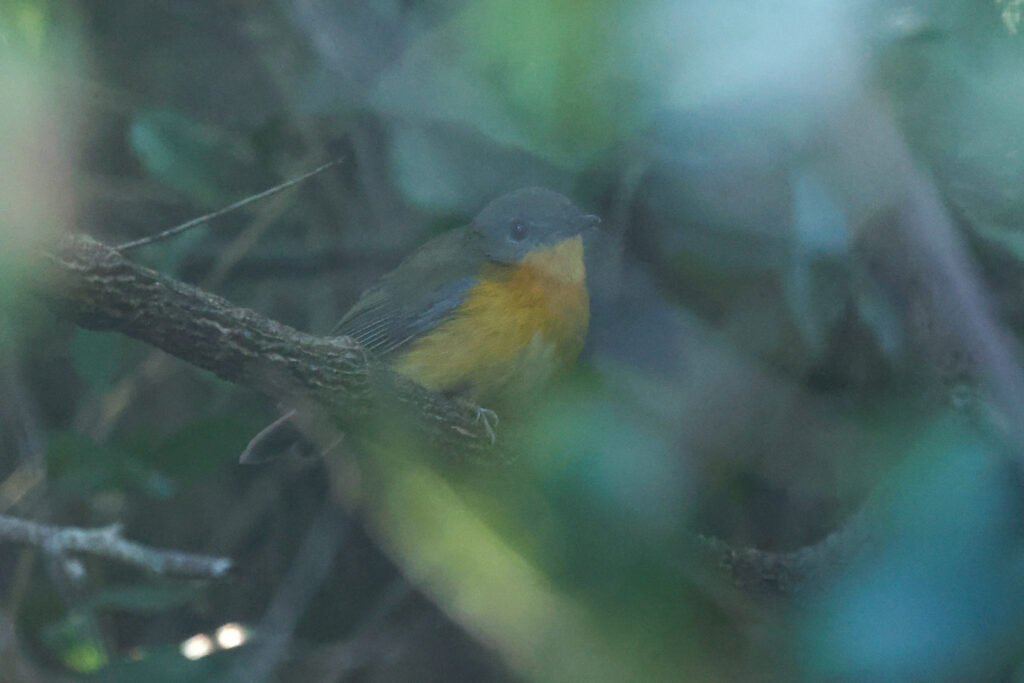
We decided to give it a go again the next day and returned pre-dawn to Unguana. We tried for most of the day but to no avail. Green Tinkerbird had given us the slip; oh well, the game is the game, I guess. However, there was another consolation prize this time: another East Coast Akalat at a different site and Lowland Tiny Greenbul, again, a species that hasn’t been recorded here for years. The forests here were amazing to bird, and we also enjoyed Livingstone’s Turacos, Dark-backed Weavers, Red-necked Spurfowl and Ovambo Sparrowhawk, along with many of the species listed earlier.
We returned to Morrungulo and enjoyed the next two days exploring other sites in the area that delivered many of the typical coastal species but no more lifers. We then drove the lengthy journey back to the border, which took the entire day, and arrived in South Africa after dark. This was an exciting trip that, apart from Green Tinkerbird, produced all of the expected targets and five lifers for me. Mozambique is an under-birded part of the subregion; our finding of the East Coast Akalat and Lowland Tiny Greenbul is a testament to this fact. Anyway, I guess I have to go back to the coconut-lined beaches again to try for that tinkerbird.