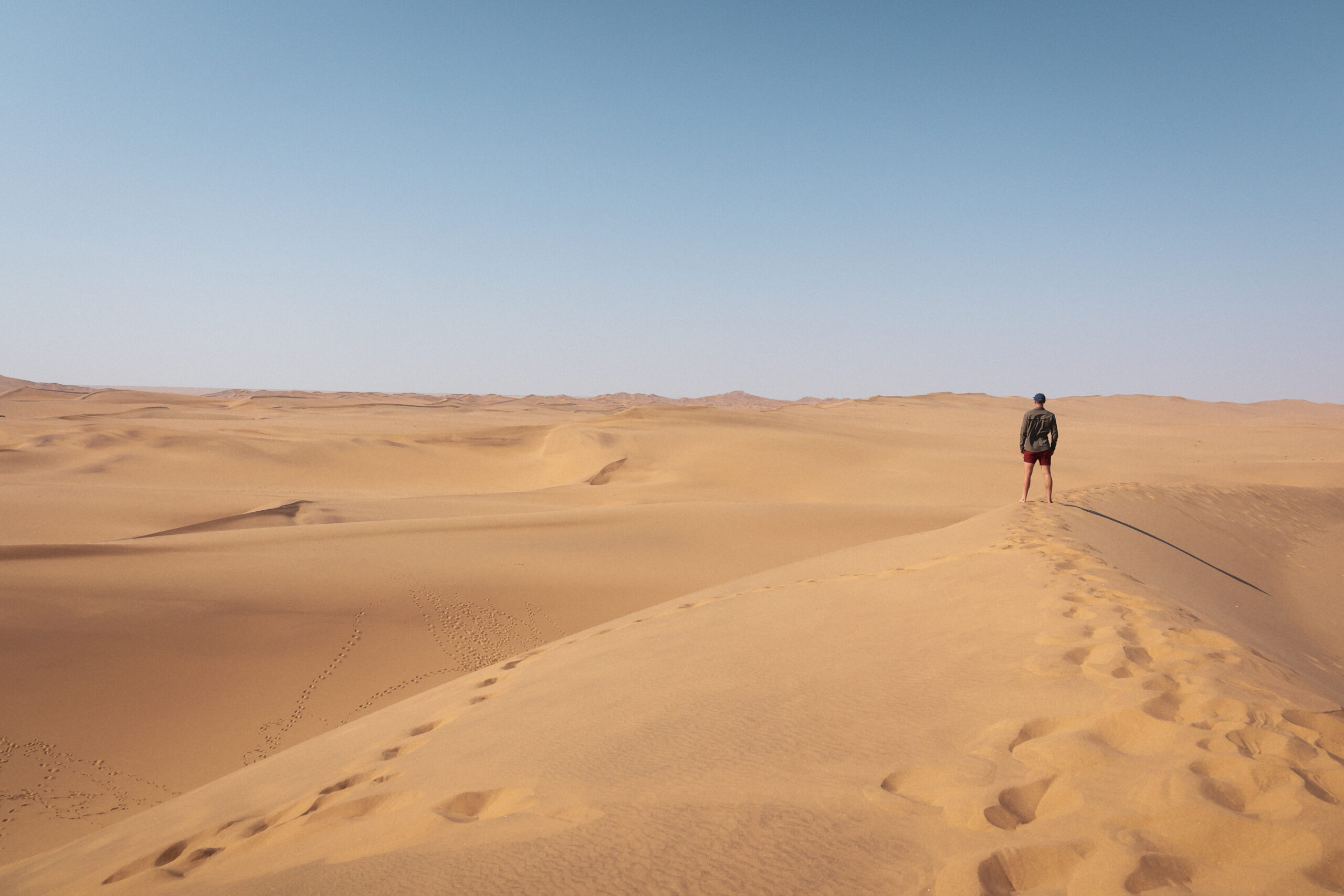
Of the countries in the southern African subregion, the one I had birded least was Namibia. In fact, my only Namibian birding was a single morning spent wandering around the dunes in Walvis Bay. Sure, I saw what was then the country’s only endemic, Dune Lark (which has since been lumped with Barlow’s Lark), and had distant views through the heat haze of a Gray’s Lark, but I had essentially done no birding in Namibia before June 2024.
My good friend Joshua Olszewski and I set off from Cape Town, reaching the border with Namibia at sunset. We were conducting a scouting trip of Namibia, Botswana, and Zambia (have a look at the tour on the Birding Ecotours website) for Birding Ecotours, and we would spend the next 19 days traversing the three countries.
This blog is basically a brief overview of our trip. I don’t get bogged down in too many details about where exactly we saw what, not for any other reason than the fact that I should be working on submitting my honours project instead of writing blog posts for my website.
Anyway. Let’s get into it.
Noordoever to Windhoek
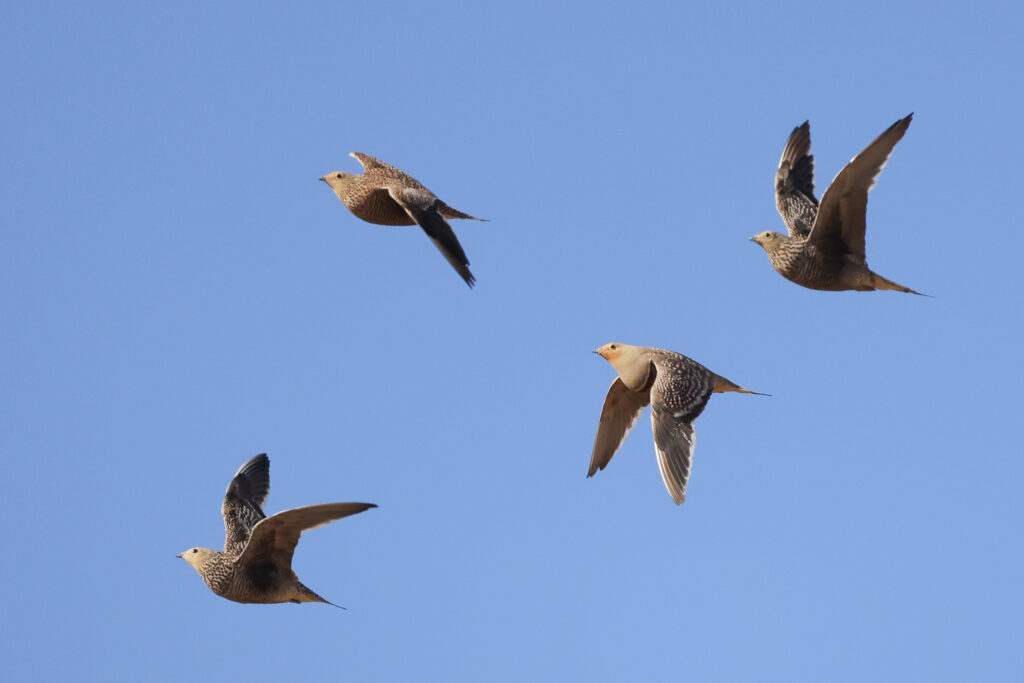
After crossing the border and spending the night in Noordoever, we made our way up to the capital city, Windhoek, in a single day. We passed through some incredibly desolate landscapes – think lunar surfaces, and scenes from a Western. The birding was excellent, and Josh and I made several stops throughout the day, picking up classic Kalahari and Karoo species like Namaqua Sandgrouse, Karoo Korhaan, Karoo Long-billed Lark, Pale-chanting Goshawk, Pririt Batis, Pale-winged Starling, Short-toed Rock Thrush and my first lifer of the trip – Chat Flycatcher (I blame the fact that I hadn’t seen this bird partially on the fact that I hadn’t actually spent time in its range and partially because of a skill-issue).
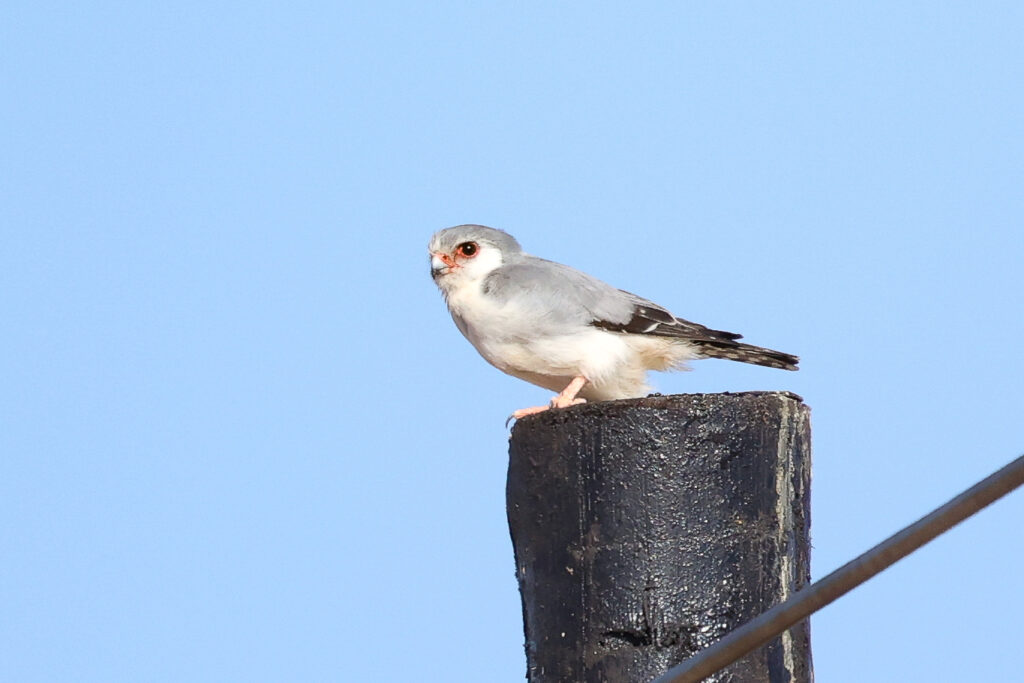
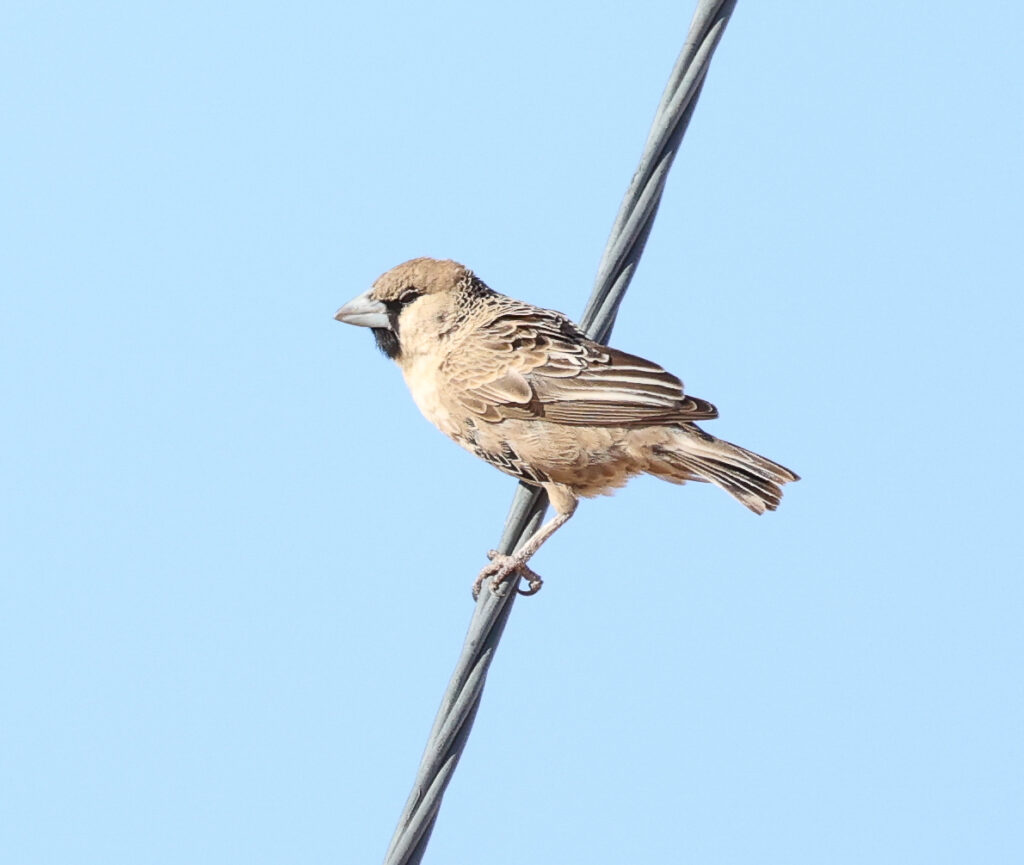
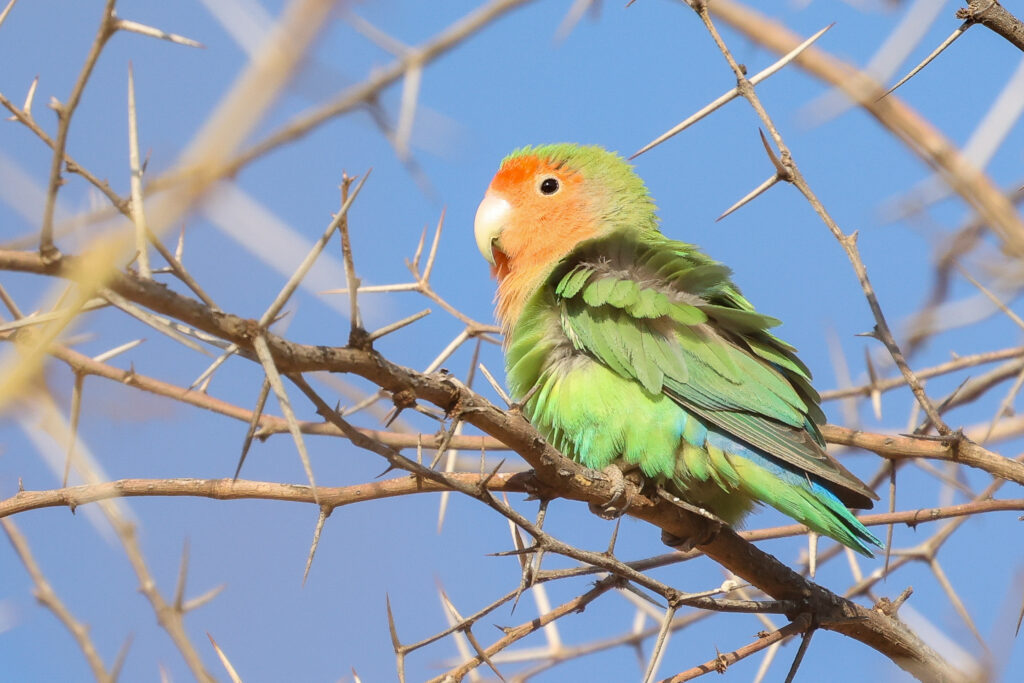
As we got closer to and beyond Mariental, we picked up birds I don’t get to see often, like Sociable Weaver and Pygmy Falcon, before heading into the hills around Windhoek. We spent the night in Windhoek, where we had flocks of Rosy-faced Lovebirds, my second (and more respectable) lifer for the trip, getting ready to roost.
Windhoek
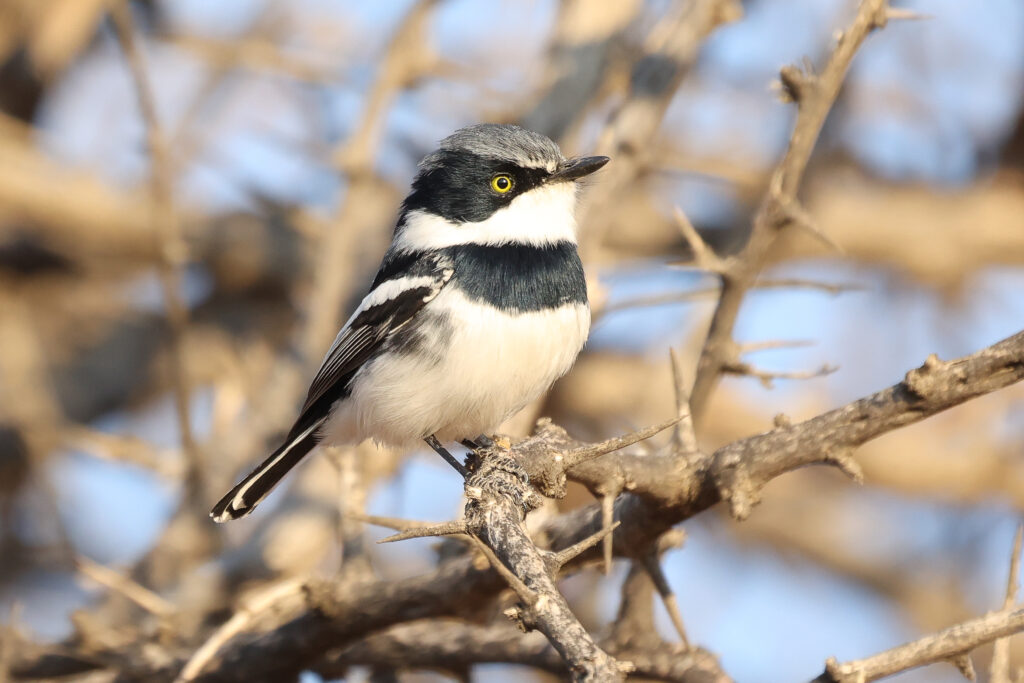
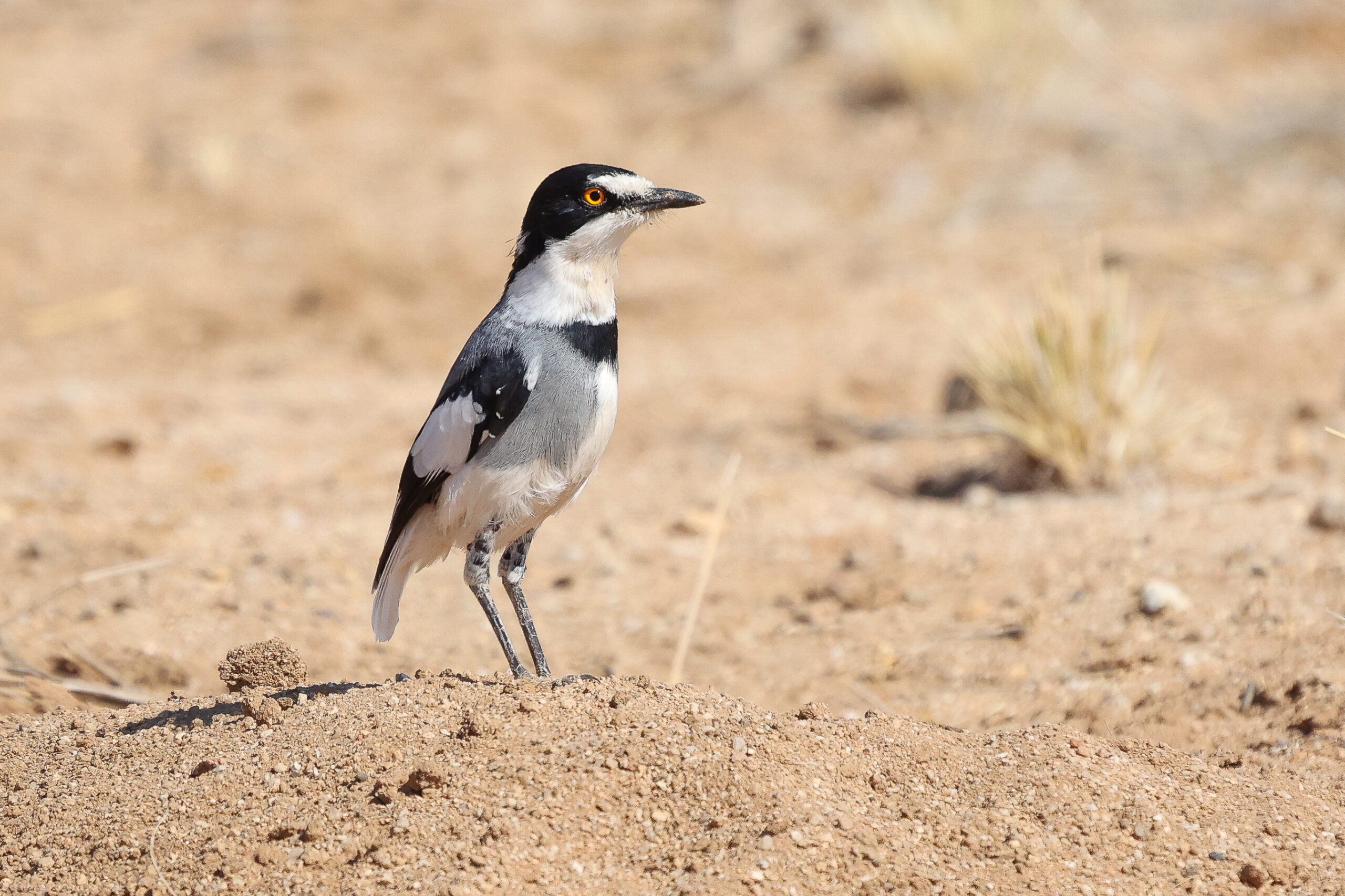
The next morning, we birded a few spots around Windhoek. We picked up the unbelievably cool White-tailed Shrike (definite S-tier bird) at our accommodation, along with the rather boring (they were in non-breeding plumage) Chestnut Weaver. Avis Dam produced Rockrunner, Damara Red-billed Hornbill, and other typical Kalahari bushveld species like Crimson-breasted Shrike, Black-faced Waxbill, Red-headed Finch, and more.
Walvis Bay and Swakopmund – Namib Desert birding
We left Windhoek, picking up Bradfield’s Swift on the way out, and drove to Walvis Bay. On the way, we bagged Monteiro’s Hornbill, which is just a phenomenal bird that inhabits the driest habitat of any hornbill in the world. Once closer to the coast, we started picking up very pale-looking Tractrac Chats and had mind-bending views of Gray’s Larks at the Swakopmund Salt Works.
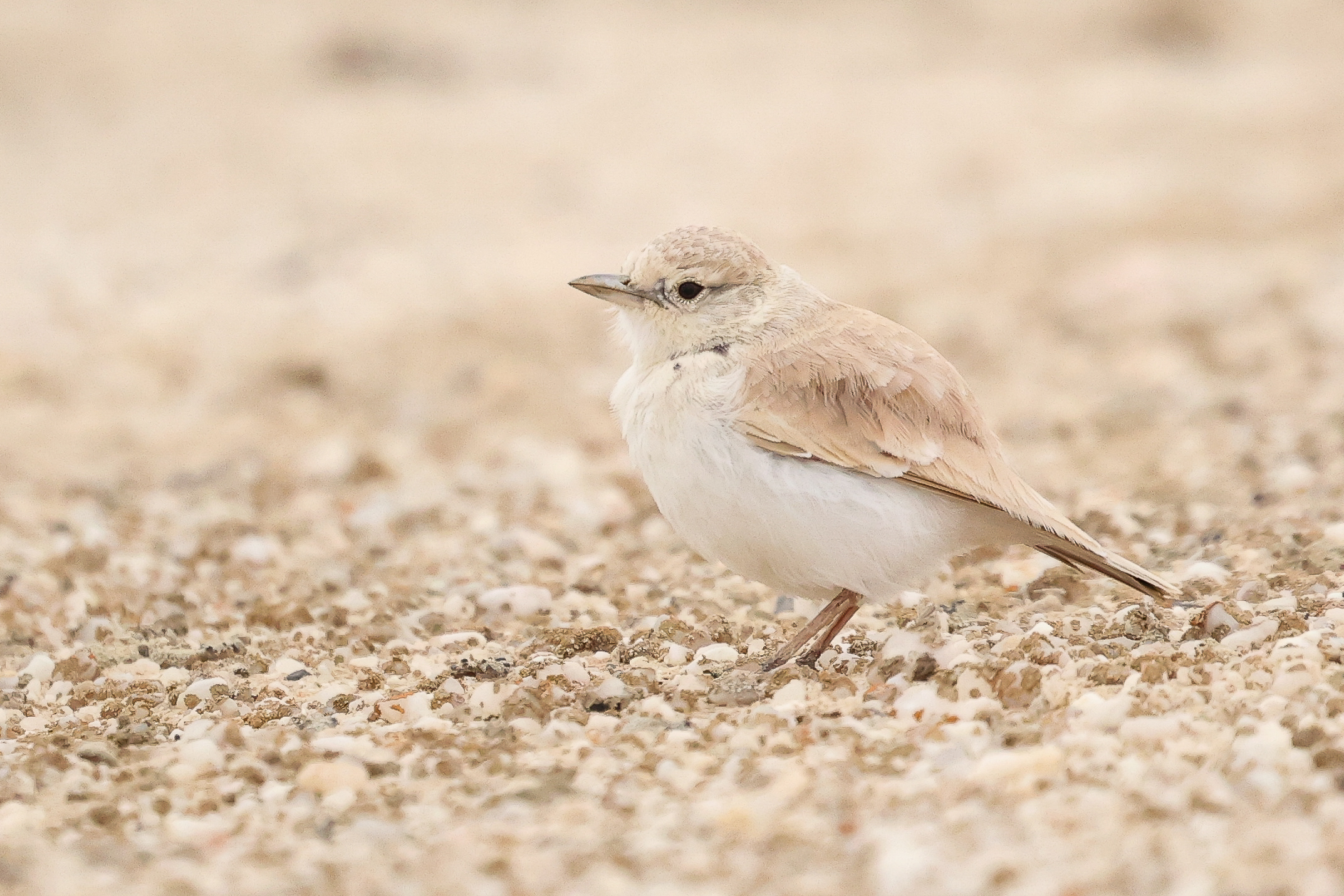
We also had a look at the Welwitschias (a weird, two-leafed gymnosperm that grows in inhospitable conditions) on a random side road. The drive between Swakopmund and Walvis Bay is out of this world. On one side of the road, you have towering Namib dunes, and on the other side, you have the beach. Josh and I tried to string a Bank Cormorant for our Namibia lists, but ultimately decided against it after working through thousands of Cape Cormorants. We then headed down to the Salt Pans in Walvis Bay, which were very birdy, even though the wind was howling and it was essentially dark. We had a good number of flamingos, both Greater and Lesser, as well as Black-necked Grebes, Chestnut-banded Plovers, and the localised Damara Tern (I missed this one for my Namibia list).
The following day, we headed east of Walvis Bay to Rooibank, where, after a few minutes walking around on the dunes, we found several Dune Larks. It was great to see this species again. I love any bird with a specialised habitat, and it doesn’t get much better than the Namib dunes. We also had Orange River White-eyes, here at the northern limit of their range.
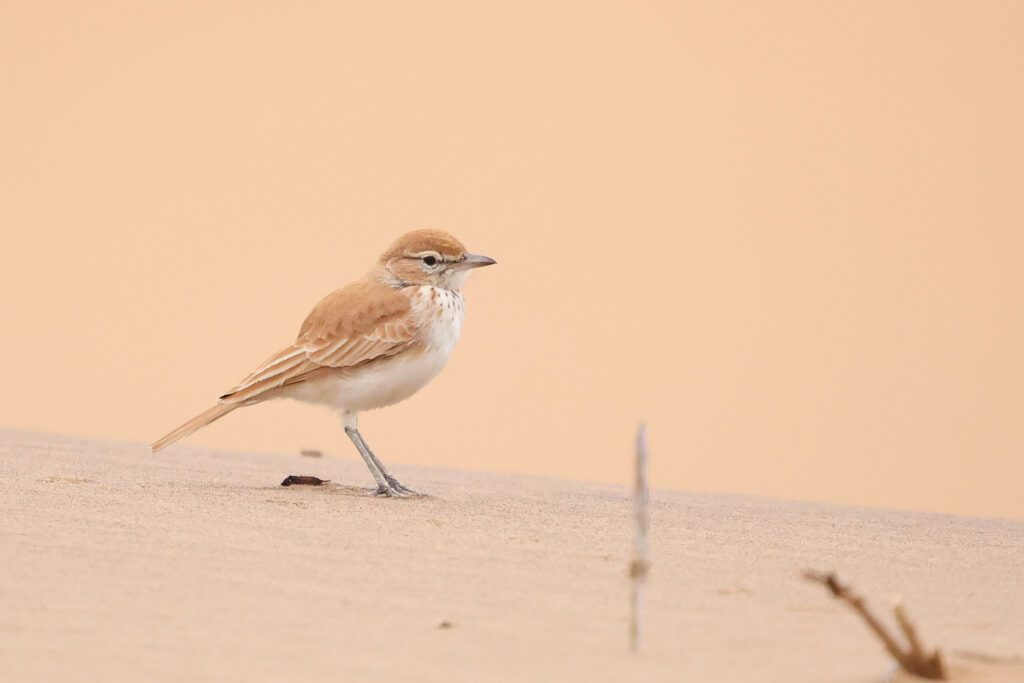
Spitzkoppe
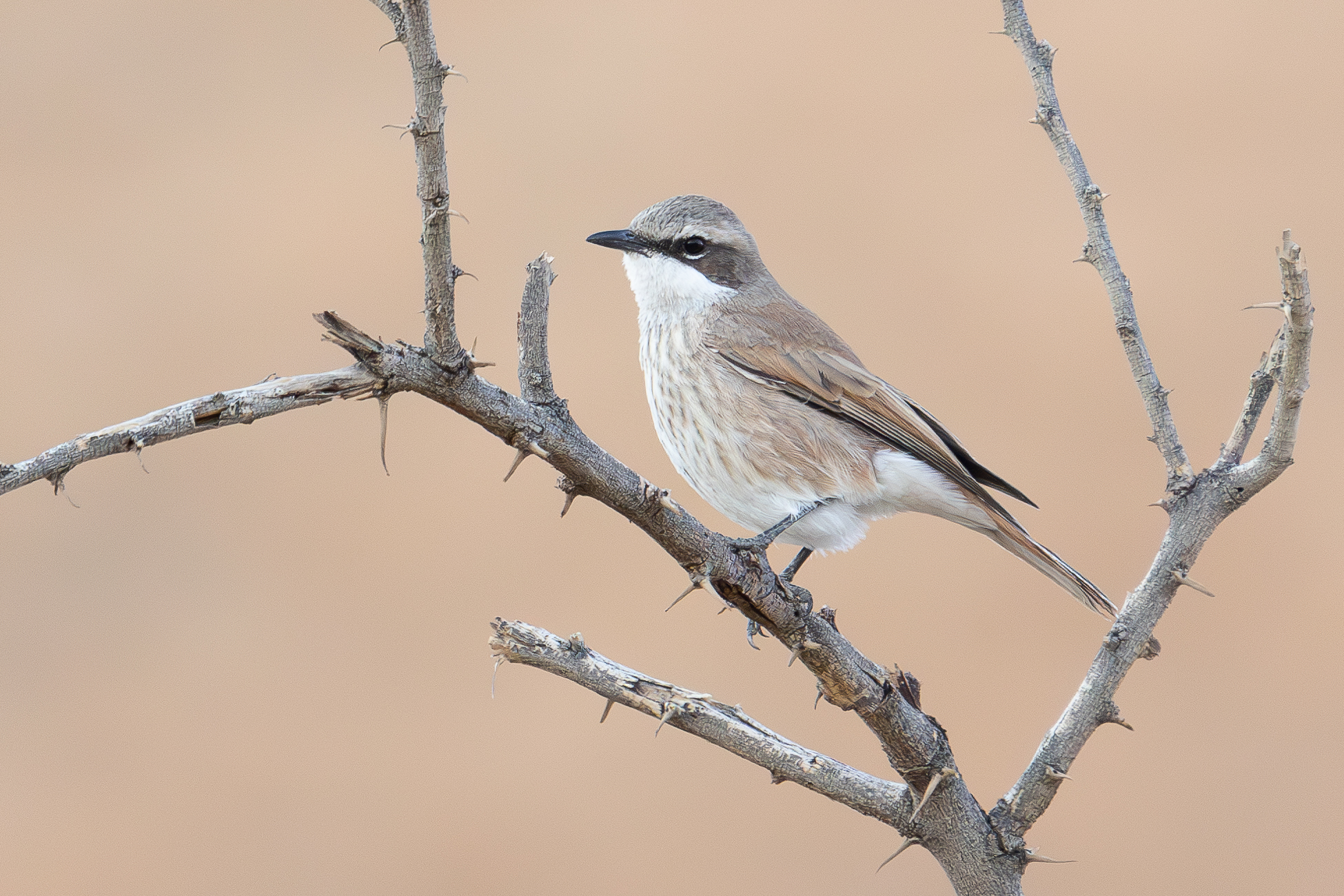
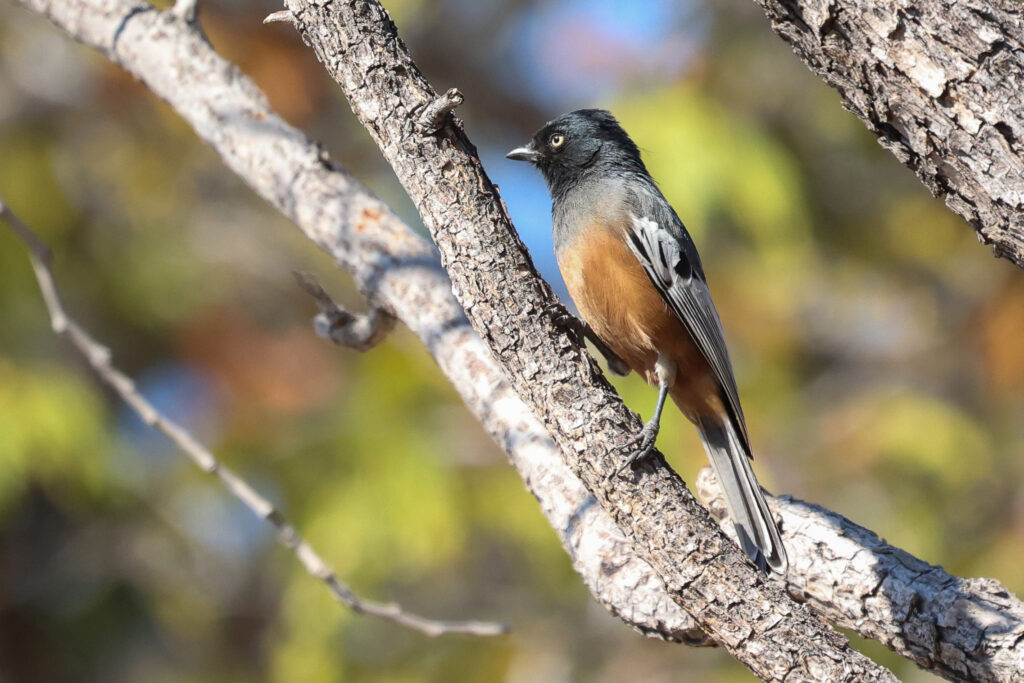
The drive up to Spitzkoppe, a group of impressive granite peaks, took us through many kilometres of desolate white gravel plains where we found Rüppell’s Korhaan, another Namib specialist, on the roadside. We watched a pair for a while and had a second pair shortly after. Let me tell you, Spitzkoppe is a delightful place. We camped in the reserve and took a drive around the hills on our first evening, picking up the sought-after Herero Chat without much effort. Other typical arid country species like Mountain Chat, Dusky Sunbird, Pale-winged Starling, Acacia Pied Barbet, and African Red-eyed Bulbul were also in evidence.
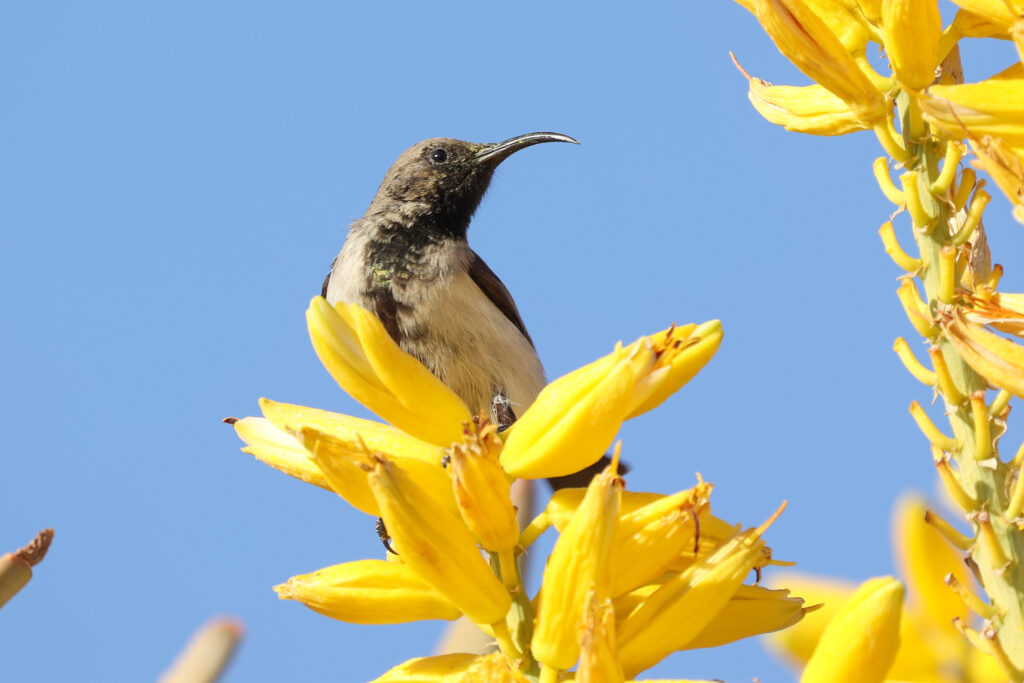
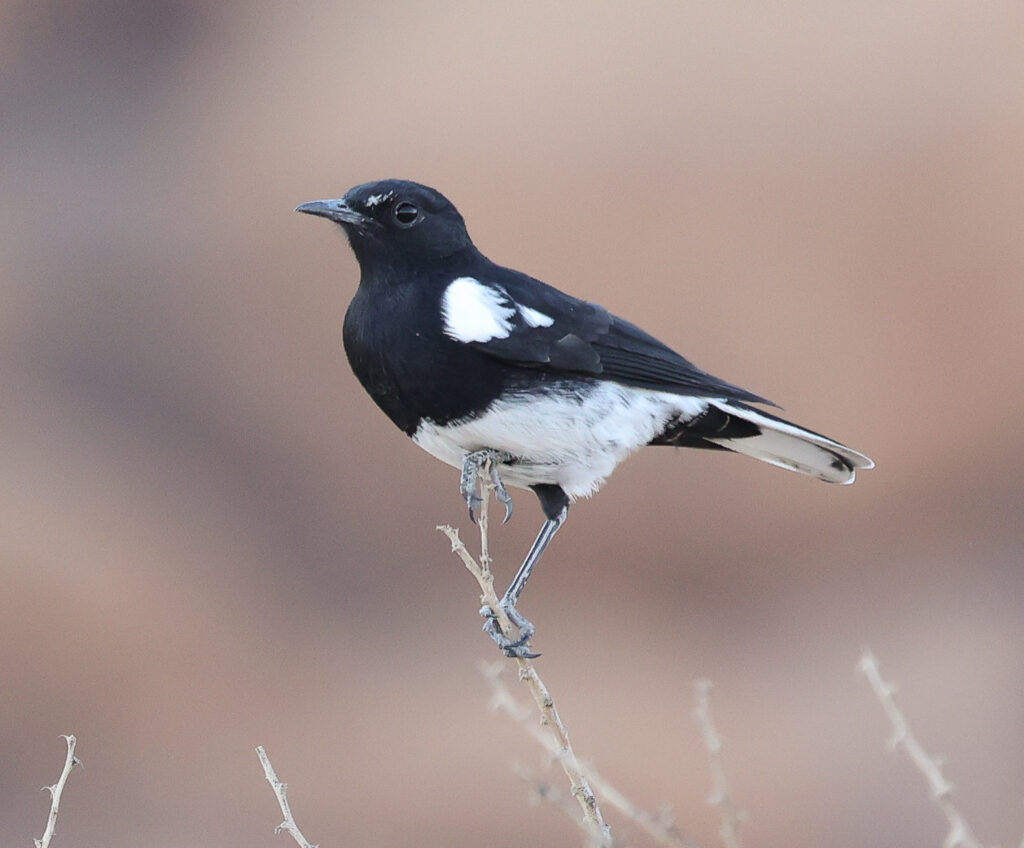
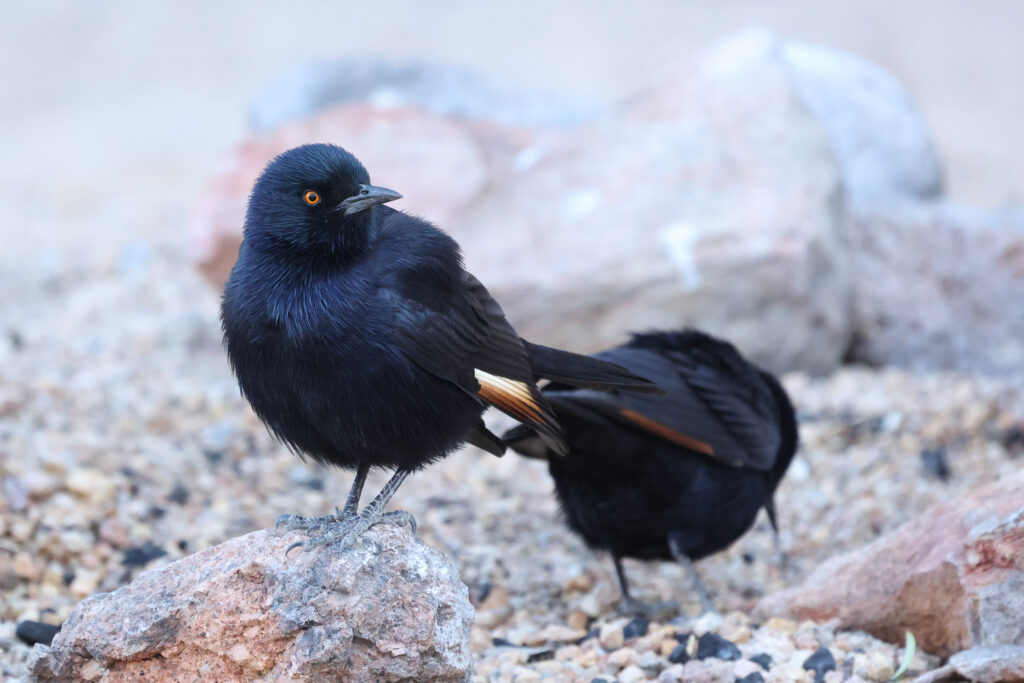
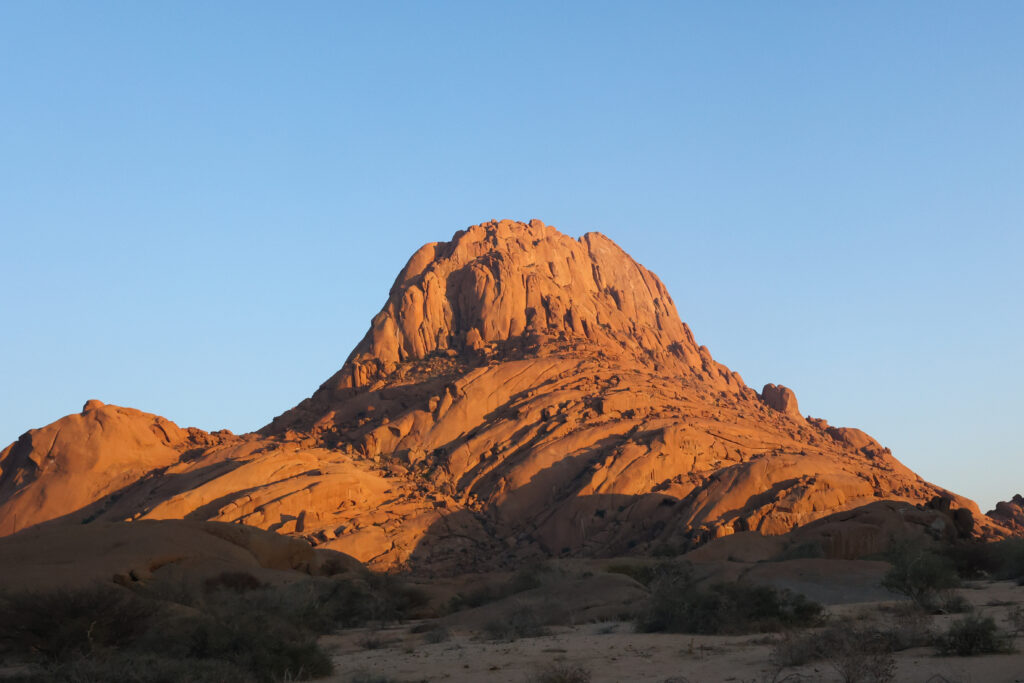
The next morning, we drove around to the northern side of Spitzkoppe, where we had several Namib specials like Monteiro’s Hornbill, White-tailed Shrike, Rosy-faced Lovebird, Carp’s Tit, and more views of Herero Chat. I also nearly stepped on a pair of Double-banded Sandgrouse that were defrosting in the early morning light.
Birding the Erongo Mountains
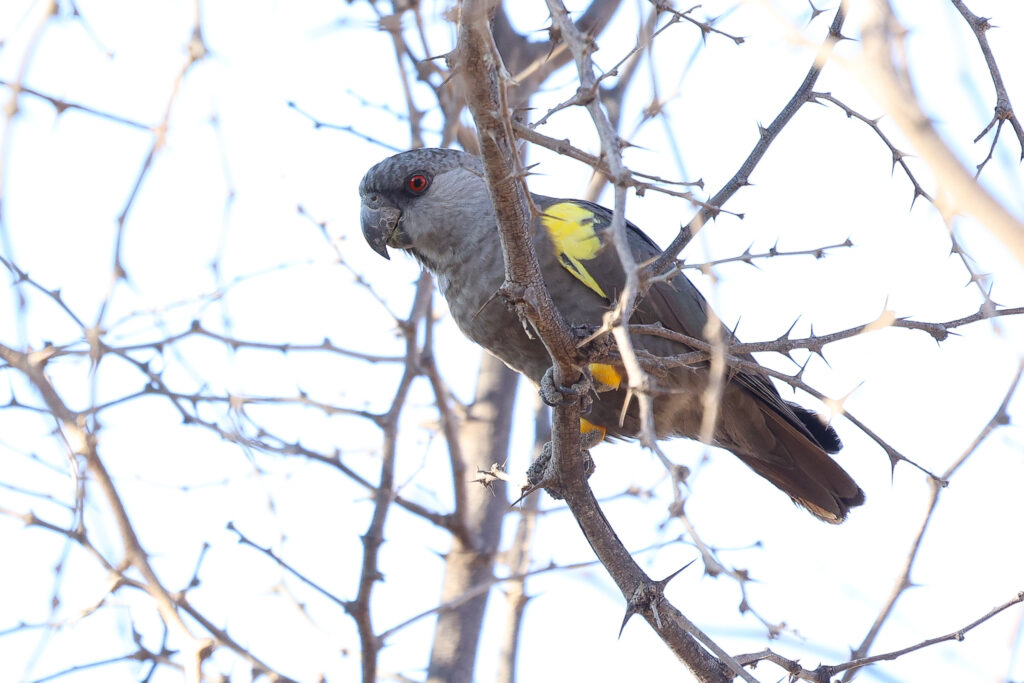
From Spitzkoppe, we made our way to the Erongo Mountains, picking up Karoo (Benguela) Long-billed Lark along the way, along with a soaring Verreaux’s Eagle. Despite the drive from hell on severely corrugated gravel roads, we made it to Ai Aiba Rock Painting Lodge, where we would spend the night. In the afternoon, we took a drive up to a dry riverbed near Okombahe, where we found a screeching Rüppell’s Parrot and a cacophony of Violet Wood-hoopoes, among other birds, including a Pearl-spotted Owlet and a Damara Red-billed Hornbill.
Back in the Erongos, we saw flocks of Rosy-faced Lovebirds looking like Christmas baubles in the arid vegetation, plus Augur Buzzard, Ludwig’s Bustard, and several Red-billed Spurfowls as the sun began to set. At night, we had vocal Freckled Nightjars at our accommodation.
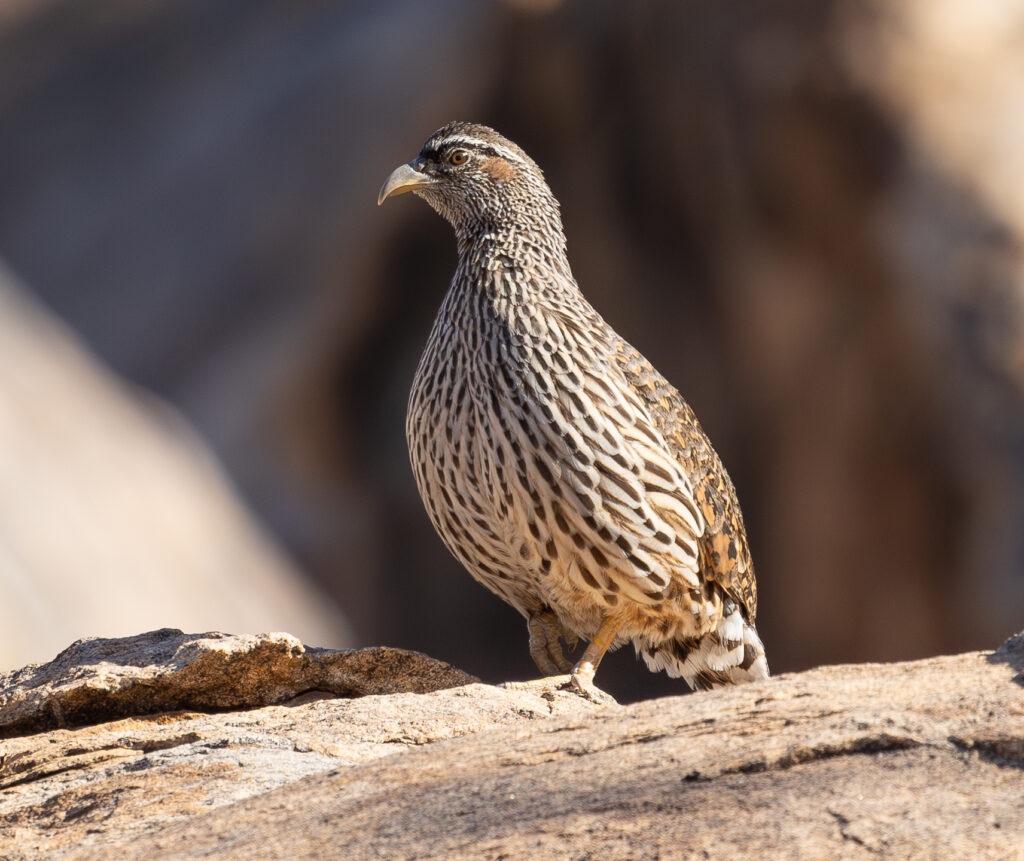
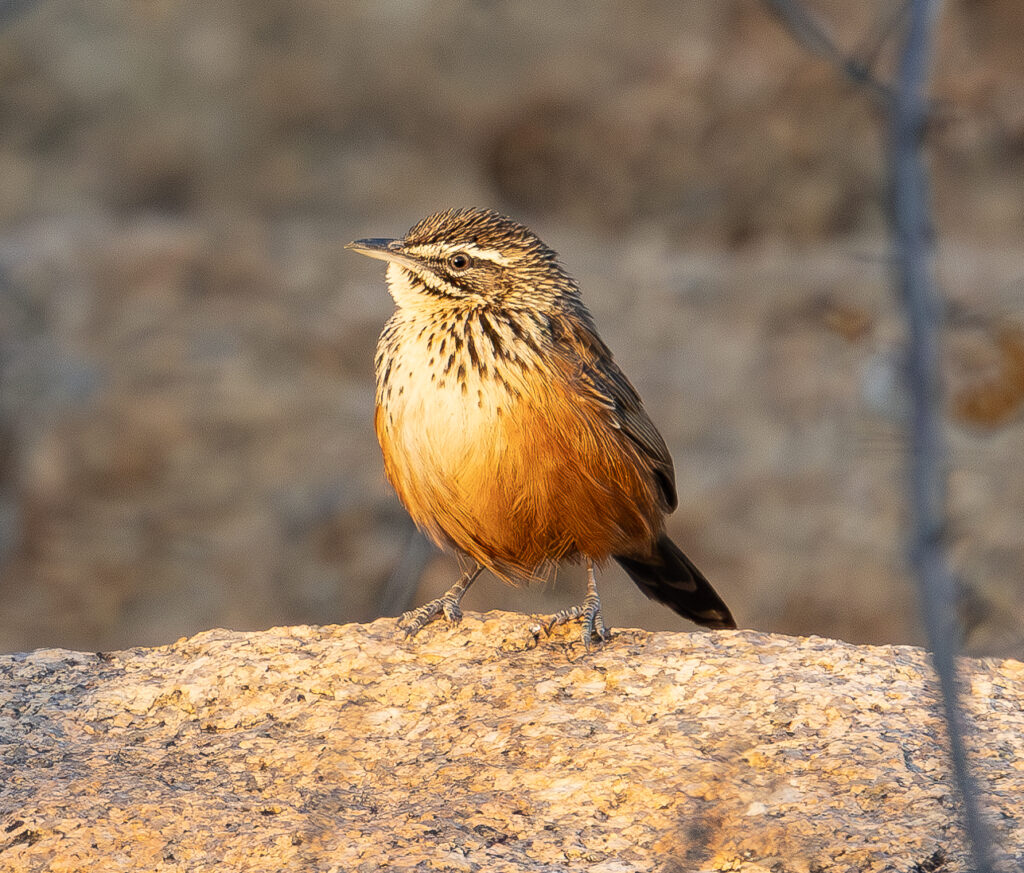
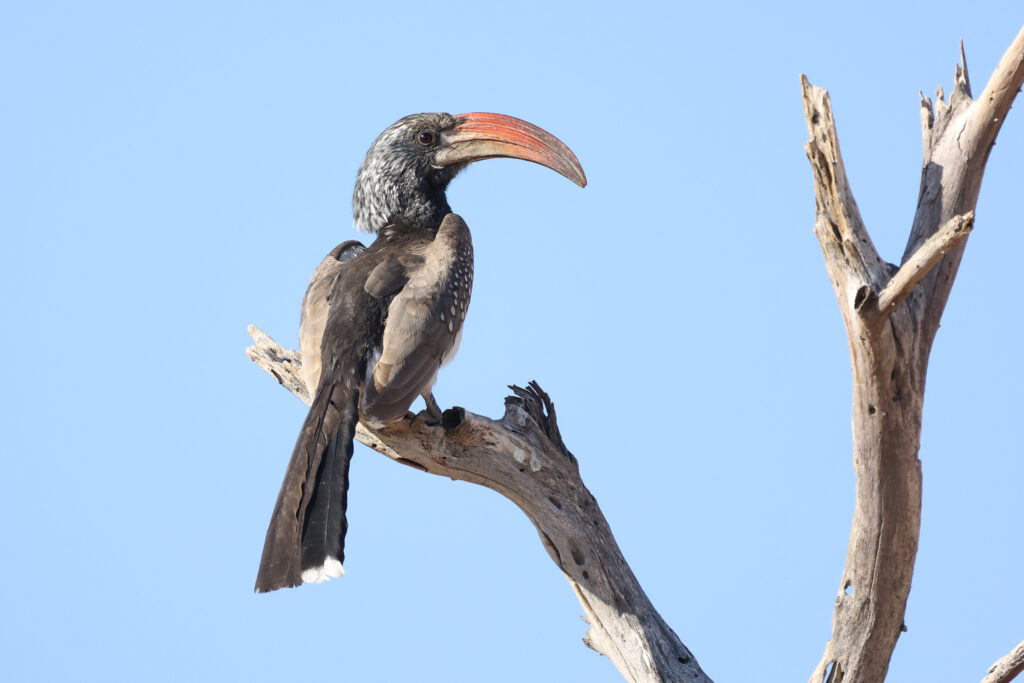
On our first whole morning in the Erongos, we took a walk around the granite outcrops at Ai Aiba, which produced many of the same species mentioned earlier. The highlight was a vocal pair of Monteiro’s Hornbills and a very showy Rockrunner. After having a tough time with Hartlaub’s Spurfowl, we connected with a pair at a random roadside stop along the D2315 on the way to Omaruru.
Etosha National Park
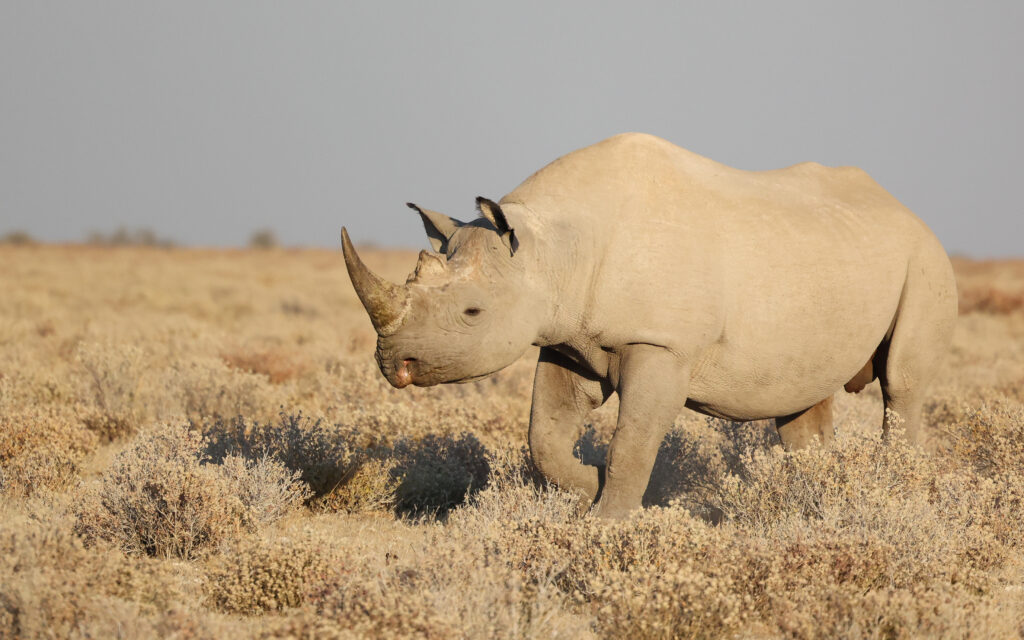
The drive up to Etosha National Park from the Erongos passed without event. Once in Etosha, it was great to see large numbers of mammals, including my first Black Rhinoceros. In the bird department, we had good views of Double-banded Coursers (they’re really common in Etosha), several Chat Flycatchers, Northern Black Korhaan, and more. We spent the first of our three nights in Etosha at Halali Camp and enjoyed watching hundreds of Double-banded Sandgrouse coming down to the waterhole to drink.
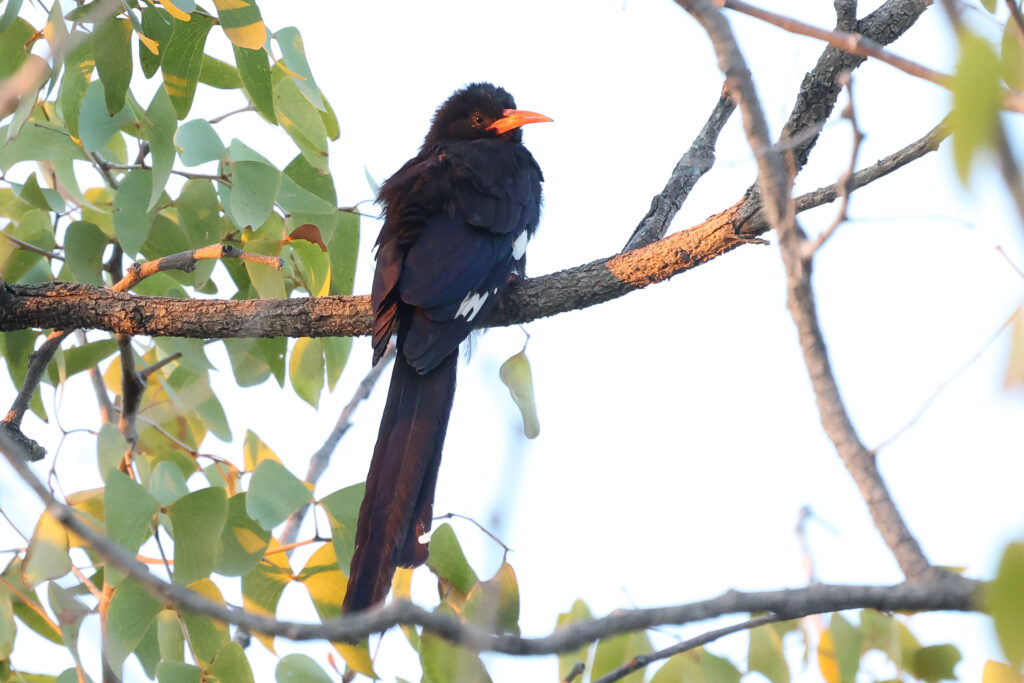
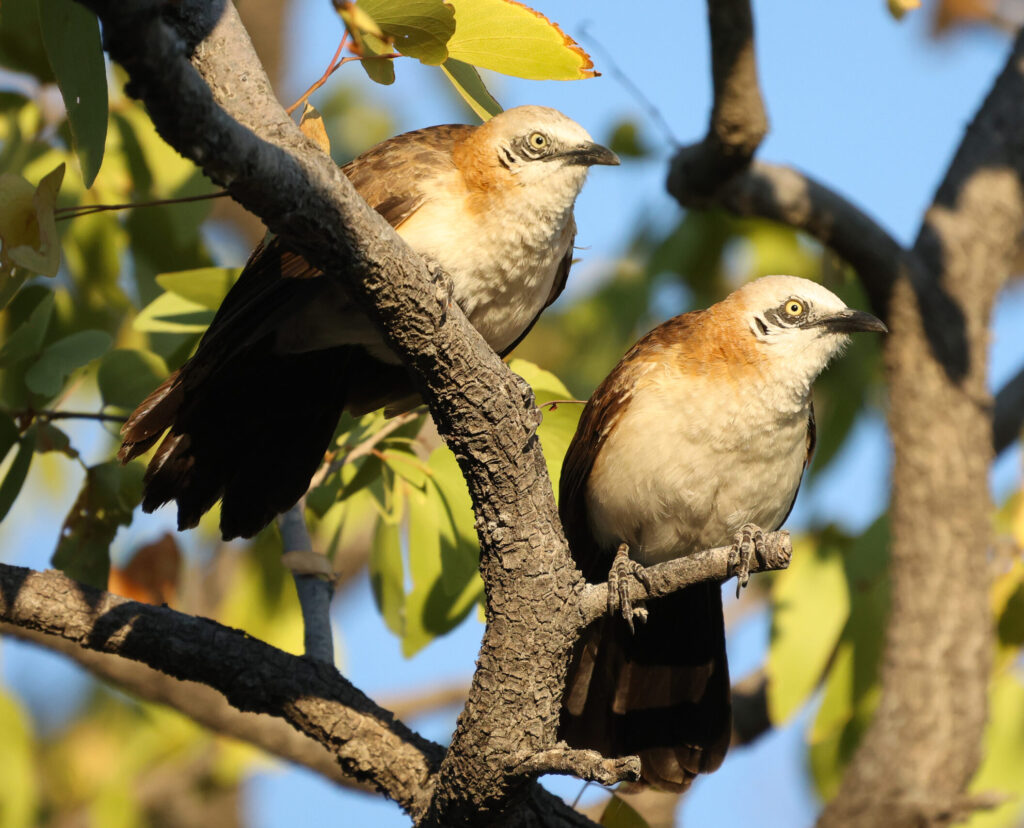
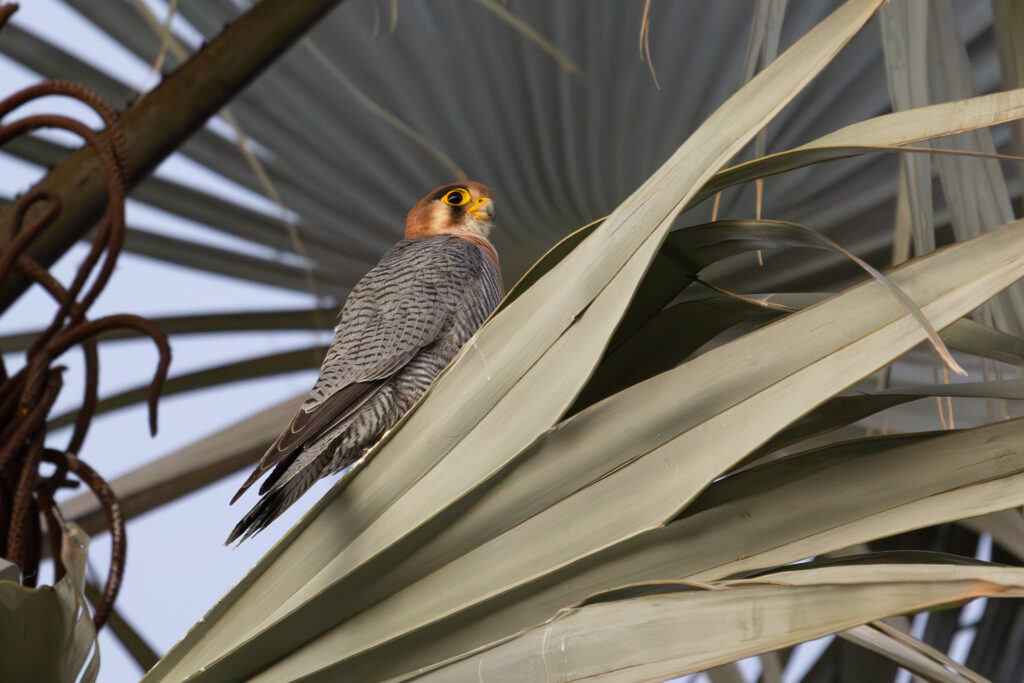
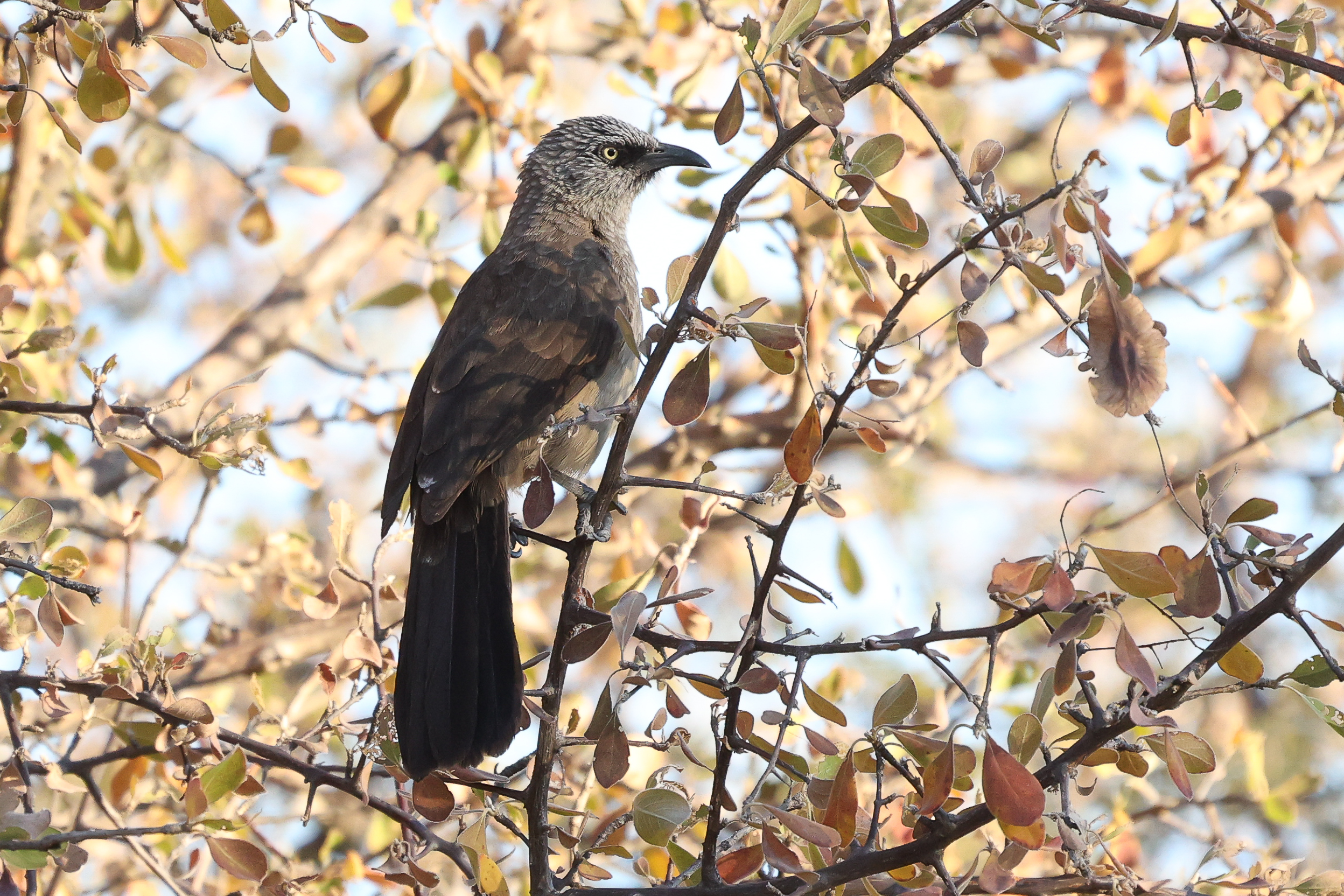
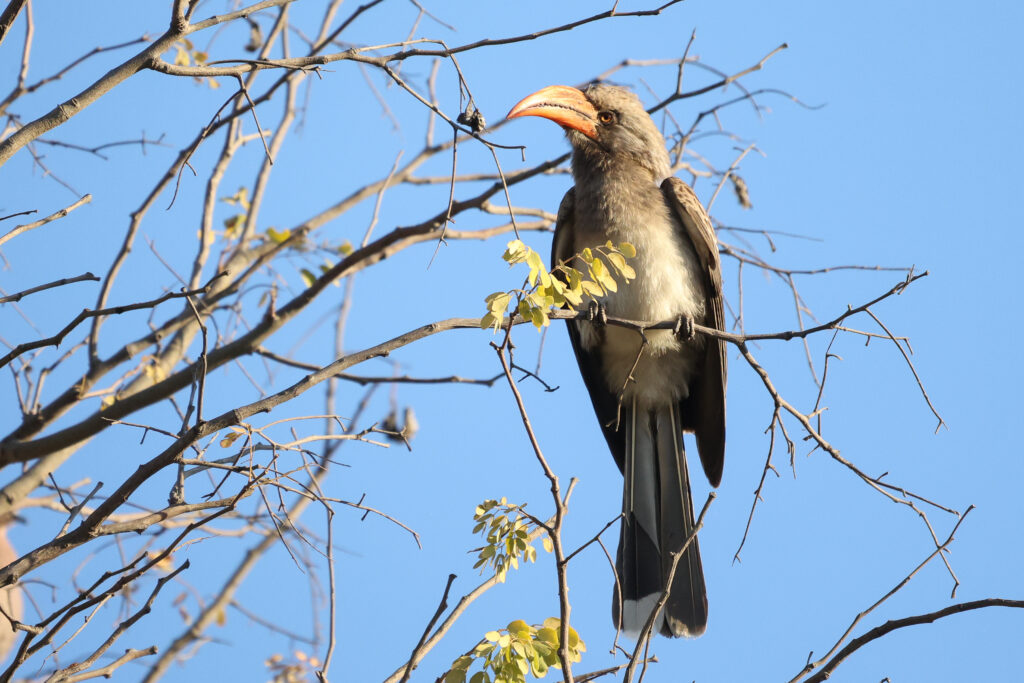
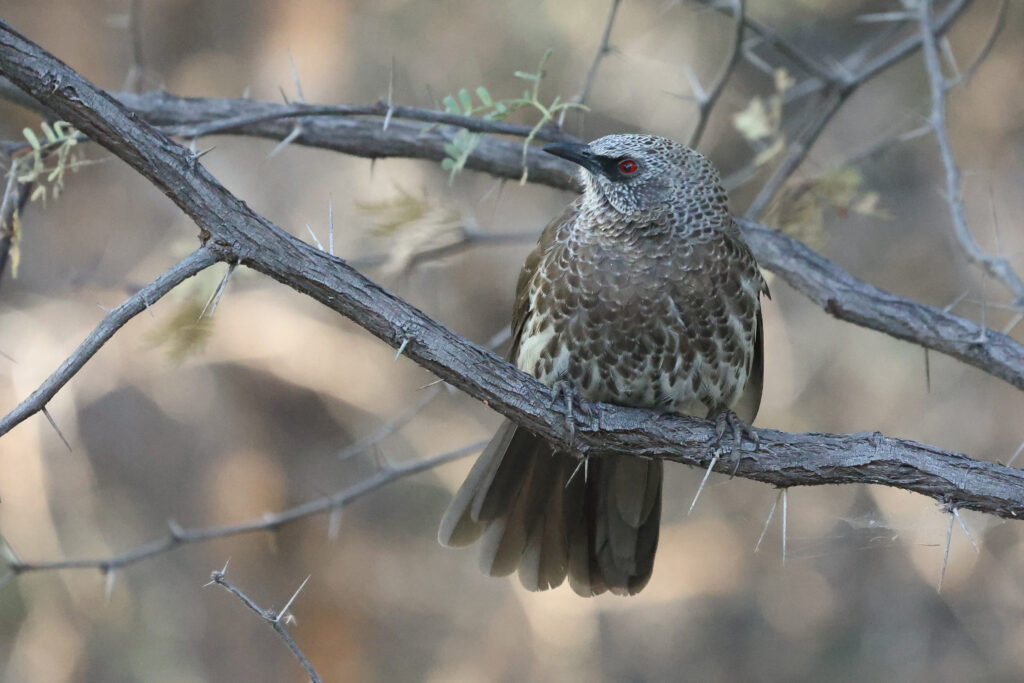
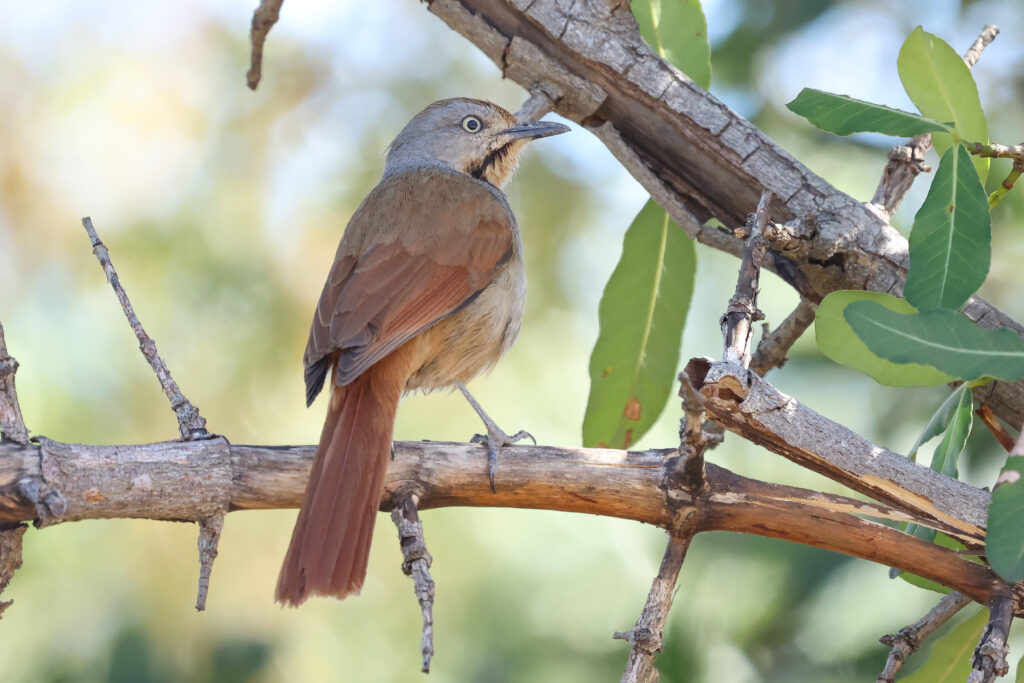
The next morning, we had excellent views of Violet Wood-hoopoe and Damara Red-billed Hornbill in the camp, along with our top target here, the localised Bare-cheeked Babbler. On our way to Namutoni Camp, it was great to connect with a pair of Red-necked Falcons. We also had one individual that came to roost in the palms at Namutoni on both nights. Other mention-worthy birds we saw included Kori Bustard and Swallow-tailed Bee-eater, and a drive to Namutoni Gate (after a failed attempt at Mokuti Lodge) produced the range-restricted Black-faced Babbler.
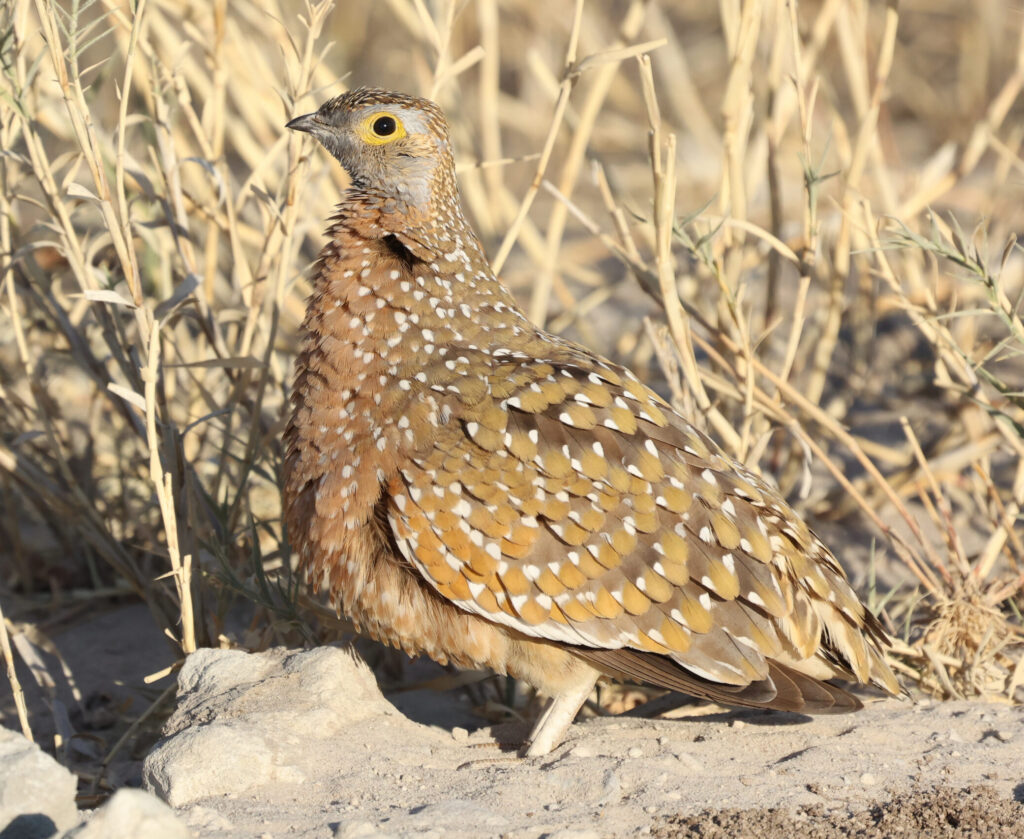
We spent the next day exploring the eastern sections of Etosha, where we connected with Burchell’s Sandgrouse, Cape Penduline Tit, Violet-eared Waxbill, and many other typical bushveld birds. We also had views of both Pink-billed and Eastern Clapper Larks, both of which are always good to see, I guess.
Rundu and surrounds
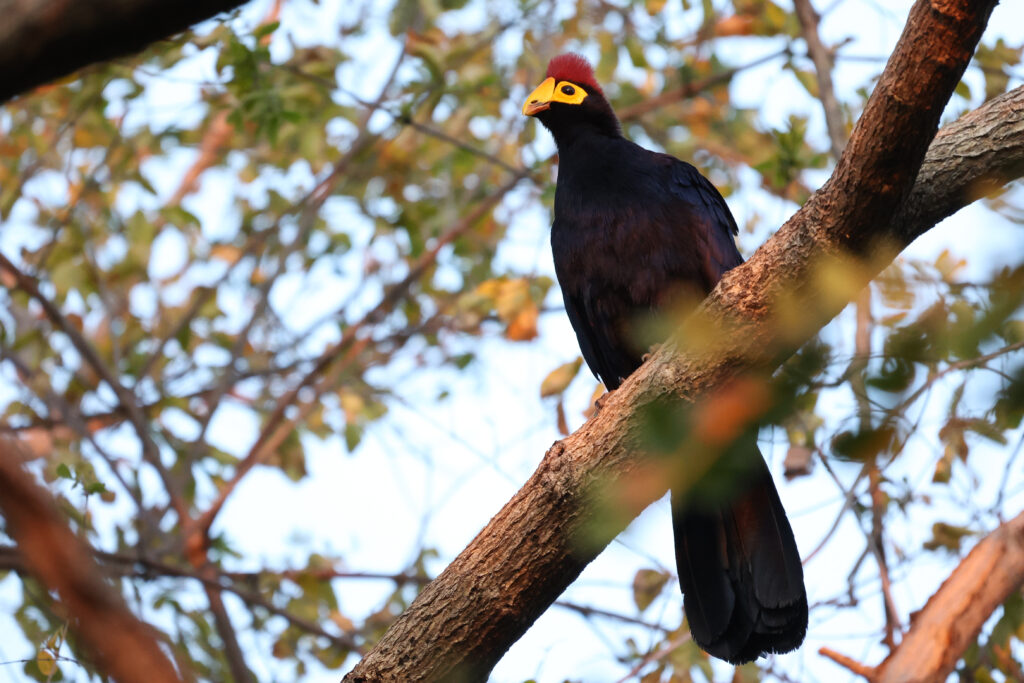
After leaving Etosha, we made our way northeast to Rundu, stopping at Roy’s Rest Camp along the way, where we had Black-faced Babbler again. We also started seeing our first Bradfield’s Hornbills in this area. At Taranga Safari Lodge, we spent the afternoon walking around the lodge grounds, which yielded a long-staying Ross’s Turaco that has been present in the lodge grounds for several years now.
Taranga also gave us our first looks at the bulky Coppery-tailed Coucal with its booming call, as well as Swamp Boubou and Hartlaub’s Babbler, in addition to several other more widespread species like Meyer’s Parrot, Violet-backed Starling, and a surprise Lesser Jacana.
We left Taranga early the following morning and worked the woodlands around the B8 near Kayaru, where we had our only Sharp-tailed Starling of the trip. Josh and I walked for hours in these otherwise dead woodlands to try to find Souza’s Shrike and Rufous-bellied Tit to no avail. Luckily, we would have another shot at these birds on the way back to Cape Town.
Okavango birding and Bwabwata National Park
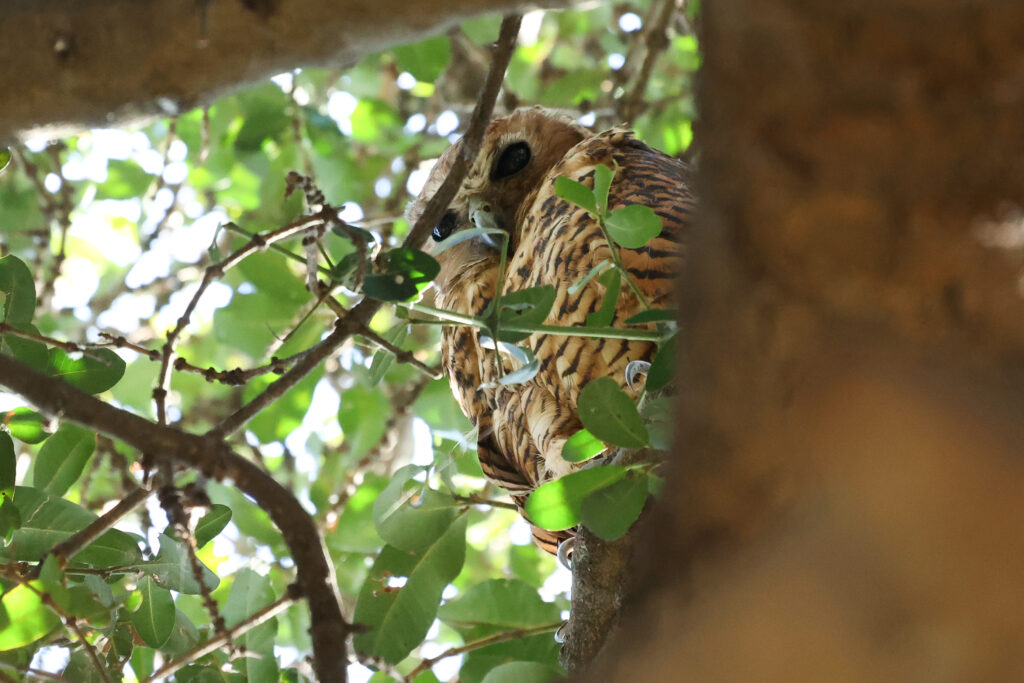
We then birded in Bwabwata National Park for a short while, where we picked out a distant Wattled Crane, before making our way across the border at Mohembo and into Botswana. We spent two days in the Shakawe area, birding the Okavango panhandle, where we added several excellent birds, including Chirping Cisticola, Greater Swamp Warbler, White-browed Coucal (my 800th species in southern Africa), Bat Hawk, Pel’s Fishing Owl, Hartlaub’s and Black-faced Babblers (we were tripping over them on this trip), Swamp Boubou, and Bradfield’s Hornbill.
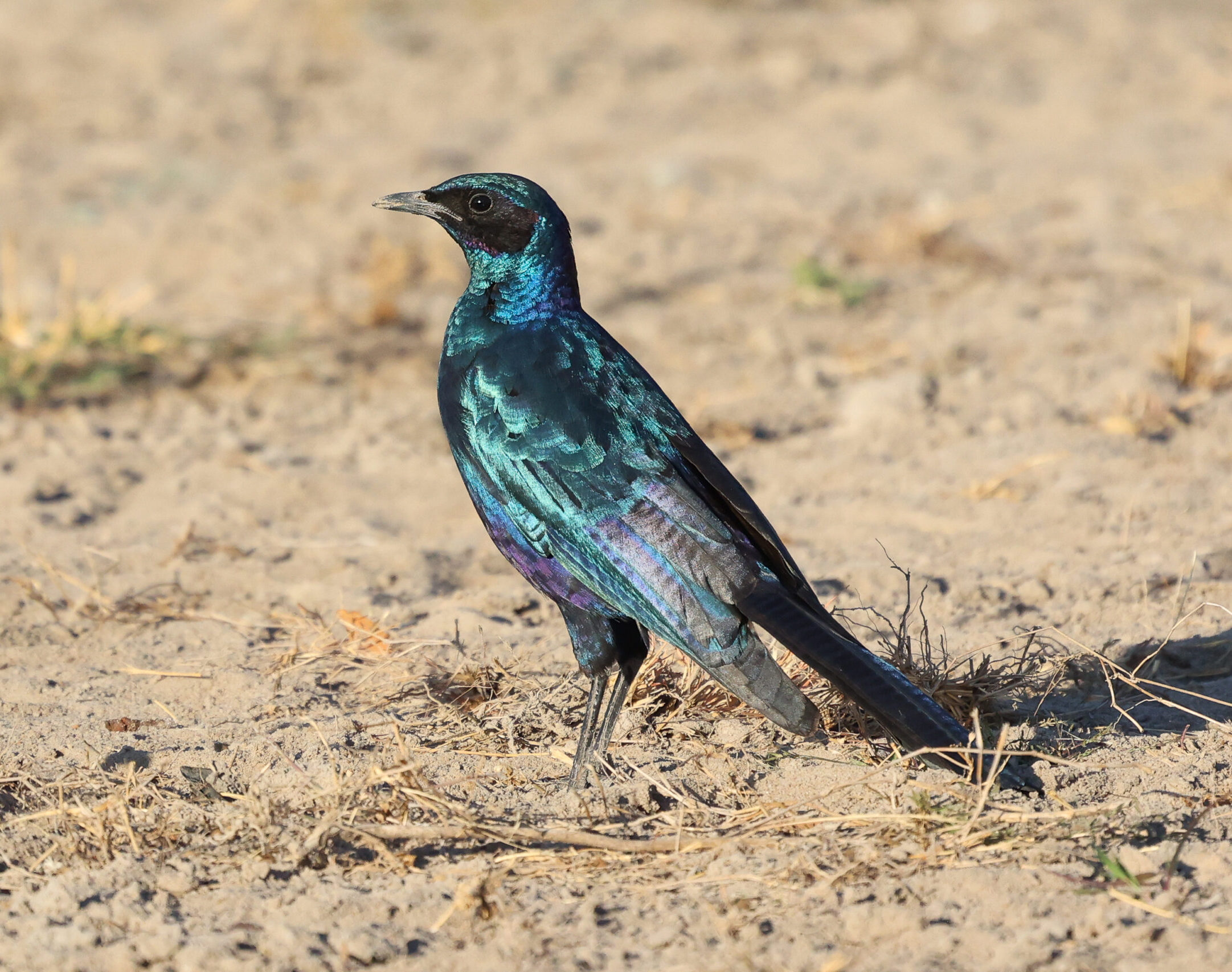
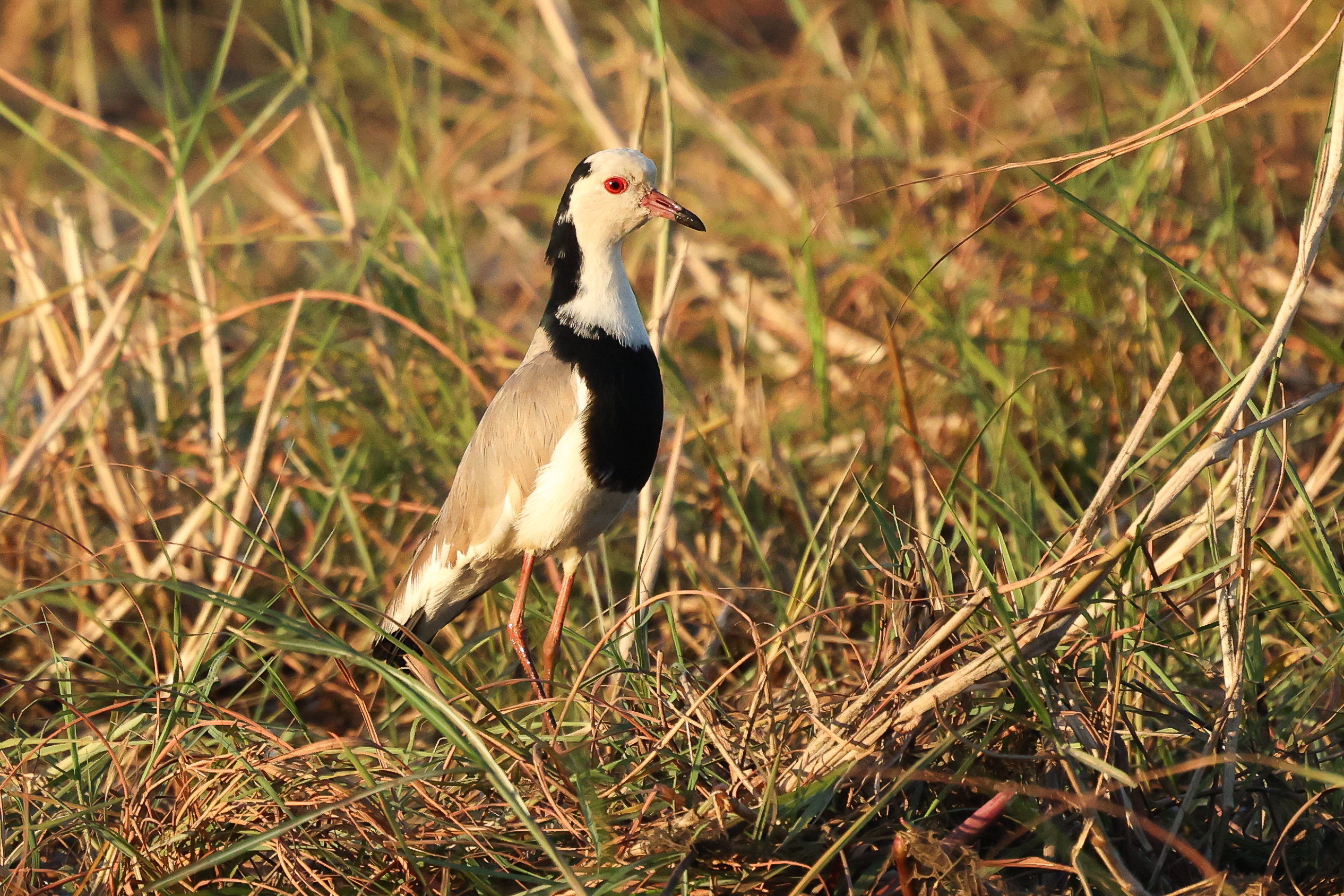
Back in Namibia, we spent a whole day birding in Bwabwata National Park and recorded well over 100 species, including my lifer, the Long-toed Lapwing and Rufous-bellied Heron. Other good birds included Collared Pratincole, Saddle-billed Stork, Black Heron, Slaty Egret, and African Skimmer.
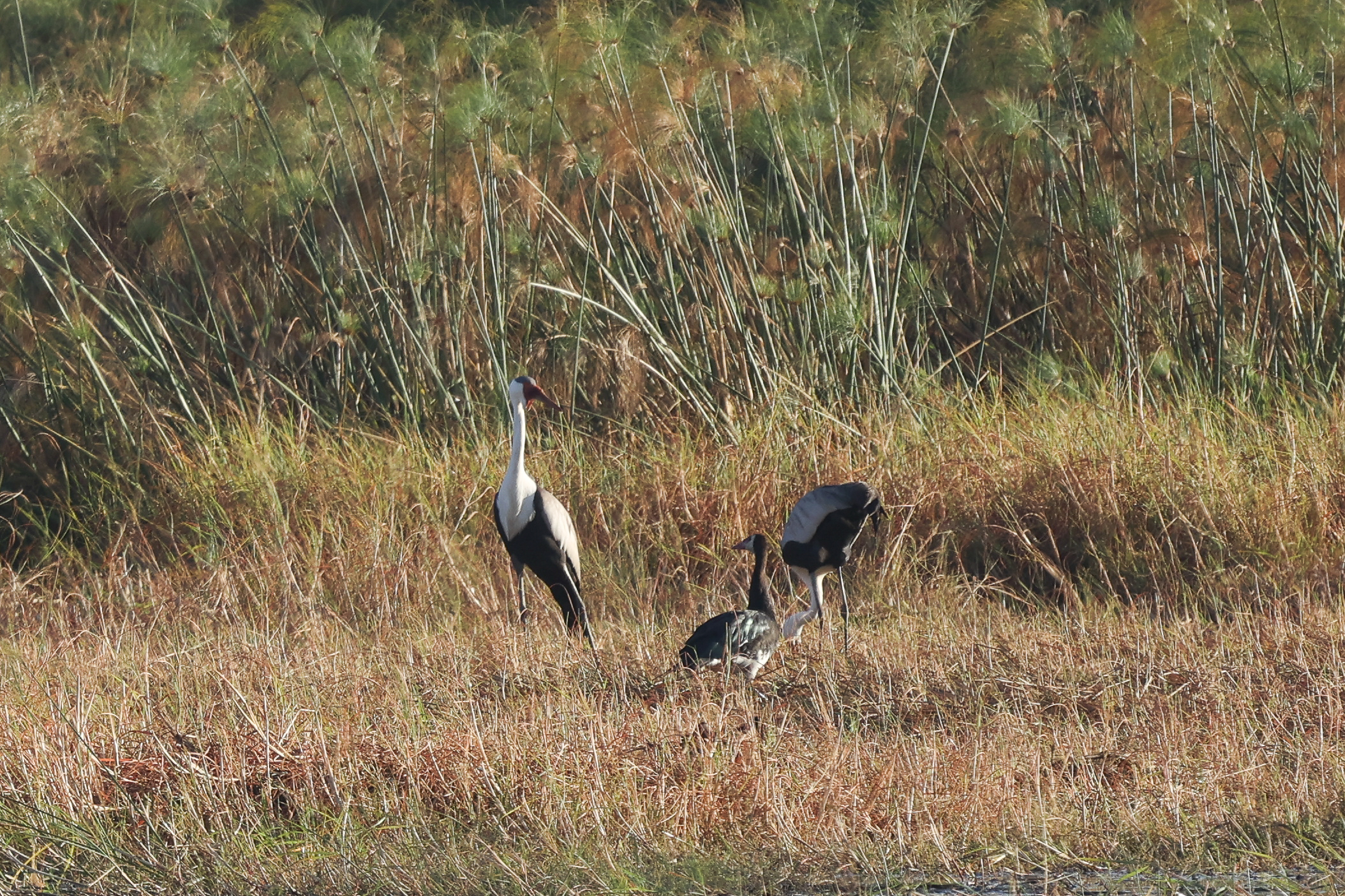
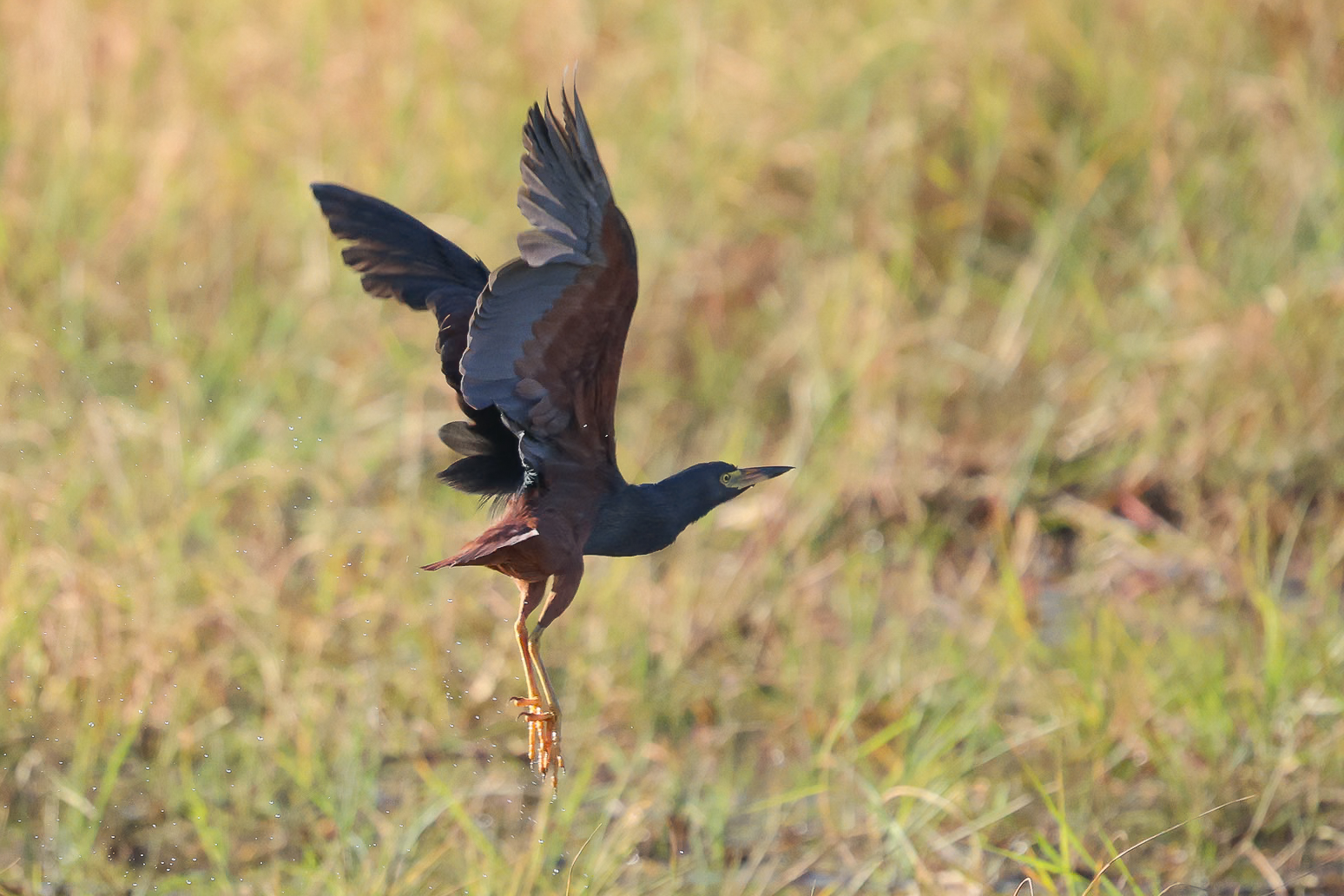
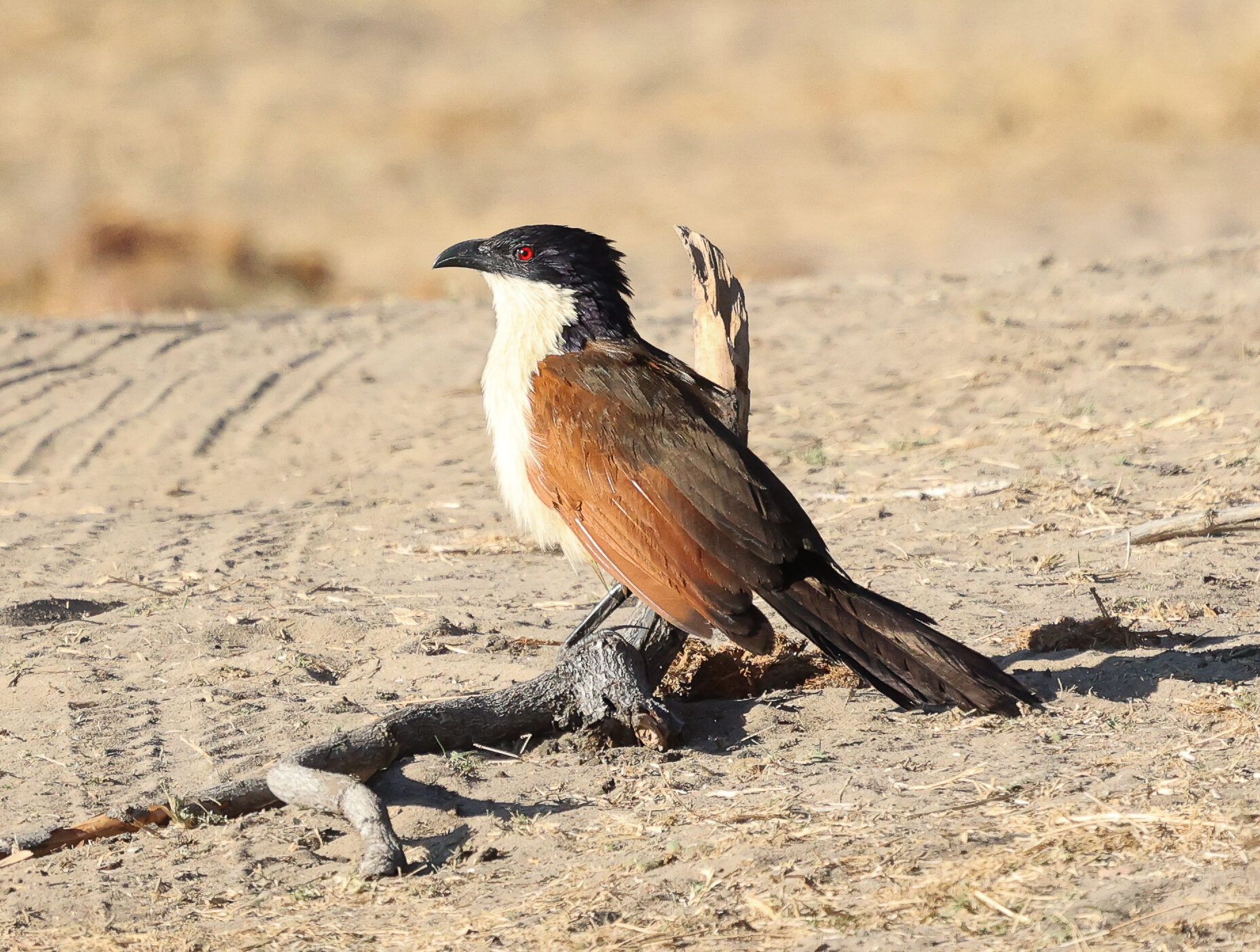
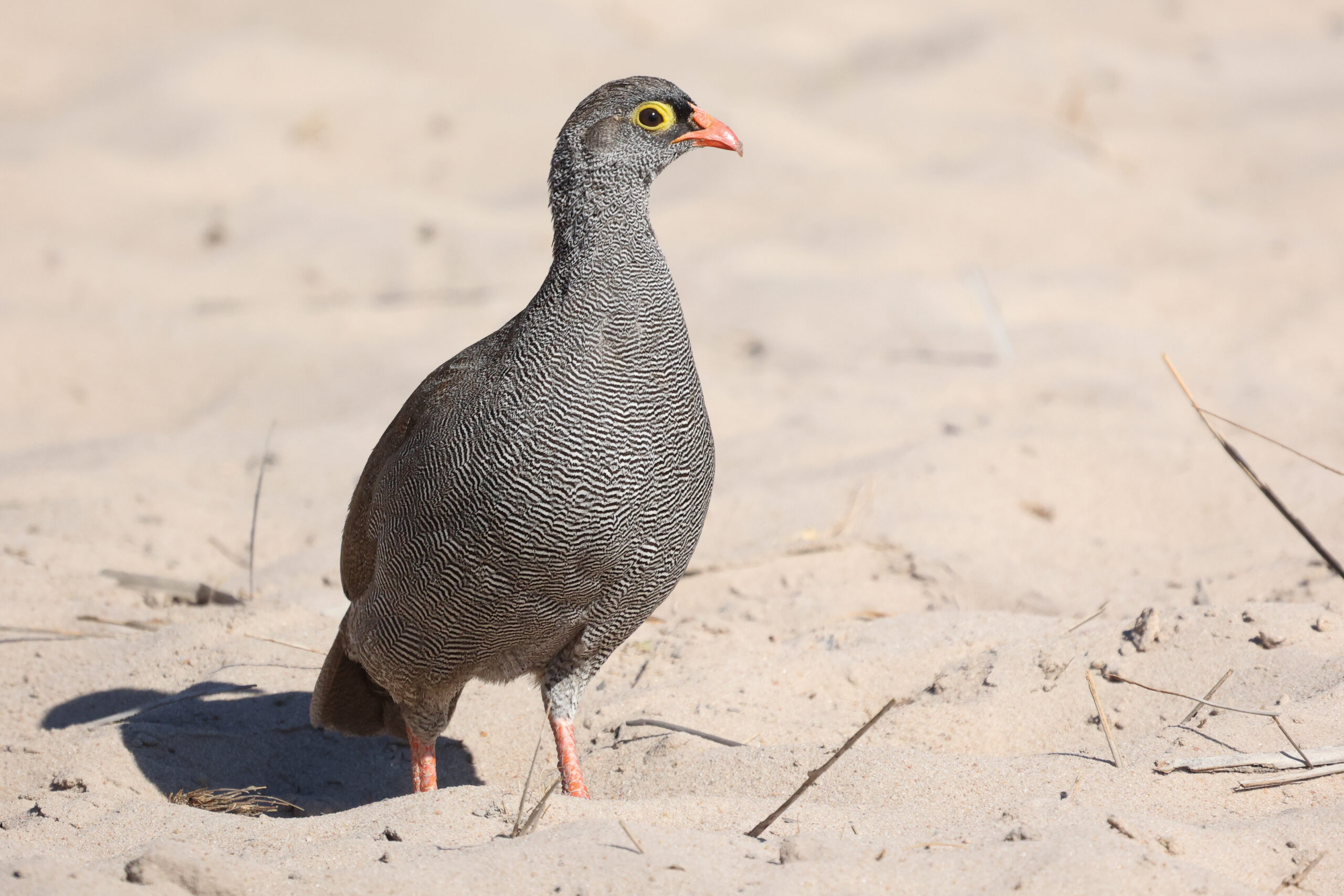
After spending the night at Mahangu Safari Lodge, we returned to Bwabwata early the next morning. Once again, we exceeded 100 species for the morning, with repeat views of many of the above-mentioned species.
Katima Mulilo birding
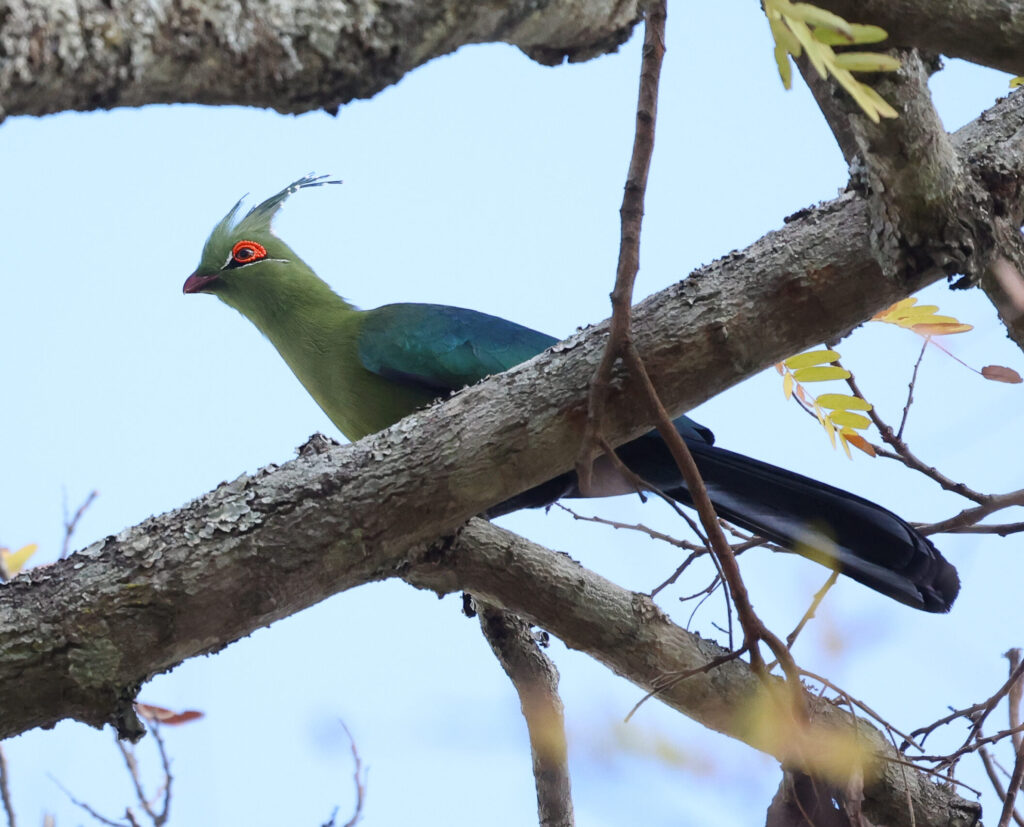
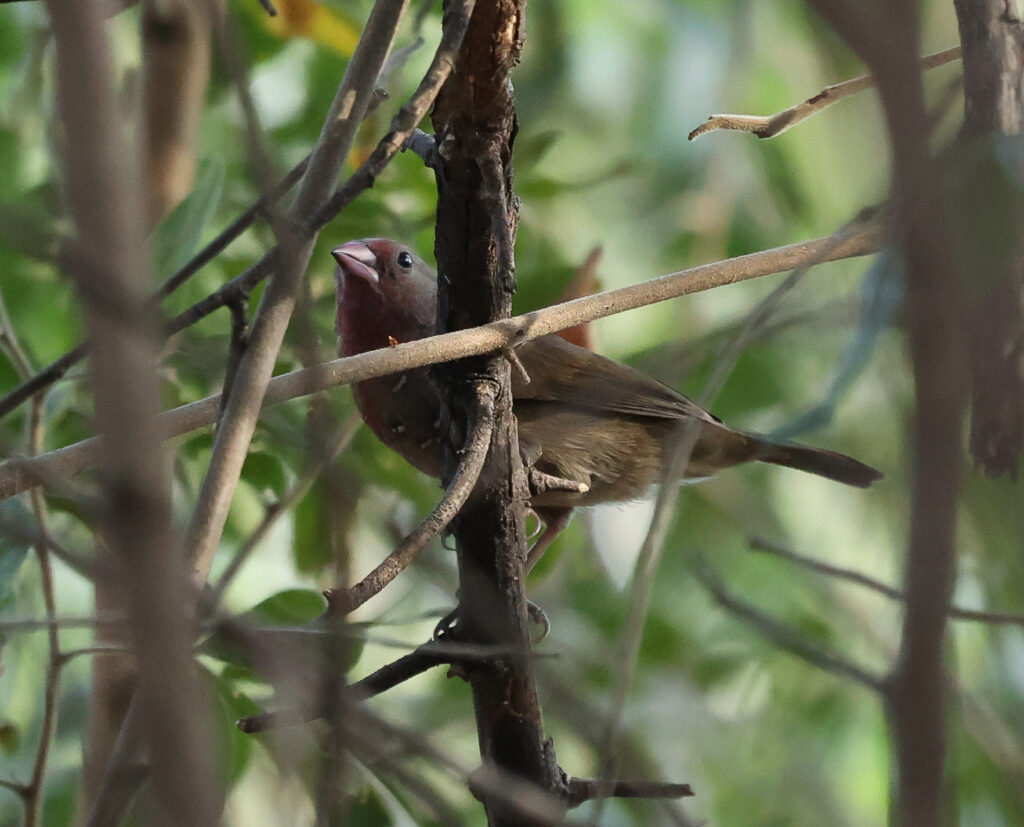
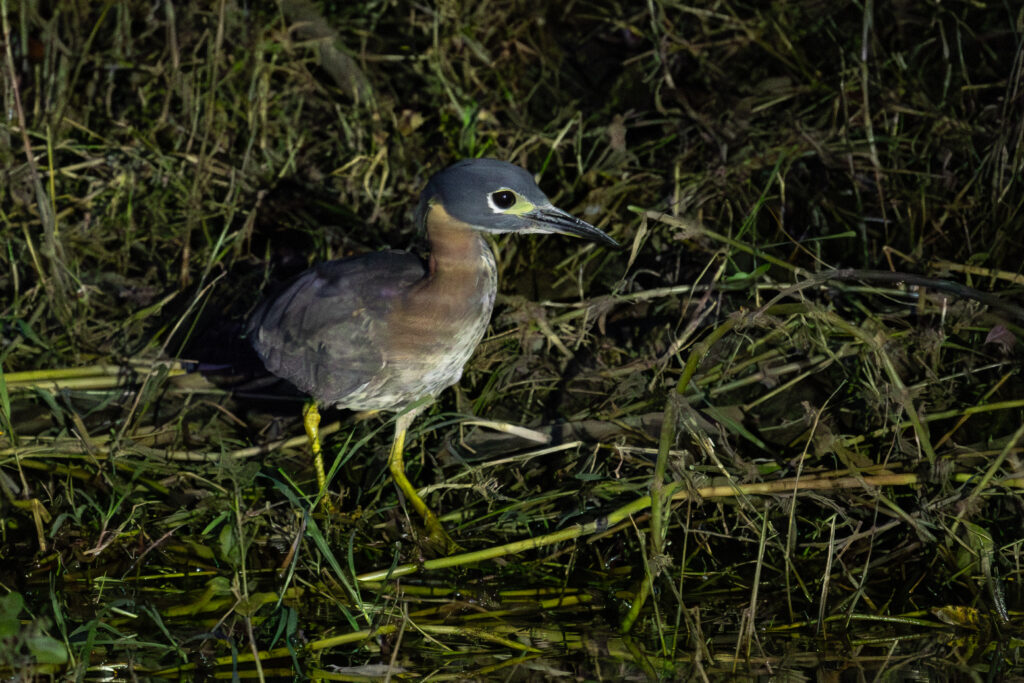
We then drove across the Caprivi Strip to Katima Mulilo, where an afternoon birding session along the banks of the Zambezi River delivered the epic Schalow’s Turaco and Brown Firefinch. A quick visit behind a Total Service Station delivered Northern Grey-headed Sparrow, and as the sun set over the Zambezi, we had African Finfoot and White-backed Night Heron make an appearance.
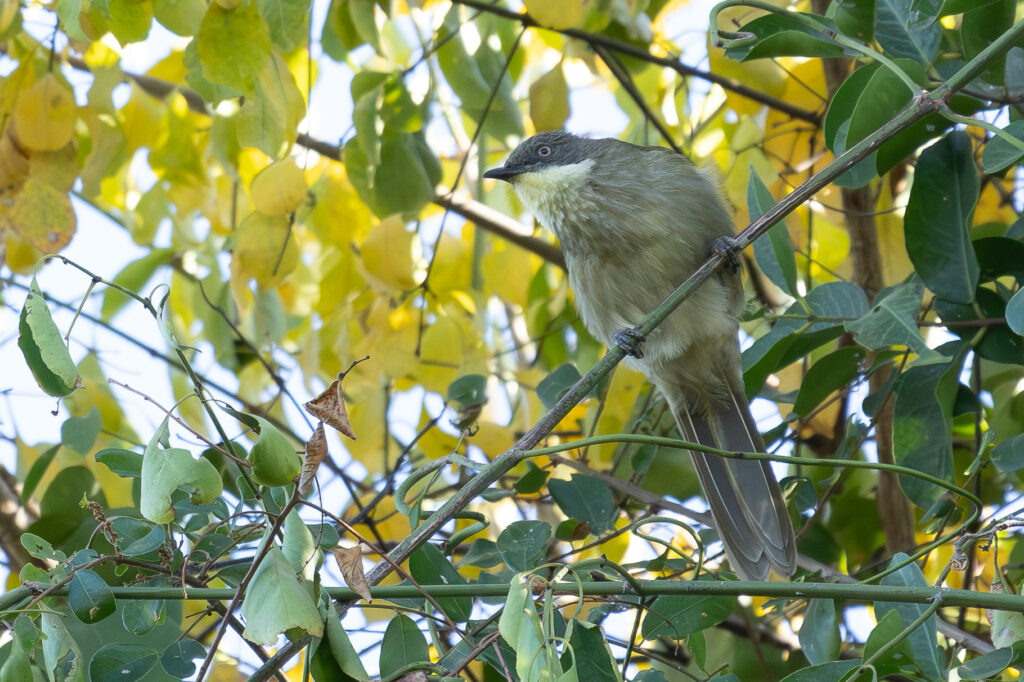
Early the next day, we visited the long-staying Pale-throated Greenbuls near Caprivi Houseboat Safaris before heading down to Ngoma for some exploratory birding, which yielded a Collared Palm Thrush.
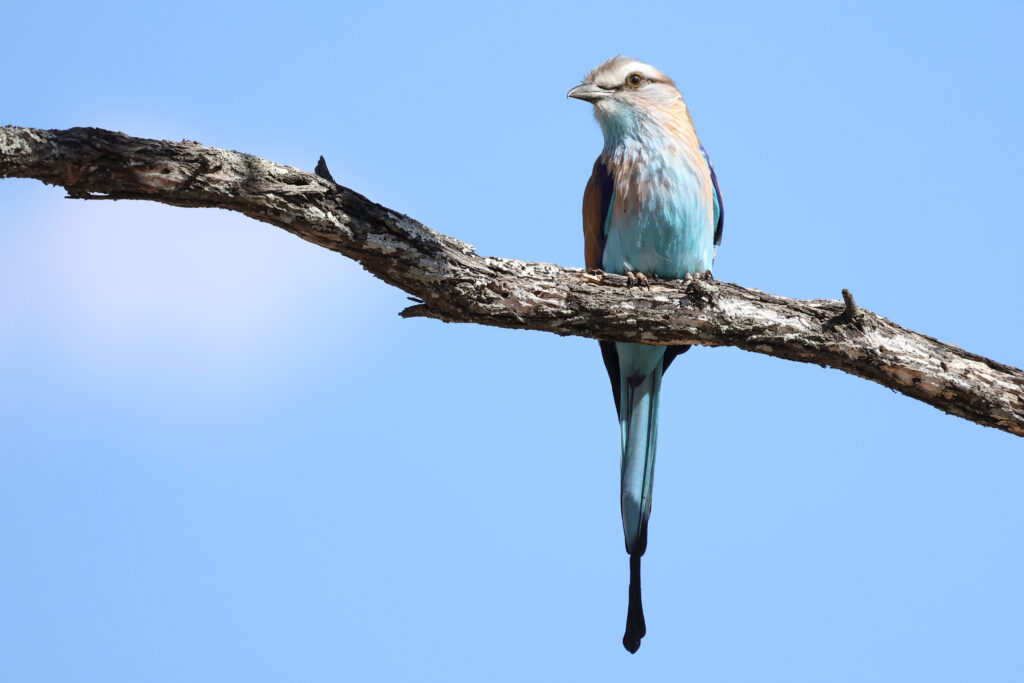
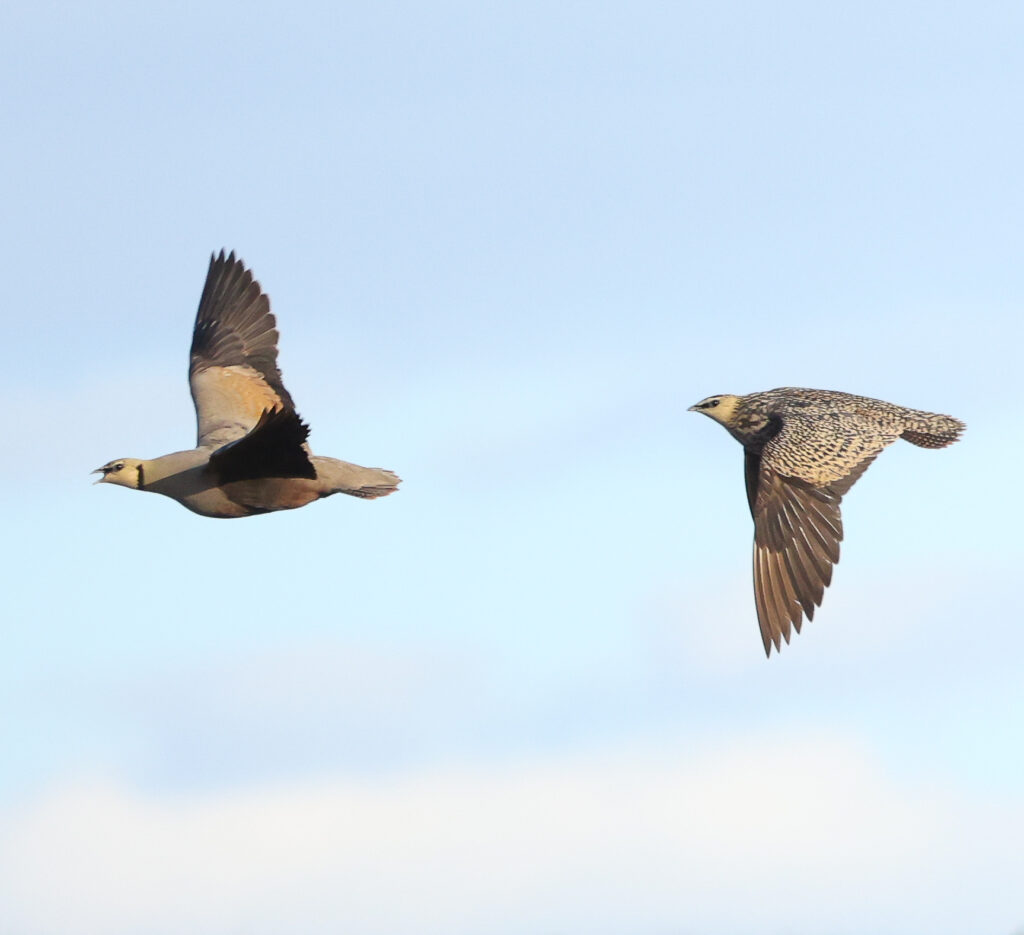
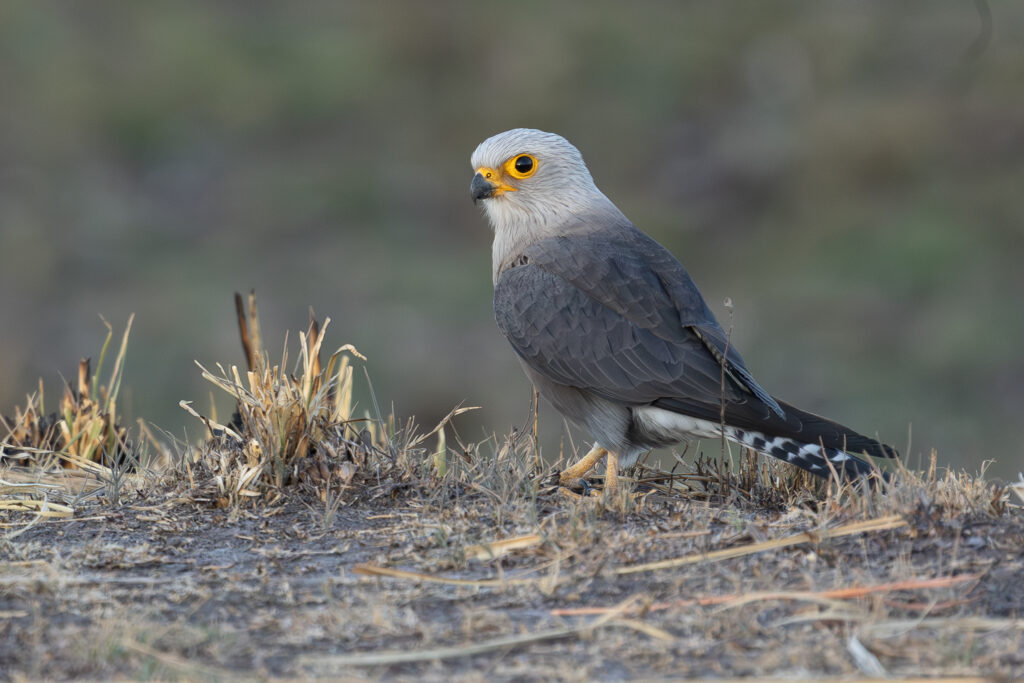
We worked a flooded grassland on the banks of the Zambezi, where we finally saw Luapula Cisticola and had excellent views of Racket-tailed Roller in the Gusu woodlands near Katima Mulilo. In the evening, Josh and I visited a spot near Ngoma, where we added Yellow-throated Sandgrouse and Dickinson’s Kestrel to our Namibia lists.
Chasing Zambia’s endemic birds
The following day, we crossed the border from Namibia to Botswana again, then passed through the chaotic Kazangula border post and entered Zambia. For those of you interested in these sorts of geographical peculiarities, Kazungula Bridge, over the Zambezi River, is as close as you’ll get to the meeting point of four countries (Namibia, Botswana, Zambia, and Zimbabwe) – pretty neat. Anyway, after navigating passport control, dodging typical border post scams, and sorting out some drama with the car papers, we were on our way to Livingstone. In the afternoon, we quickly popped in at the iconic Victoria Falls before having dinner in Livingstone and getting an early night.
The next morning, we undertook the three-hour drive north to Choma, where we birded the Bruce-Miller Farm. Ian Bruce-Miller, the owner of the farm, was understandably shocked to hear that we had driven all the way from Cape Town (3,000 km away) to get there in search of Chaplin’s Barbet, one of the two Zambian endemic birds.
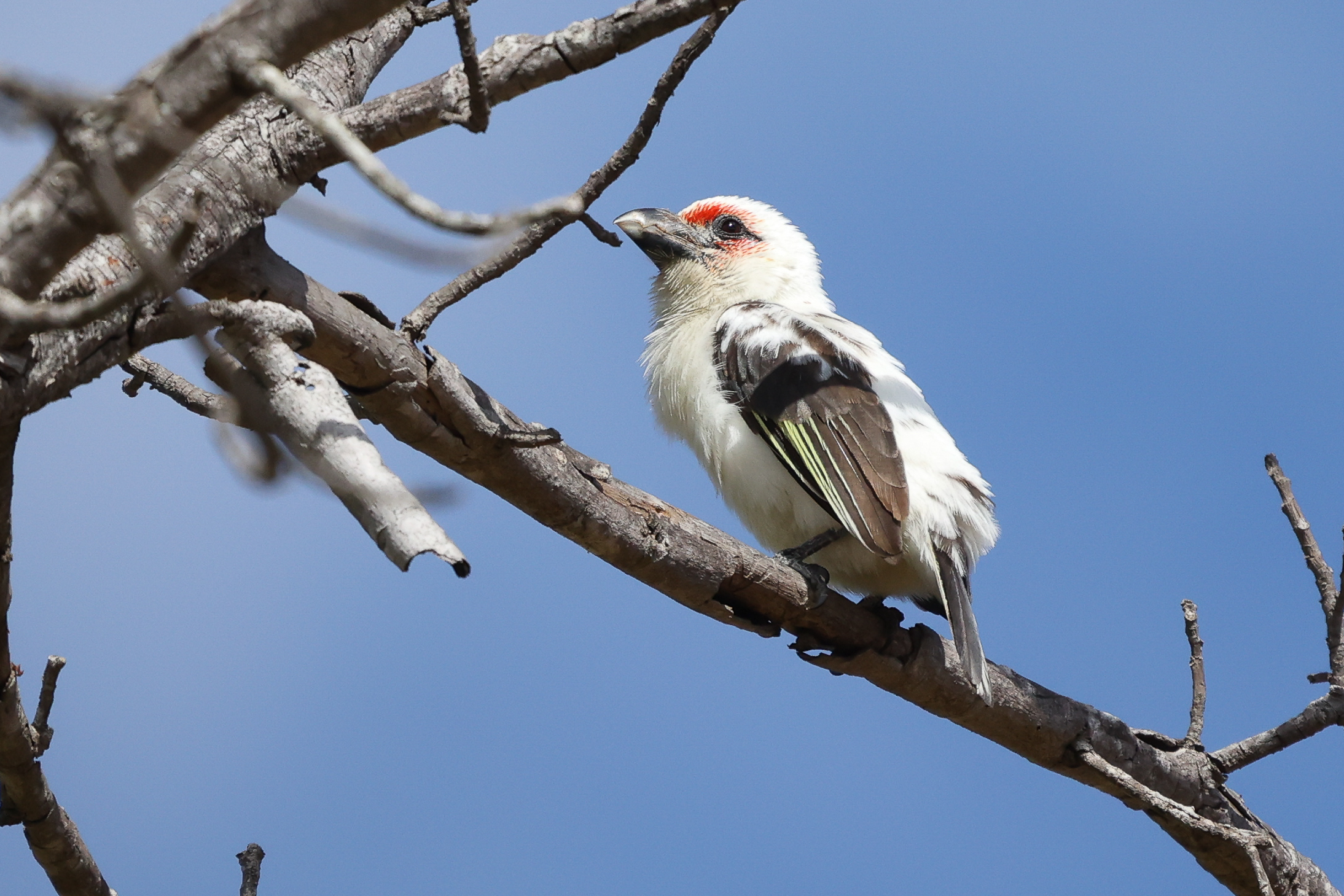
After a few minutes walking through open savanna, we had excellent views of a pair of these stunning birds, in addition to two other unexpected lifers, Sooty Chat and Fülleborn’s Longclaw. We celebrated with coffee in Choma before birding a patch of woodland just west of the town, where we added Miombo Pied Barbet and Shelley’s Sunbird: two very welcome lifers and great birds.
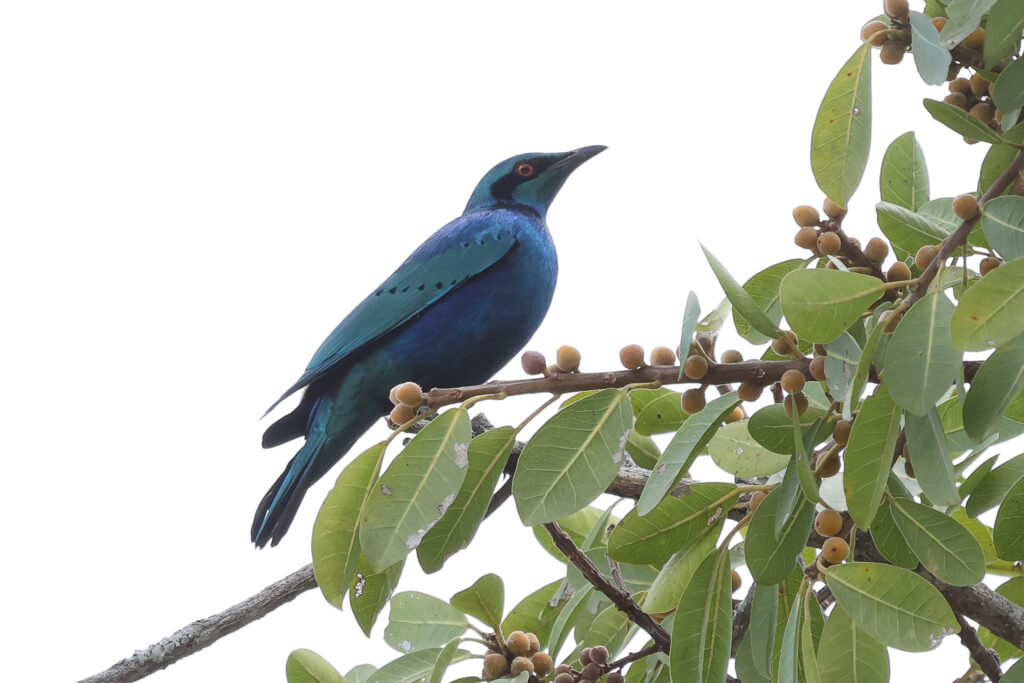
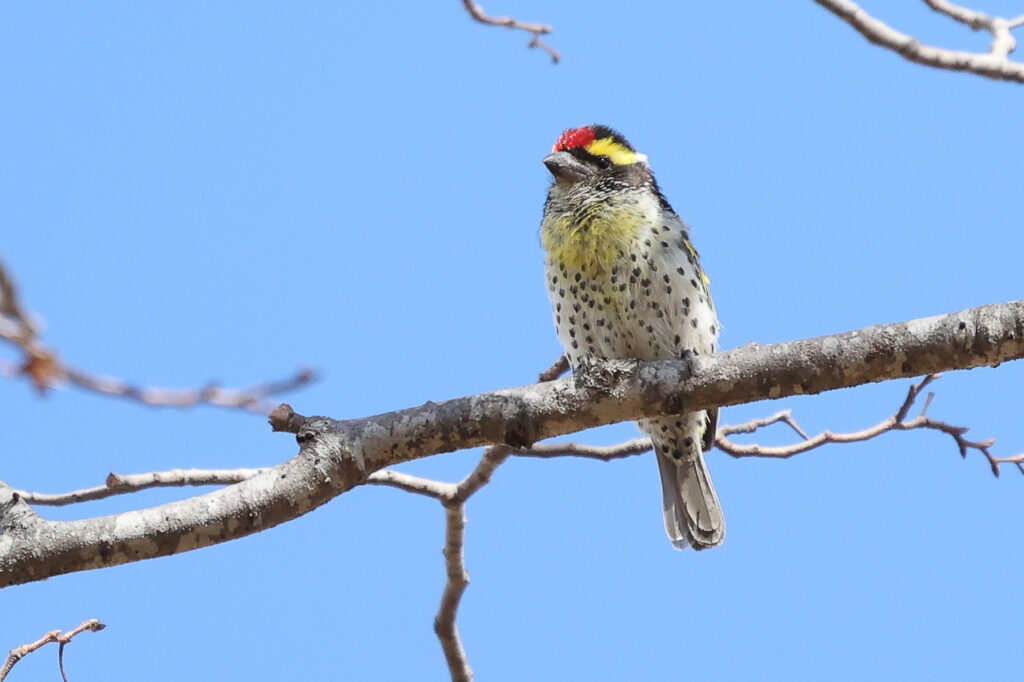
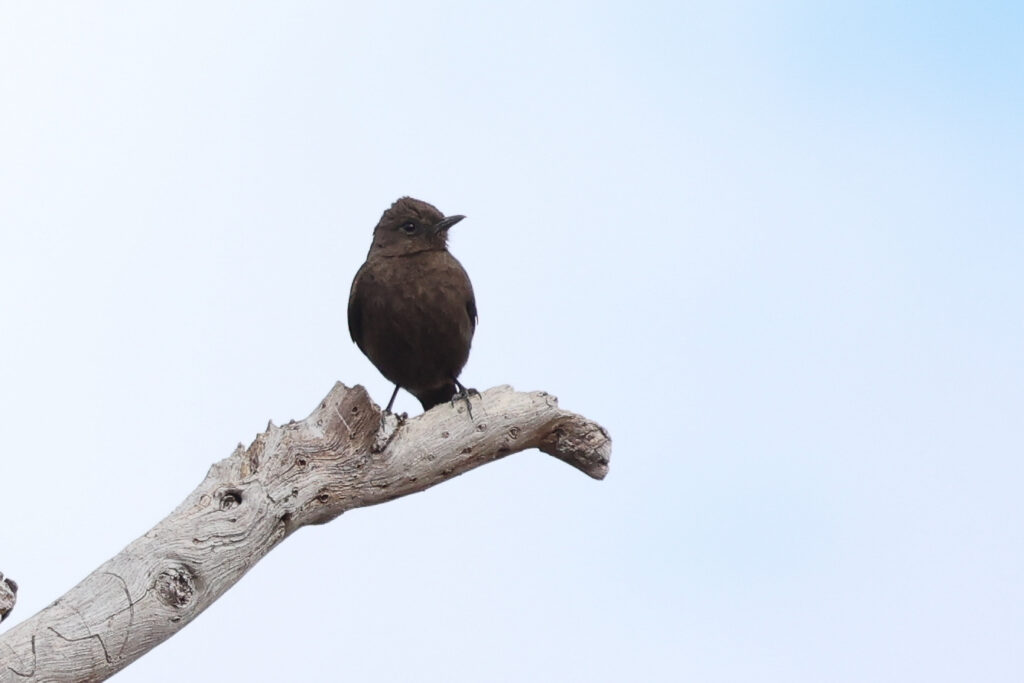
The next day, we undertook a grueling drive along Zambia’s M10 to access a sandy track that, after 30 km, enters the tall Mopani woodlands near the villages of Misiteli. We drove around for hours and decided to call it quits at noon, as we still had a mammoth drive to Mahangu Safari Lodge in the Caprivi Strip ahead of us. As we were on our way out, we heard the distinctive high-pitched call of a Black-cheeked Lovebird and had excellent views of three birds! Success!
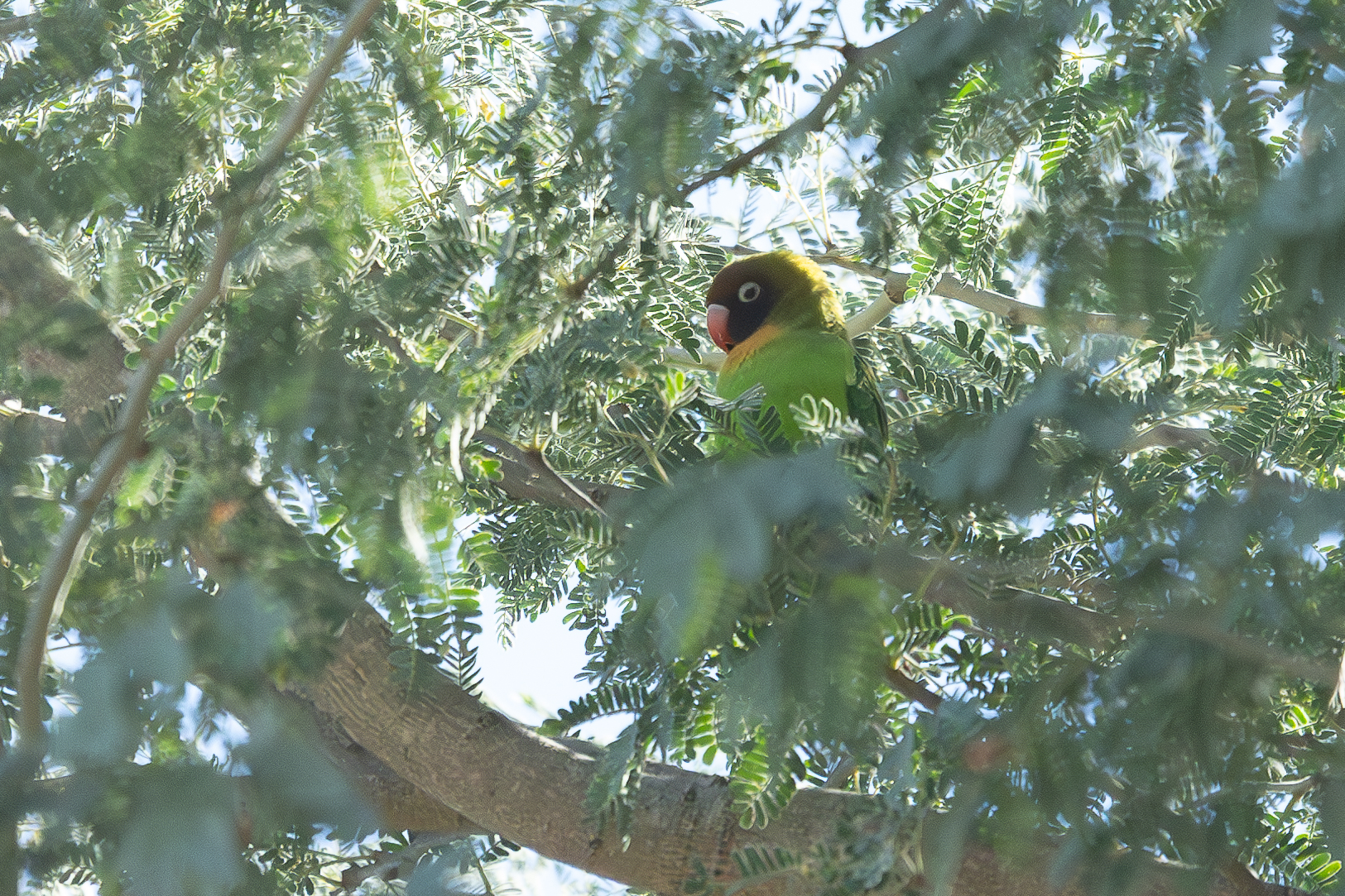
With both of Zambia’s endemics in the bag, we continued rearranging our vertebrae on the M10, crossed the border at Katima Mulilo, entered Namibia, drove across the Caprivi Strip, and fell asleep exhausted at Mahangu Safari Lodge.
Operation Souza
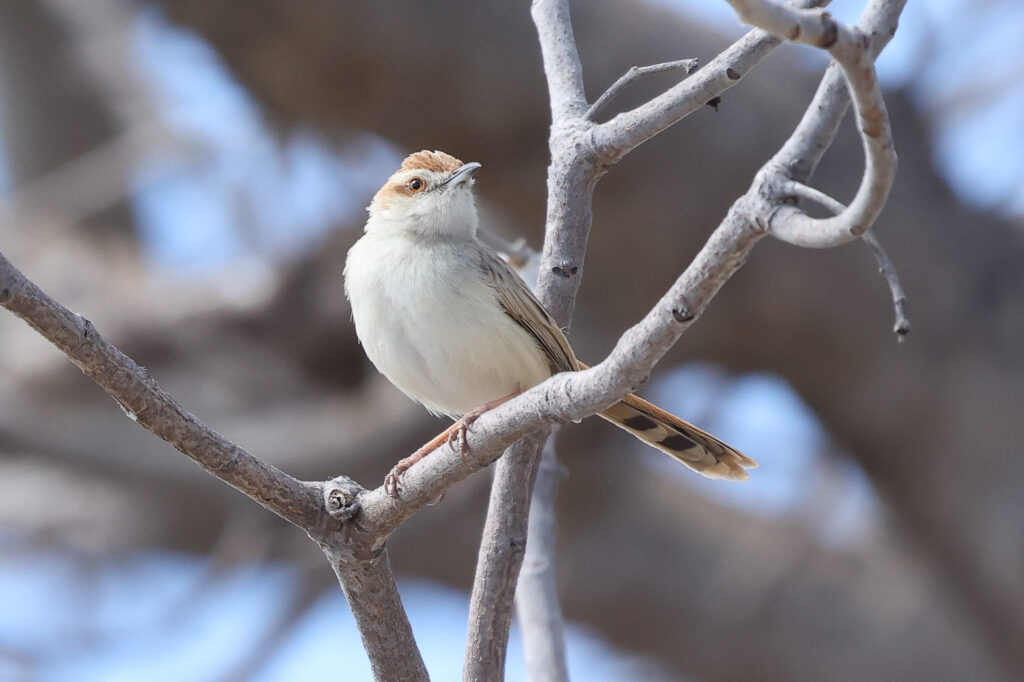
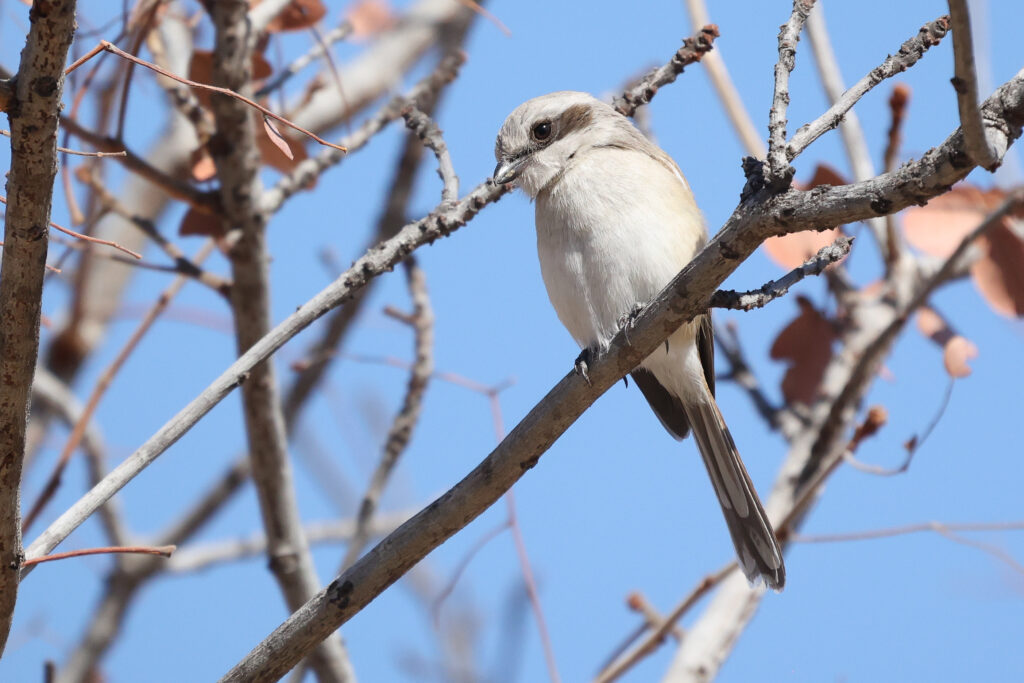
Josh and I were up before dawn, and shortly after sunrise, we were back in the Kayaru woodlands looking for our two remaining targets. Hours passed, but we were determined. At long last, a Rufous-bellied Tit casually announced its presence in a large bird party. With one target out of the way, we decided to walk back to the car to rehydrate. About 200 meters from the car, atop a tall dead tree, sat a Souza’s Shrike. Job done.
The return
After cleaning up all our potential lifer opportunities, bar Western-banded Snake Eagle (which has a wide range throughout Africa and wasn’t a priority on this trip), we made our way back to Cape Town, with an overnight stop in Windhoek and Noordoever, concluding what had been an incredible Namibia birding adventure. In total, we recorded 384 species, of which 42 were global lifers for me. We covered just over 9,000 km through this delightful part of Africa and I’m ready to do 9,000 more!