This blog is part five of my Northwest Argentina birding trip with Garret and Joshua. In this blog, we start making our way back to Córdoba, picking up several range-restricted species and our “bird of the trip”. See our eBird trip report here.
Day 16. 22 January 2024. Yavi to Salta
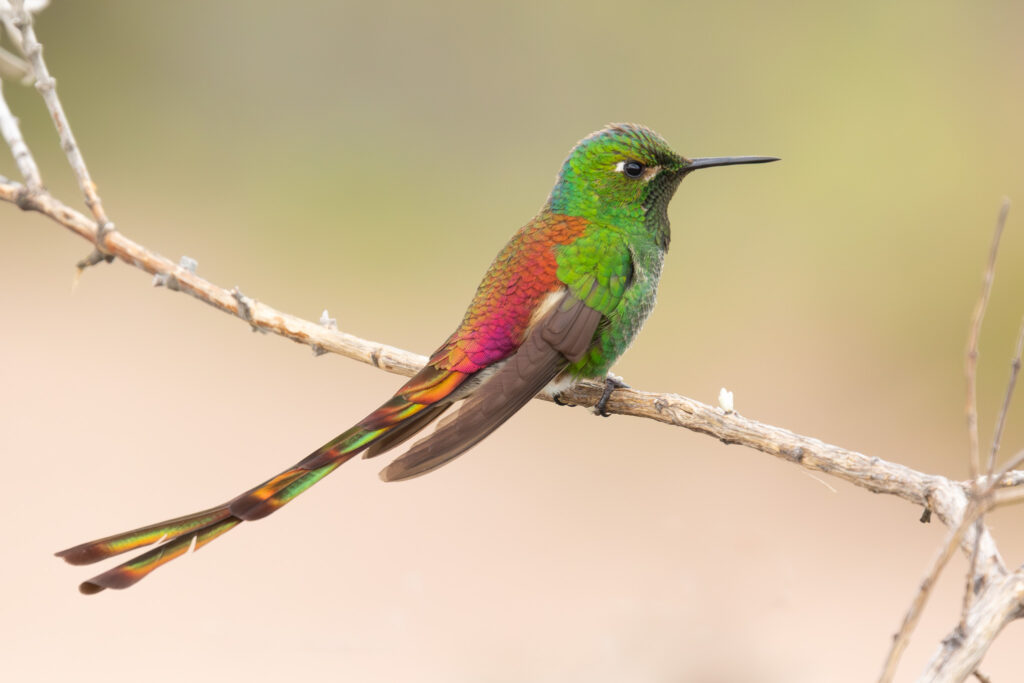
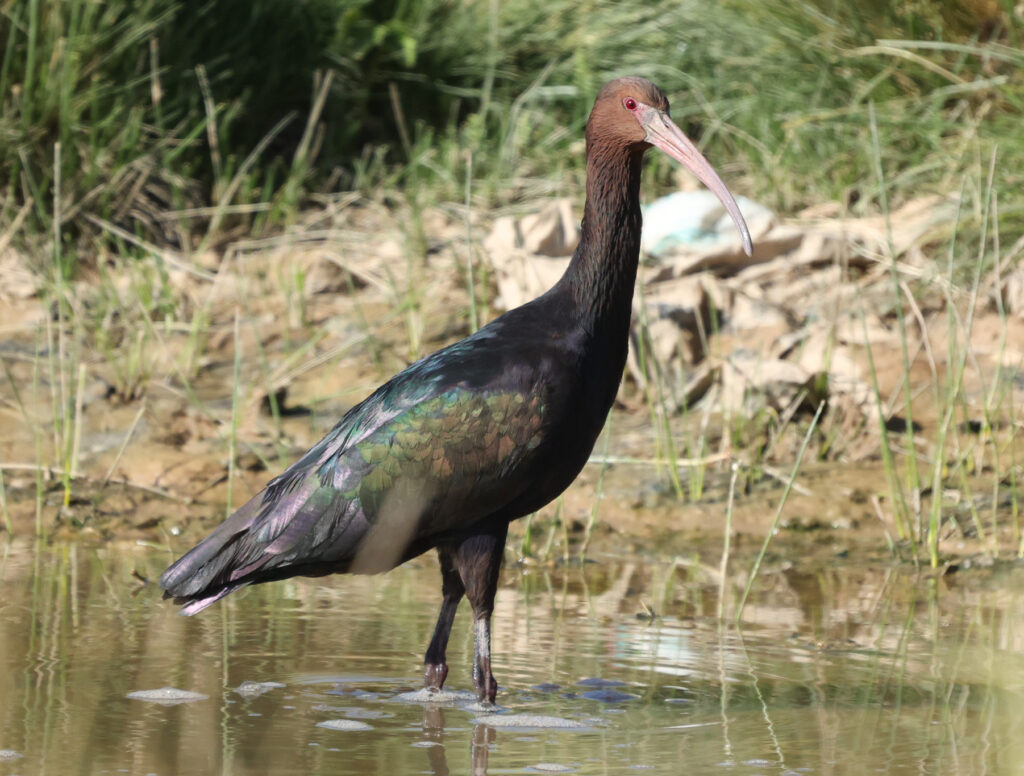
We left Yavi after breakfast and started the six-hour drive to Salta. Over the next three days, we would drive just shy of 1,300 km to Córdoba, picking up as many remaining target species as possible. The road between Yavi and La Quiaca delivered Aplomado Falcon, Andean Lapwing, Brown-backed Mockingbird, Puna Pipit, Diuca Finch, and Mourning Sierra Finch. A brief stop at Humedal Río Miraflores (-22.709302, -65.714096) near Abra Pampa delivered many of the same species that we saw on the way up to Yavi, along with an out-of-range White-faced Ibis in a flock of Puna Ibises. We also stopped again at Laguna de Huancar (-22.767115, -65.714335), where we managed to spot a small flock of Mountain Parakeets, a species we had not seen yet. Near the town of Tilcara, we investigated a spot (-23.583030, -65.385477) where White-sided Hillstar is reported with some regularity; however, it was already baking hot, and we only saw Black-hooded Sierra Finch, White-tipped Plantcutter, Rufous-banded Miner, and Blue-and-white Swallow.
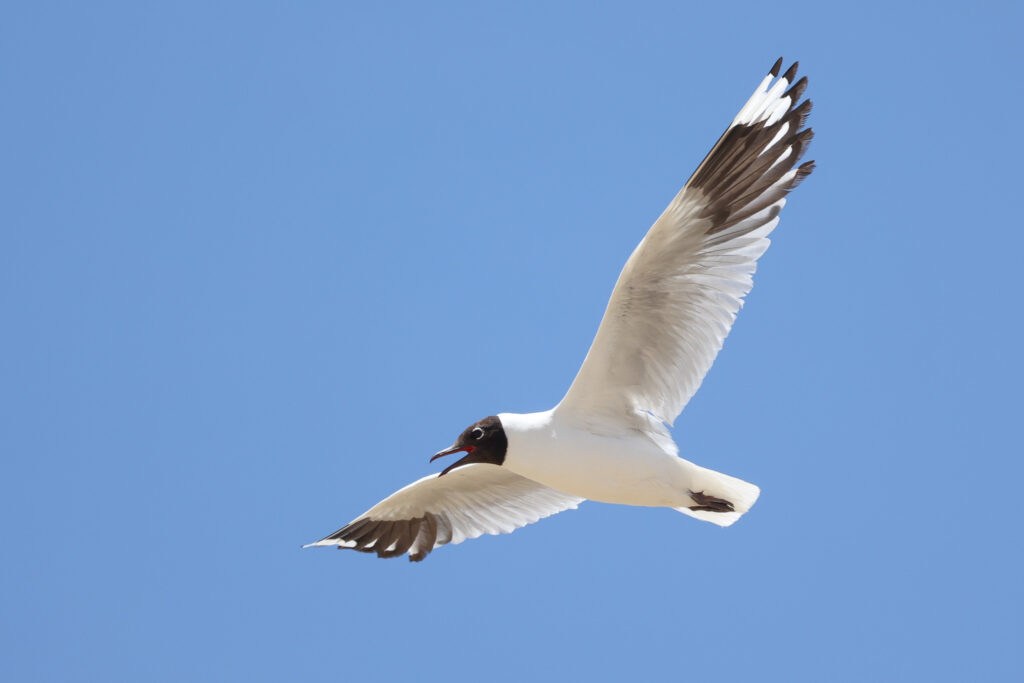
Upon our arrival in Salta, we decided to visit Parque del Bicentenario (-24.732432, -65.414367), which was once again very productive. We had large numbers of waterfowl, including White-faced and Fulvous Whistling Ducks, Ringed, Brazilian, Silver, and Cinnamon Teals, Red Shoveler, White-cheeked Pintail, and Andean Duck. Our main reason for revisiting this park was to try for the long-staying Paint-billed Crake. After a bit of work, we had flushed views of this local rarity and globally challenging bird.
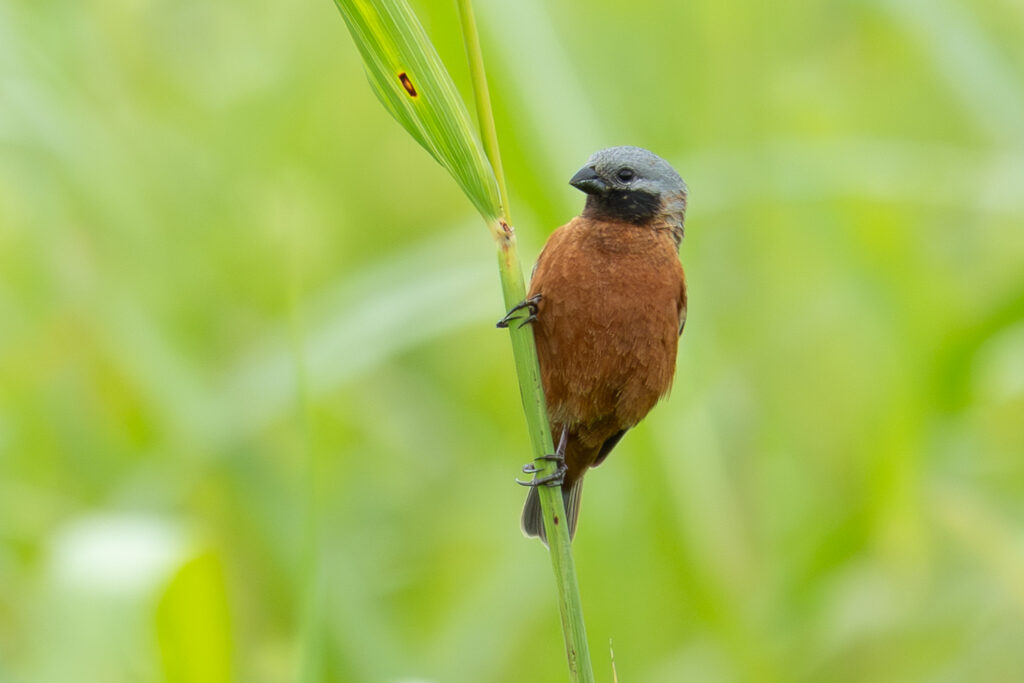
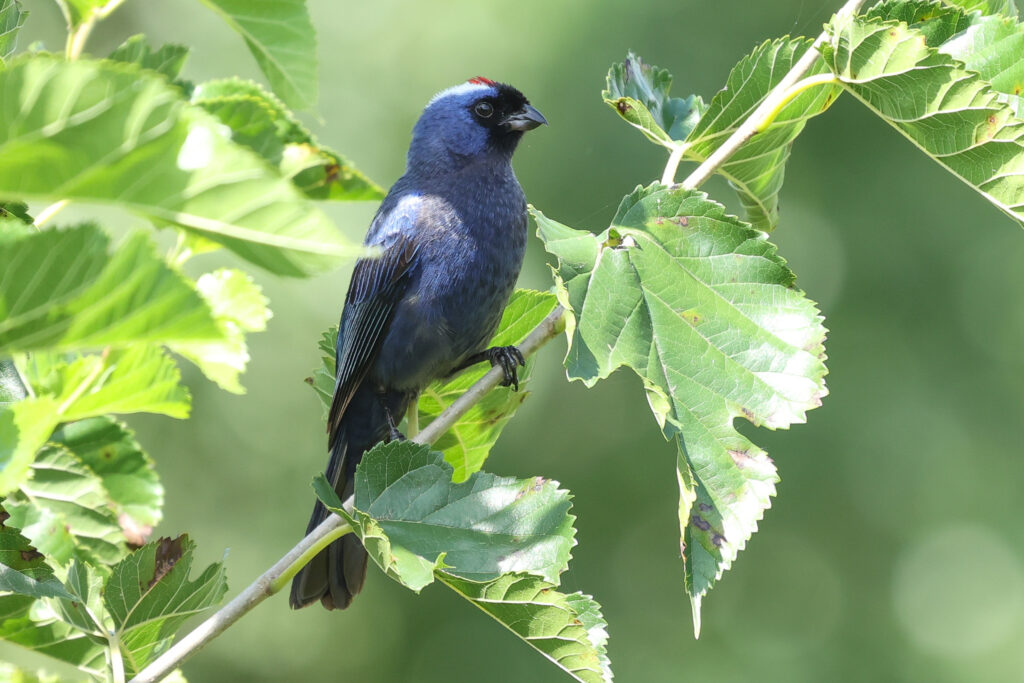
We spent two-and-a-half hours in the park and recorded 60 species, with some highlights including Maguari Stork, White Monjita, Tawny-headed Swallow, Yungas Sparrow, Black-and-chestnut Warbling Finch, Blue-black Grassquit, Lined (lifer), Double-collared, Band-tailed and Dark-throated Seedeaters.
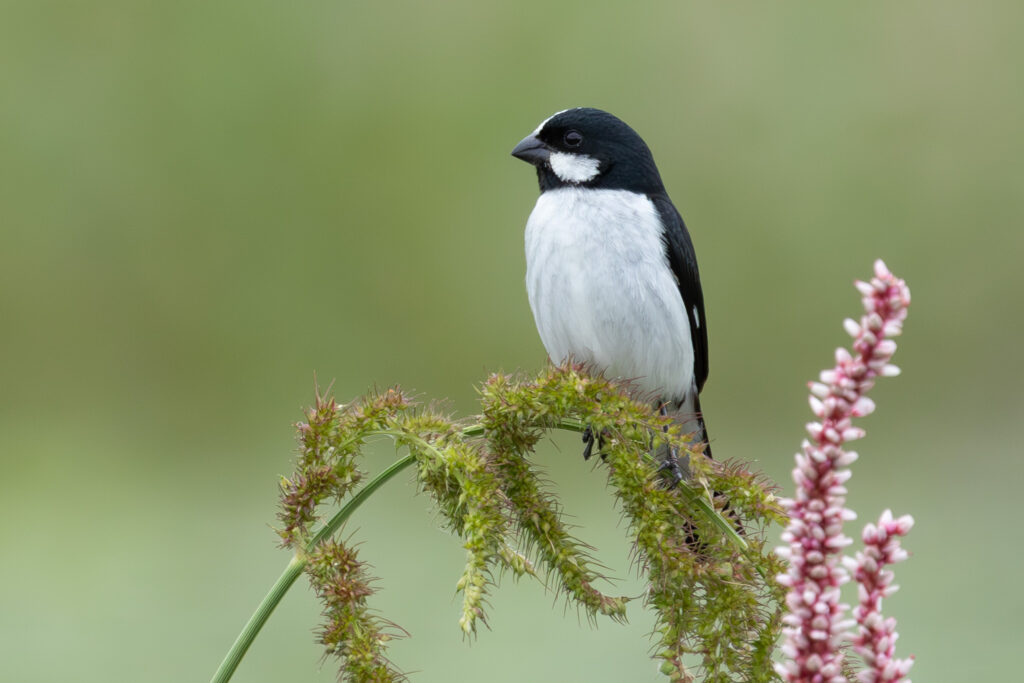
We spent the night in Salta, satisfied with three lifers on this travel day.
Day 17. 23 January 2024. Salta to Santiago del Estero
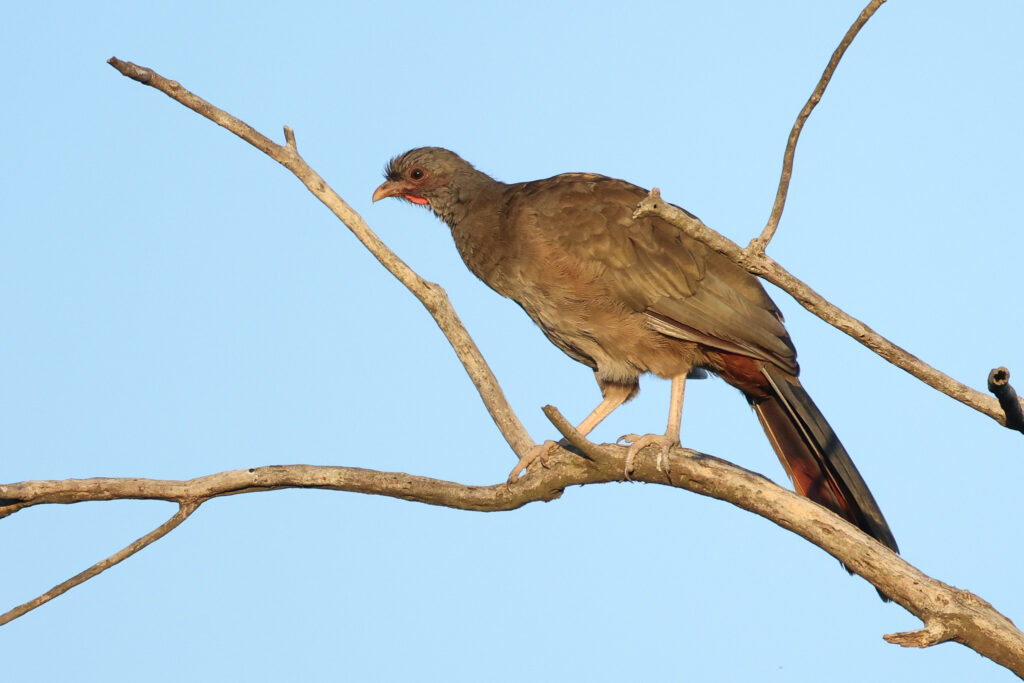
We left Salta early this morning and started our birding for the day along a dirt road (-24.734842, -65.002359) near Cobos. We spent an hour and a half birding here and walked away with several excellent birds like Black-legged Seriema, Tataupa and Brushland Tinamous (both heard-only), Muscovy Duck, Chaco Chachalaca, Large Elaenia, Greater Wagtail-Tyrant, Purple-throated Euphonia, Black-capped Warbling Finch, and Red Pileated Finch, among others. Our main reason for birding here was to try to find Stripe-backed Antbird, but ultimately, we dipped this species.
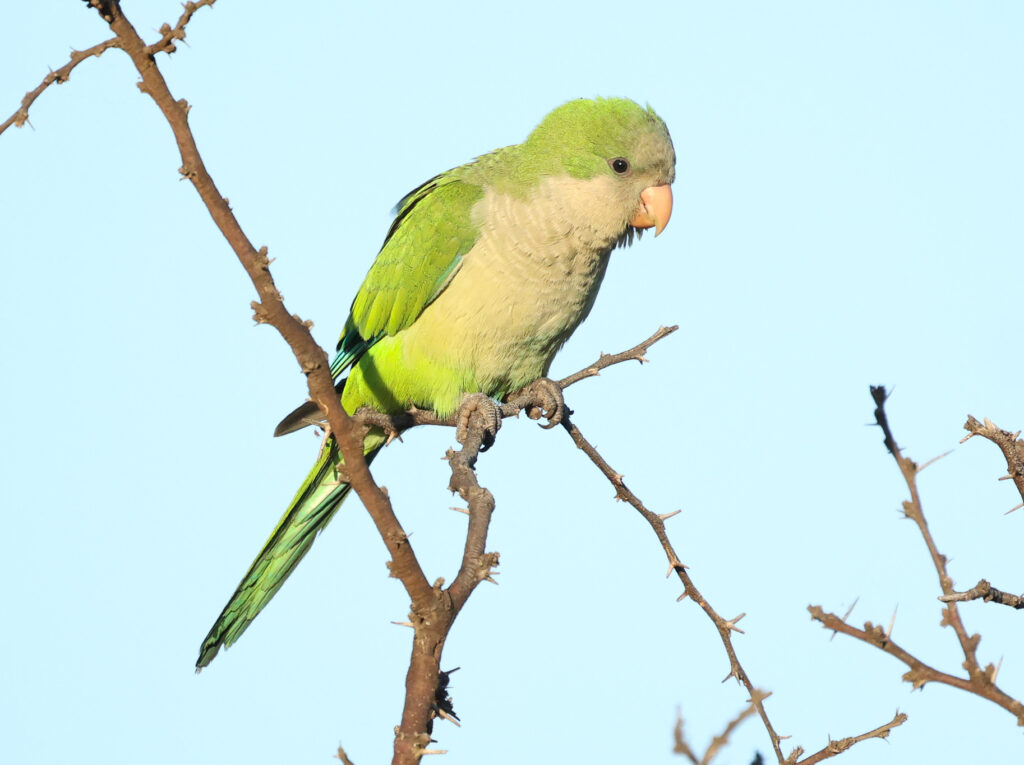
The drive down to Santiago del Estero was largely uneventful, and we saw many of the usual roadside species like Crested and Chimango Caracaras, American Kestrel, Monk Parakeet, Eared Dove, Black and Turkey Vultures, and Savanna Hawk. A surprise was a large kettle of Swainson’s Hawks, a new trip bird.
We arrived in Santiago del Estero in the afternoon and immediately took a drive to Dique los Quiroga (we drove on the small, unnamed dirt tracks to reach this part of the wetland: -27.643836, -64.383688), a large wetland along the Dulce River. In terms of species numbers, this was one of the most productive sites we visited, with 77 species recorded here during our afternoon visit. Our main target, the breeding-endemic and localised Dinelli’s Doradito, showed after a few minutes but didn’t cooperate for photos.
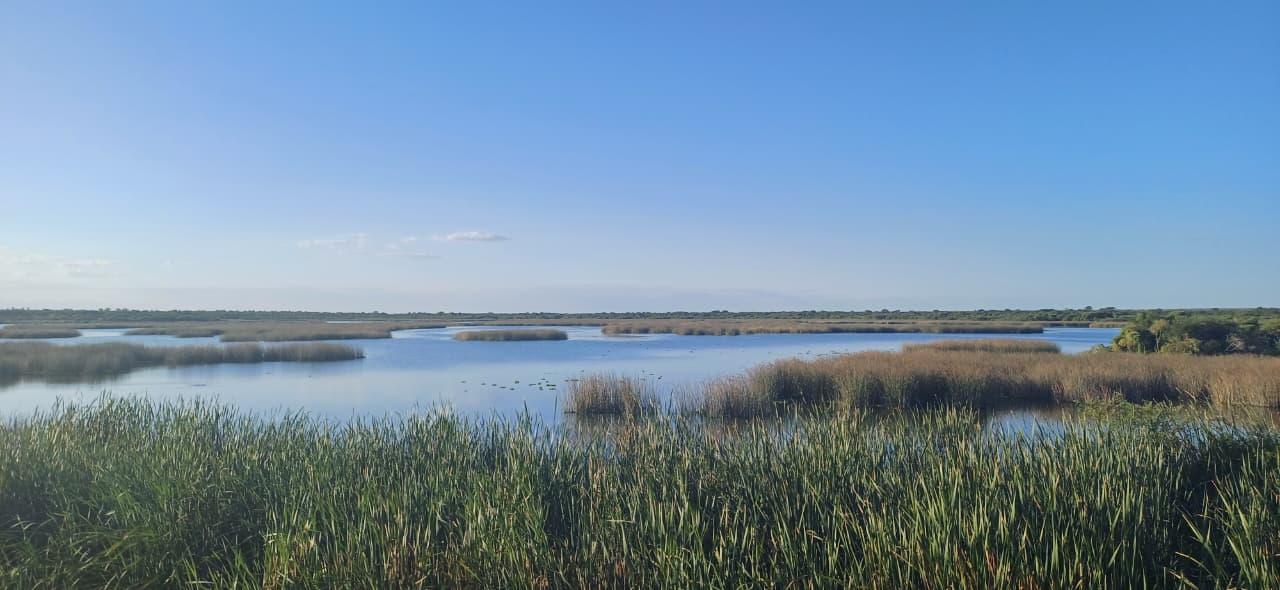
Other mention-worthy birds here included Black-necked Swan, Lake Duck, Striped Cuckoo, Blue-tufted Starthroat, the scarce Stripe-backed Bittern, Snail Kite, Crested Gallito, Many-colored Rush Tyrant, Plain Inezia, Black-backed Water Tyrant, Variable Oriole, Yellow-winged and Chestnut-capped Blackbirds and good numbers of waders including Solitary and Pectoral Sandpipers, Greater and Lesser Yellowlegs, and White-backed Stilt.
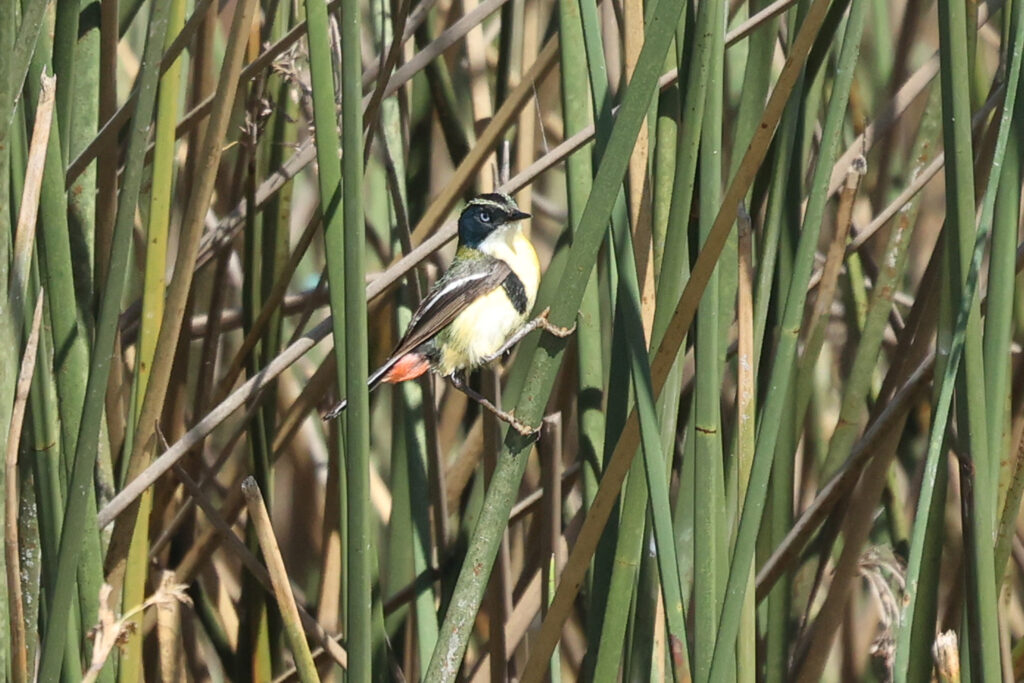
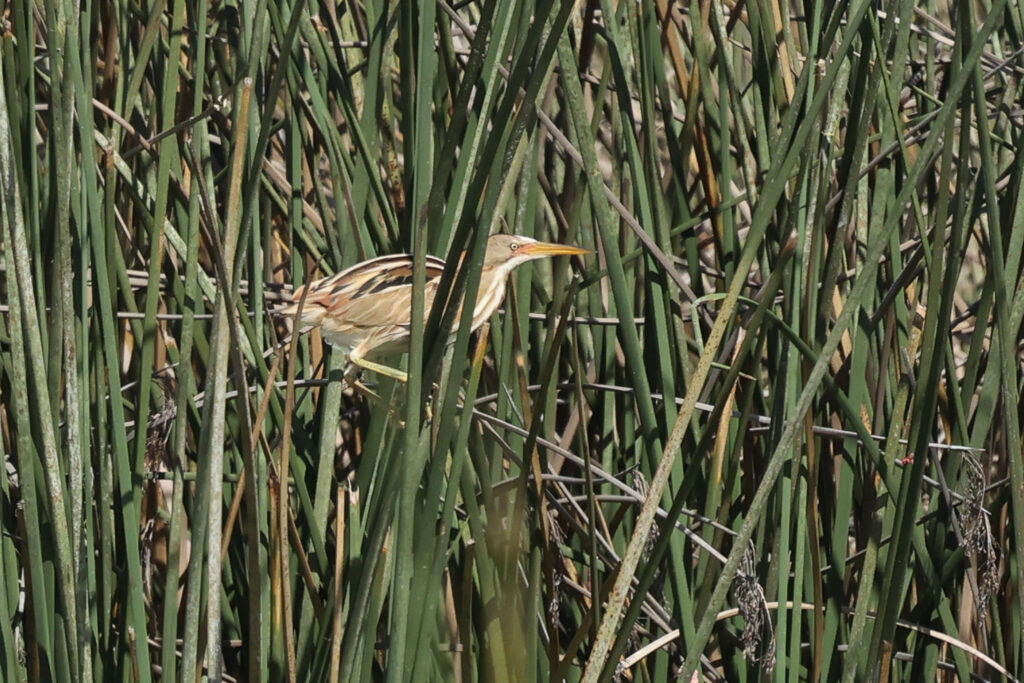
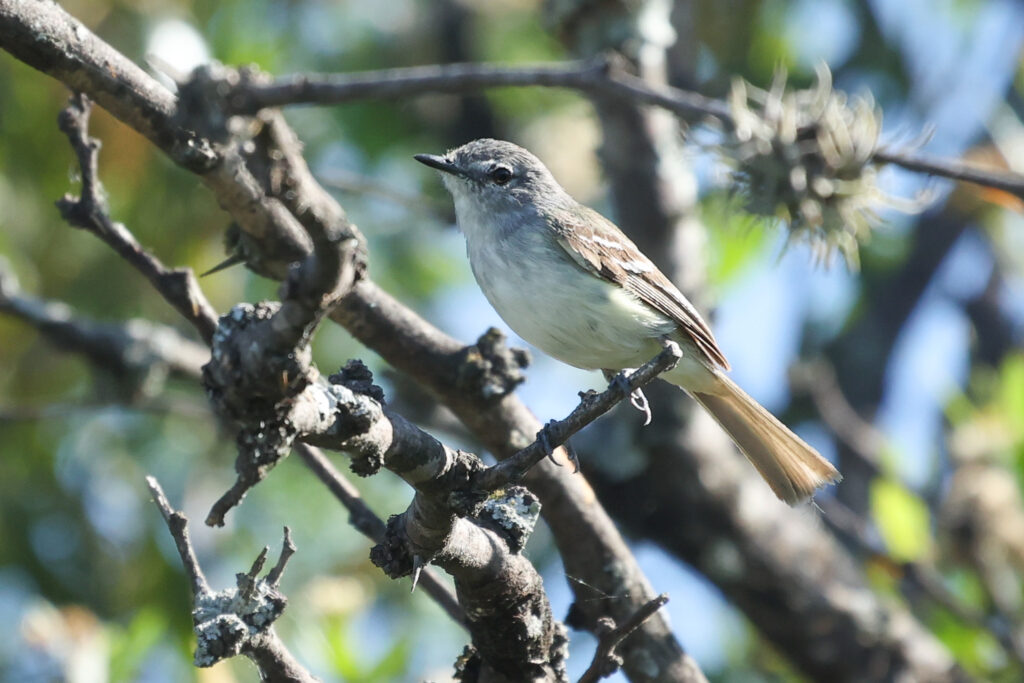
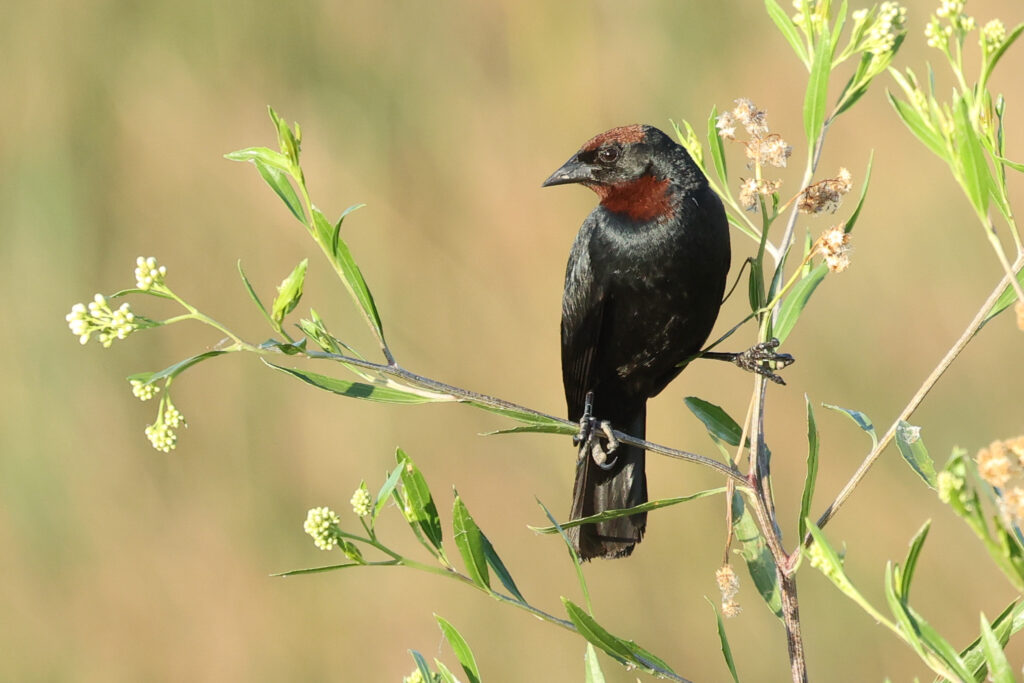
We did some more exploratory birding before sunset, which yielded many of the same species, before heading back to Santiago del Estero.
Day 18. 24 January 2024. Santiago del Estero to Córdoba
Our first stop for the day was a road along the Dulce River (-27.847181, -64.183985) where we saw Comb Duck, Chaco Chachalaca, Chaco Earthcreeper, Lark-like Brushrunner, Stripe-crowned and Yellow-chinned Spinetails, Southern Beardless Tyrannulet, Masked Gnatcatcher, and Bluish-grey Saltator, to name a few.
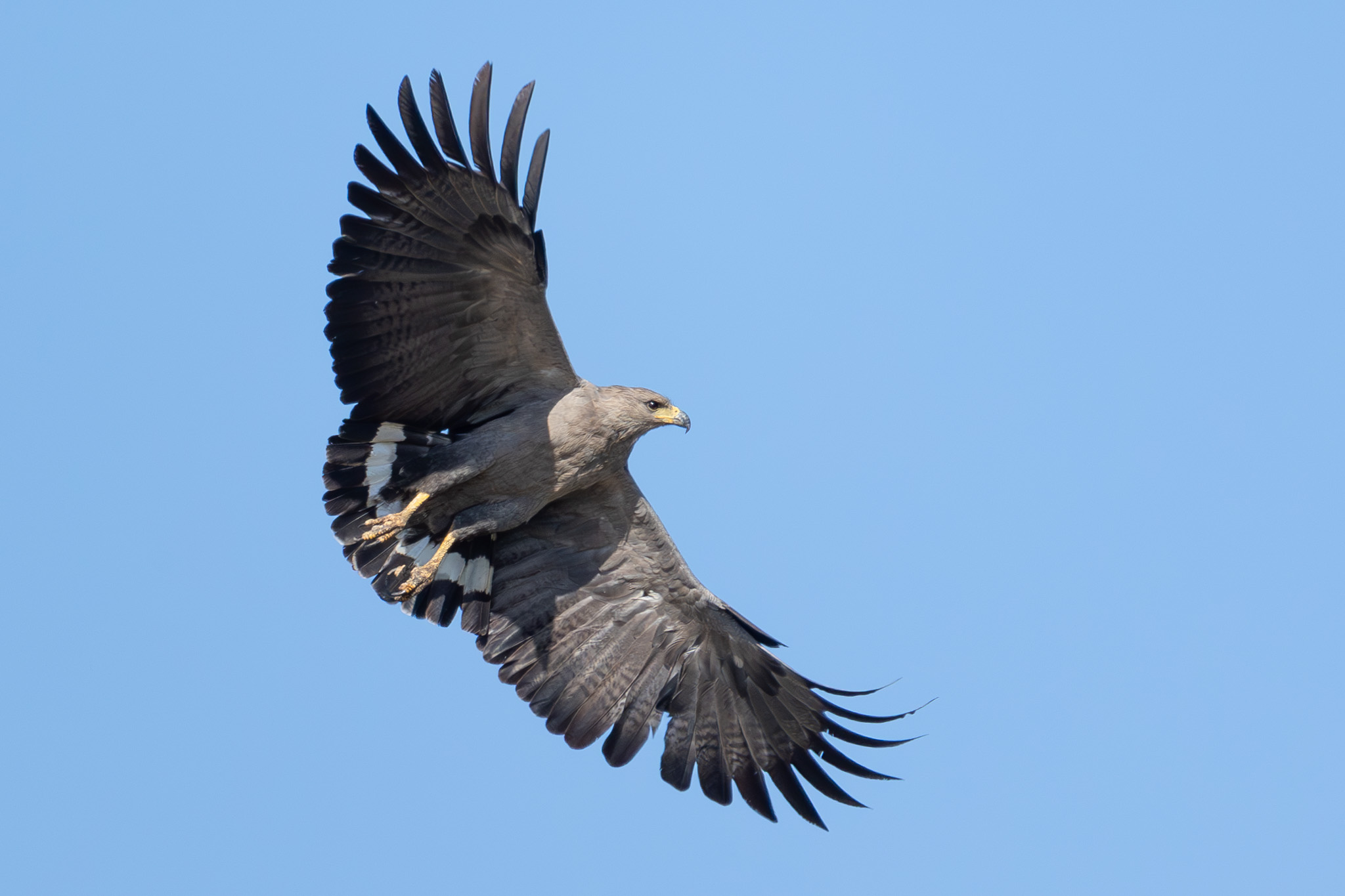
We began the long drive south to Córdoba. While passing through a section of Chaco woodland (-29.216455, -63.883642) south of Loreto, we spotted a large raptor perched atop a powerline pole. To our amazement, we had stumbled upon a Chaco Eagle, one of the least observed raptors in the Neotropics and a bird that is near impossible to target unless you have access to a nest. We had joked about seeing this species throughout the trip, and here we were watching one on the roadside. We unanimously decided that this was our “bird of the trip”.
We stopped briefly in Cerro Colorado to try for Spot-winged Falconet for Garret and Josh (I had seen this species a month earlier on my way to Patagonia). Unfortunately, we had no luck with the falconet. However, we did see several other species we had seen before, like Blue-tufted Starthroat, Brown Cacholote, White-tipped Plantcutter, Fulvous Scrub Tyrant, Greater Wagtail-Tyrant, Sooty-fronted Spinetail, White-fronted and Green-barred Woodpeckers, Red-crested Cardinal, and more.
In the evening, we arrived in Córdoba and met up with our friend Martín Toledo (who had shown us around in Part 2 of our Northern Argentina birding trip) for a few celebratory drinks after an incredible journey.
Day 19. 25 January 2024. Córdoba to Buenos Aires
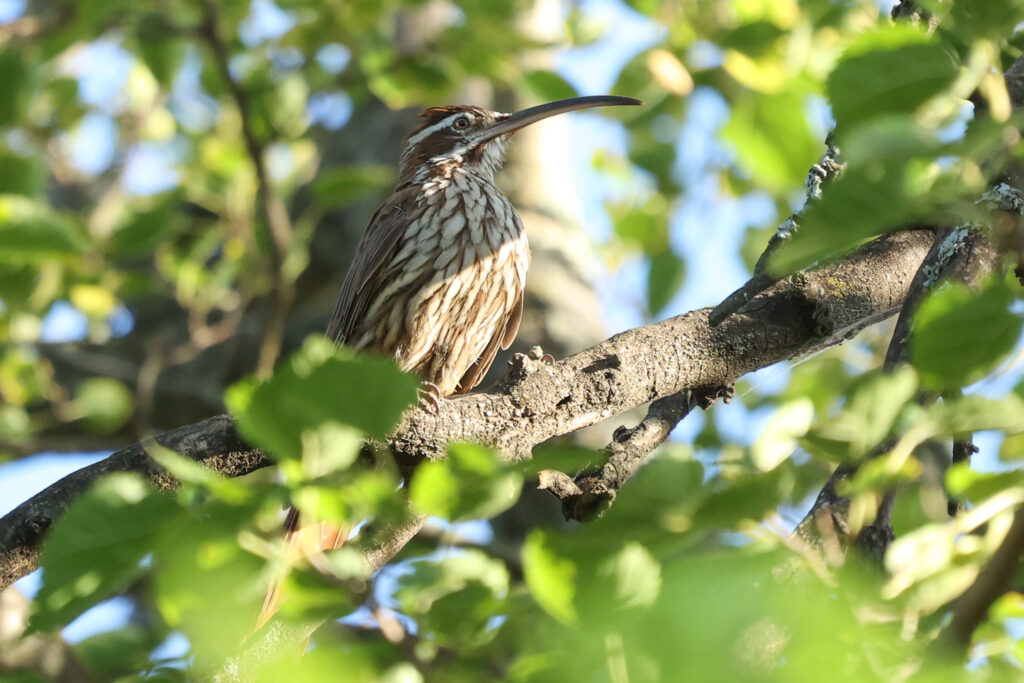
Today, we would fly from Córdoba to Buenos Aires, where our trip would conclude. As our flight out of Córdoba only departed at noon, we decided to spend the morning birding at the Reserva General San Martín with Martín. We had excellent views of Chaco Chachalaca, Turquoise-fronted Amazon, our first Great Antshrike for the trip, Scimitar-billed Woodcreeper, and several other species typical of the Chaco and Espinal woodlands of Argentina.
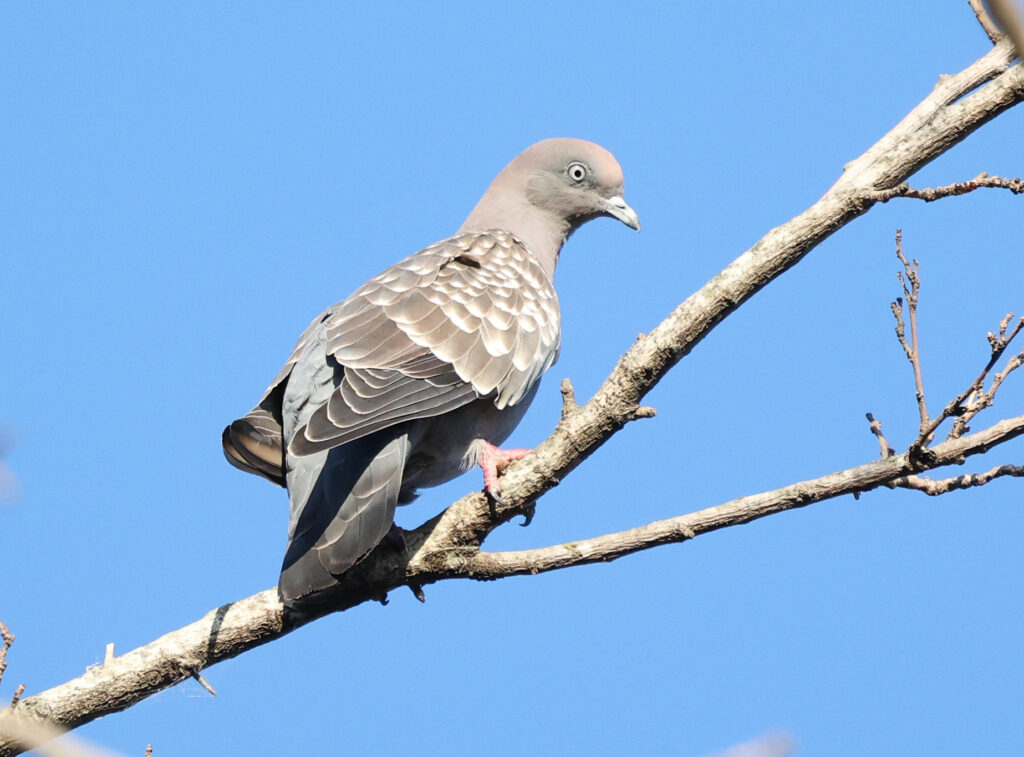
We concluded our Northwest Argentina birding trip in Buenos Aires after an unforgettable 19 days. In total, we recorded 446 species, of which 240 were global lifers for me. Argentina is a spectacularly diverse country, with excellent food, friendly people and good infrastructure. Self-drive birding in Argentina is easy, and I would highly recommend Argentina as an introductory destination for birders wishing to experience the Neotropics.
Day 20. 26 January 2024. Buenos Aires departure
After nearly two months in Argentina, I enjoyed a final birding session in Reserva Ecológica Costanera Sur with Garret and Josh. We saw 50 species, and Garret and Josh got their lifer Green-winged Saltator. At noon, we made our way to the airport and flew to São Paulo, where we would spend the next morning birding the Atlantic Forests!