Introduction
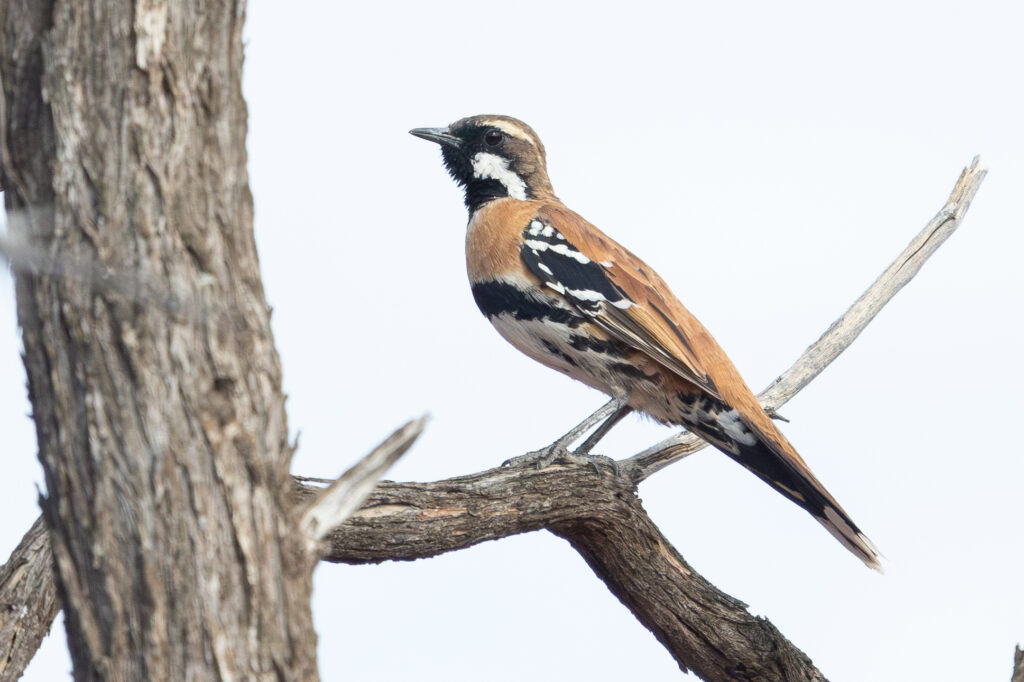
Three weeks, a Suzuki Swift, 8,000 km, 18 endemic targets. Bring it on!
I had always wanted to do a hard-core birding trip in Australia. Despite visiting the country a few times before this trip, these had been mostly family holidays with limited birding opportunities. The plan was quite different this time; we (my girlfriend, Amy, and I) would start in Perth, the capital of Western Australia (from here onwards, referred to as WA), spend a week with family in Dunsborough in Australia’s southwest, and then embark on an epic 18-day Western Australia birding trip. This trip would target all the classic southwestern Australian endemic and near-endemics and several localised species and subspecies in the more remote parts of the state.
Route
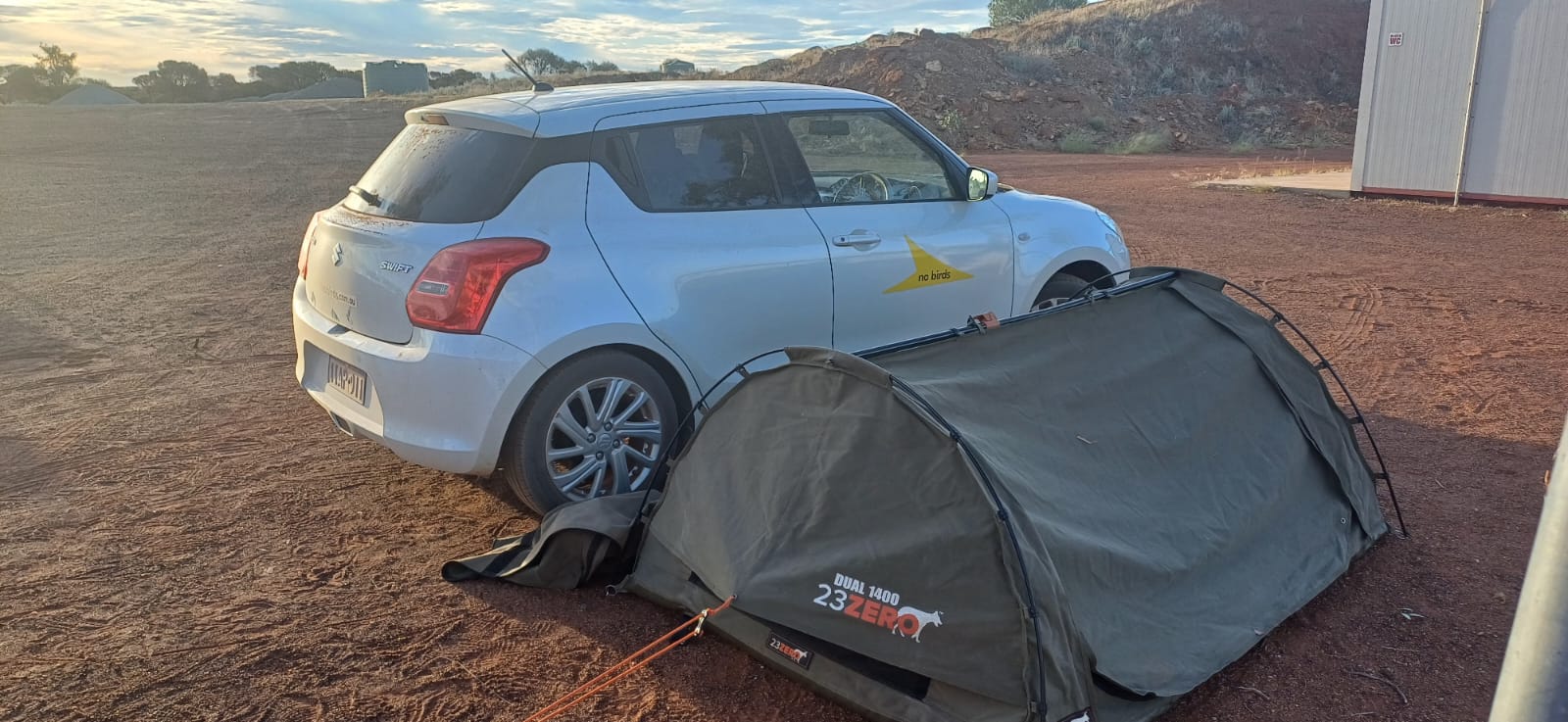
See our route map for an idea of where we stayed. We covered just over 8,000 km on this trip, but this number would be far lower if you only focused on the southwestern Australia endemic birds. Alterations to our route to consider:
- You don’t need three nights at Monkey Mia from a birding perspective. The Western Grasswrens are very easy to get, and there are spots for them closer to the North West Coastal Highway. Perhaps ditch two nights here and go up to Exmouth.
- If you can get into Cheynes Beach Caravan Park, there is no reason to stay in Albany. In December and January, they had a minimum stay of four nights, which was not feasible for us.
- We had a week in Dunsborough during our pre-trip. However, you could clean up all the important birds in the Augusta/Margaret River/Busselton area with a two-night stay in Margaret River or one of the other lovely towns in that area.
- You could probably do with an extra night in Cue; there are a few trickier Outback species that may require more than a single night there.
- Paynes Find is probably worth staying at for a realistic chance at Copperback Quail-thrush. Maybe it was the time of the year when we were there, but the heat does you no favours when looking for this bird.
- If you are prepared to drive 900 km in a day and have more than one driver, it is possible to drive from Carnarvon to Perth, in which case you can skip Geraldton, which is of limited birding interest.
Season and Weather
I don’t think December/January is the best time of the year to do this route. The northern leg of our trip was extremely hot and broke 40ºC every day (except at Monkey Mia). Furthermore, we had to contend with strong winds at many sites in the north. The south was more pleasant, but overall, we had to work hard for many species, and most were not particularly responsive.
Most of our birding had to be during the first three hours after sunrise, after which there was a noticeable drop-off in activity until the last two hours before sunset (this birding window was even narrower in the north). Rain wasn’t an issue on this trip, and we only had rain on two days. We had no choice but to make this trip in mid-summer as we were constrained by our university holidays, but if you are more flexible with time, perhaps consider spring (September – October) for a trip here.
Driving
Driving in Australia is straightforward and relaxing overall. We spent hours on long, often very quiet roads, usually passing through scenic environments. Two points are worth raising: (1) look out for kangaroos; they are not the most intelligent animals and readily make their way onto the road at the last moment, and (2) beware of the road trains, large trucks which often carry oversized freights and can be more than 50 m long. Especially in the north, road trains are a regular feature of the roads. You often need to pull off the road completely to allow these massive vehicles to pass. They travel at considerable speed most of the time.
Insects and other animals
Flies! Australia has notoriously incessant flies. At the inland sites, flies swarm your face and find their way into any opening available. You get semi-used to them eventually, but bringing a fly net for your face may be worth it. We didn’t have any issues with other insects.
Costing
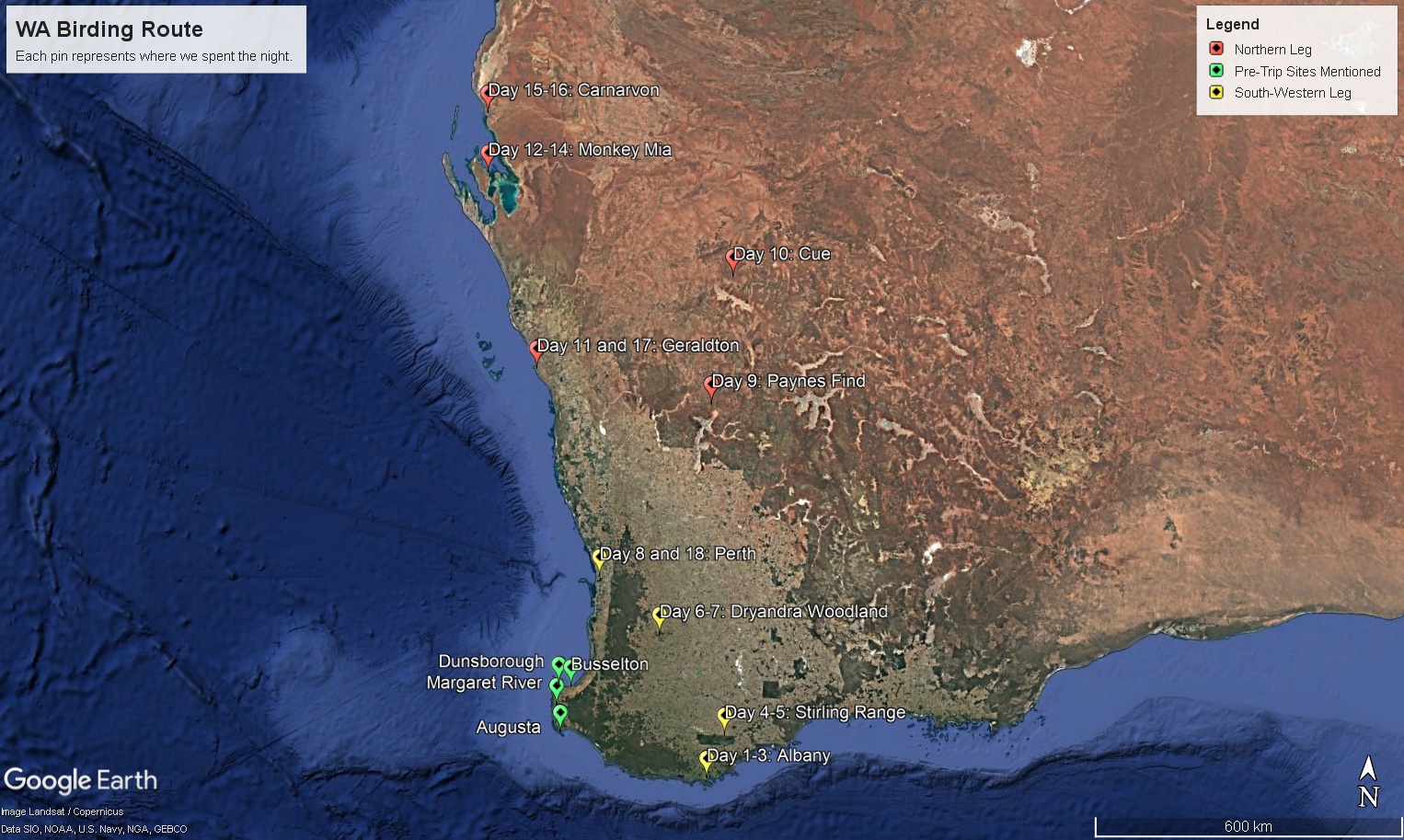
The following is a rough breakdown of the most significant costs of our trip. Australia is quite expensive on a South African student budget, so we tried to cut costs where we could. We camped almost everywhere in a swag borrowed from my family in Perth. If you like camping, this is the way to go. It is more cost-effective and gives you flexibility on the trip as you never struggle to find camping spots in Australia. In retrospect, we should have camped everywhere and done away with the cabin stays as we enjoyed the camping so much.
The accommodation cost us AU$ 513 per person for the 18-day trip. For food, we did grocery shopping and, admittedly, bought pizzas and other oily foods from roadhouses. We spent an average of AU$ 40 per day on food and drinks (it is quite possible to reduce this if you don’t drink as much coffee as we do or ditch the odd celebratory beer). Our rental car was fuel-efficient, and our total fuel cost was approximately AU$ 650. We hired our car from No Birds (how could I not?), and for 25 days, we paid AU$ 1795 for our Suzuki Swift. No Birds was extremely helpful, and I would use them again in Australia.
Birding Summary
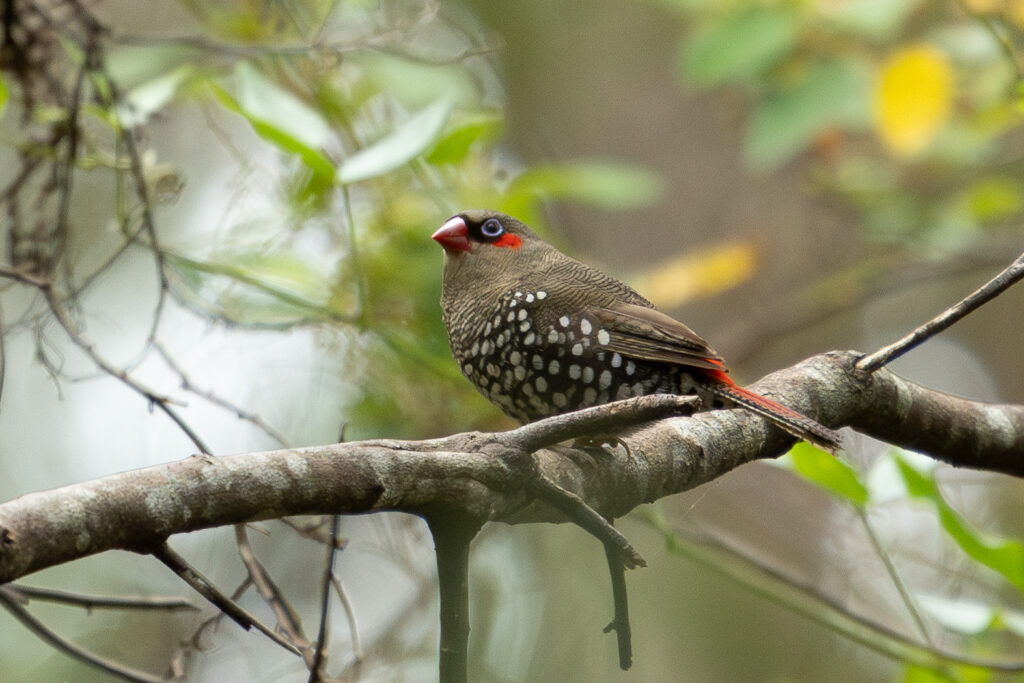
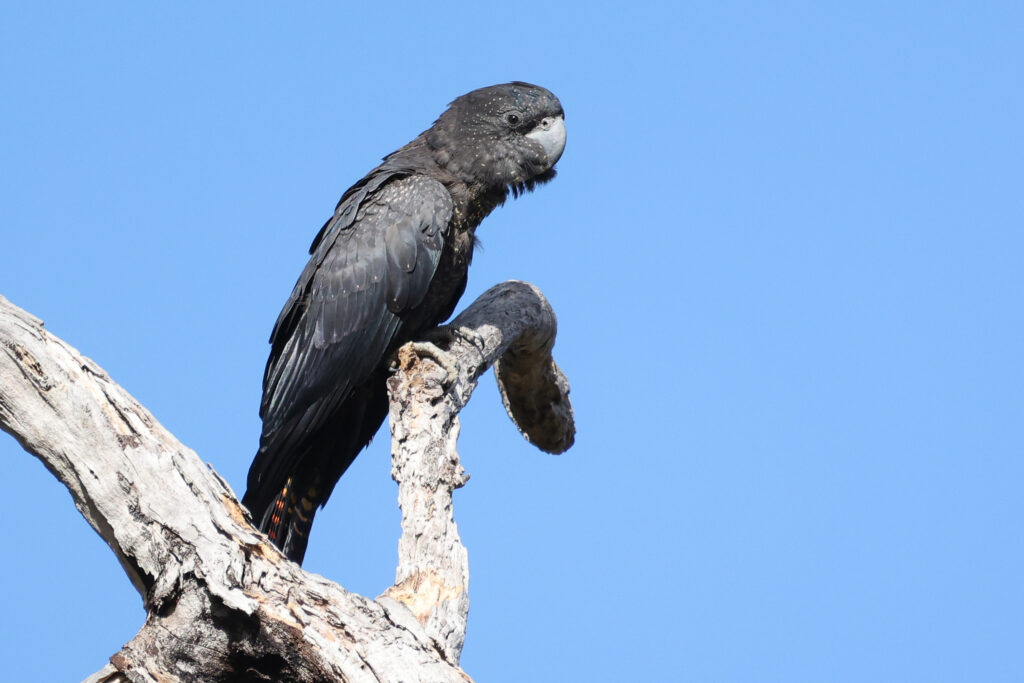
We recorded a total of 225 species (seen), with three species heard-only: Horsfield’s Bronze Cuckoo, Little Grassbird and Eastern Barn Owl. Please see our eBird trip report for a complete list of species, sites visited, and photographs (https://ebird.org/tripreport/309448). The main targets were the WA endemics and near-endemics. We saw all the Western Australia endemic birds on our route: Carnaby’s and Baudins Black Cockatoos, Western Corella, Red-capped Parrot, Western Rosella, Red-winged Fairywren, Western Bristlebird, Noisy Scrubbird, Western Fieldwren, Western Thornbill, Western Wattlebird, Dusky Gerygone, Gilbert’s Honeyeater, Western Spinebill, Black-throated Whipbird, White-breasted Robin, Western Shriketit and Red-eared Firetail.
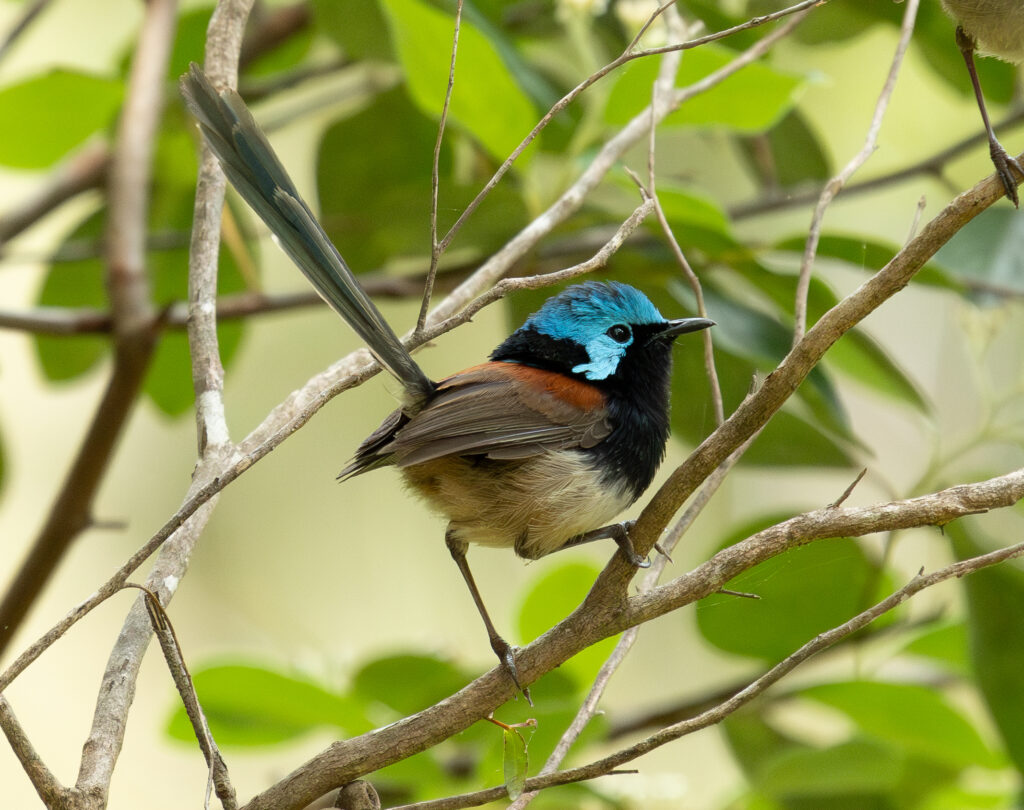
WA near-endemics seen on this trip included Rufous Treecreeper, Western and Copperback Quail-thrushes, Western Grasswren, Blue-breasted Fairywren and Western Yellow Robin. Mammals were not a priority on this trip, and we didn’t spend much time looking for any specific targets. Most mammals mentioned in this trip-report were bycatch while birding. WA endemics are highlighted in red, near-endemics in blue, and mammals in green.
PRE-TRIP BIRDING (PERTH AND DUNSBOROUGH)
PRE-TRIP BIRDING (PERTH AND DUNSBOROUGH)
25 – 27 December 2024
After months of planning and staring at eBird maps, we landed in Perth. Perth is a delightful city with abundant access to green space and parks. We would have two days here to sort out a few logistics and meet with family before heading south to Dunsborough. On the first afternoon, a walk through Woodlake Park (-31.788524, 115.974687) in the suburb of Ellenbrook delivered some species I had seen on previous visits to the country, including Maned Duck, Pacific Black Duck, Galah, Rainbow Lorikeet (introduced here), Willie Wagtail, Australian Magpie, and Australian Raven, to name a few. I even managed two lifers, Dusky Moorhen and Brown Goshawk; we were off to a strong start!
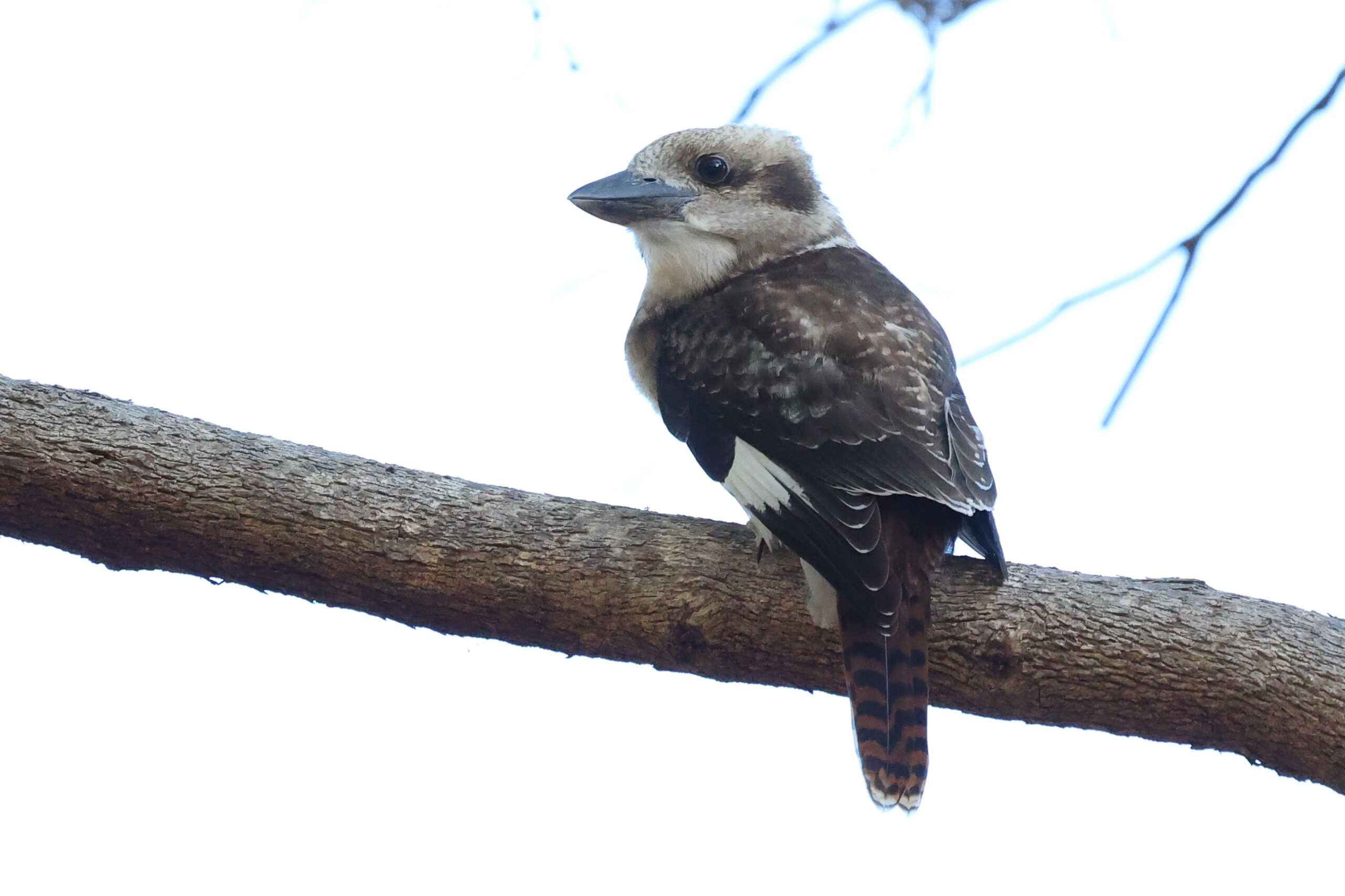
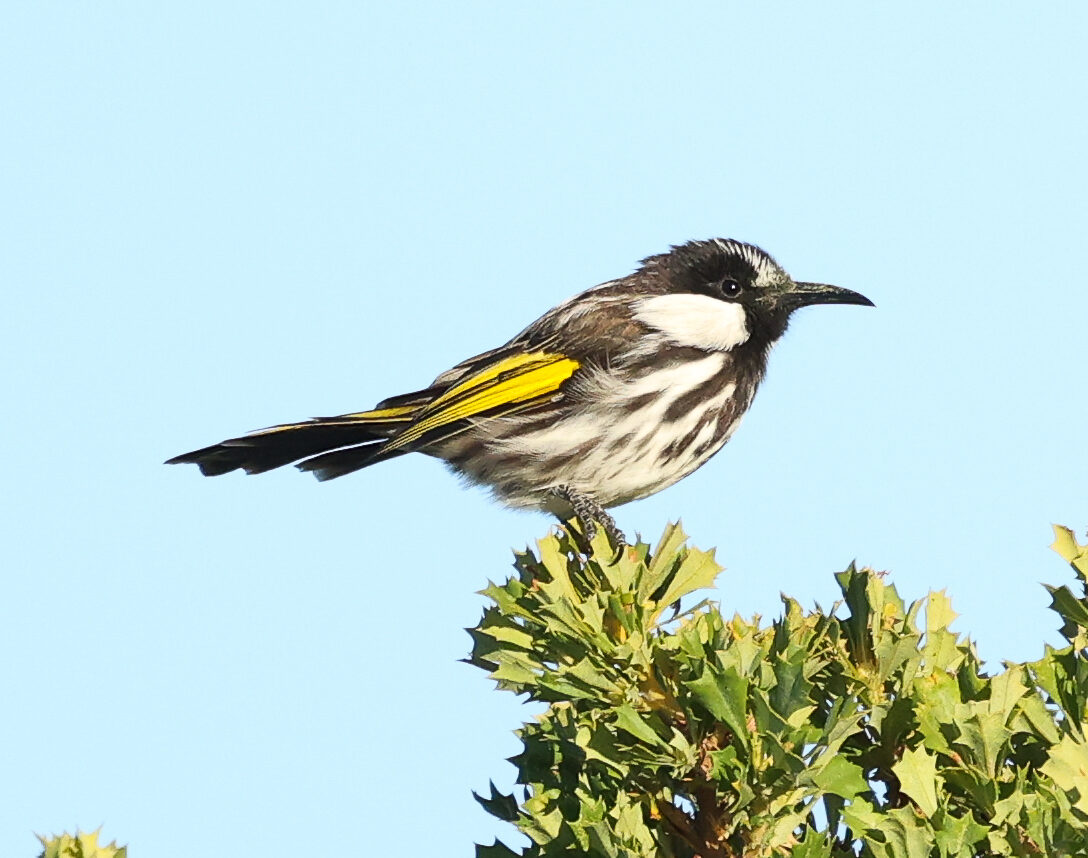
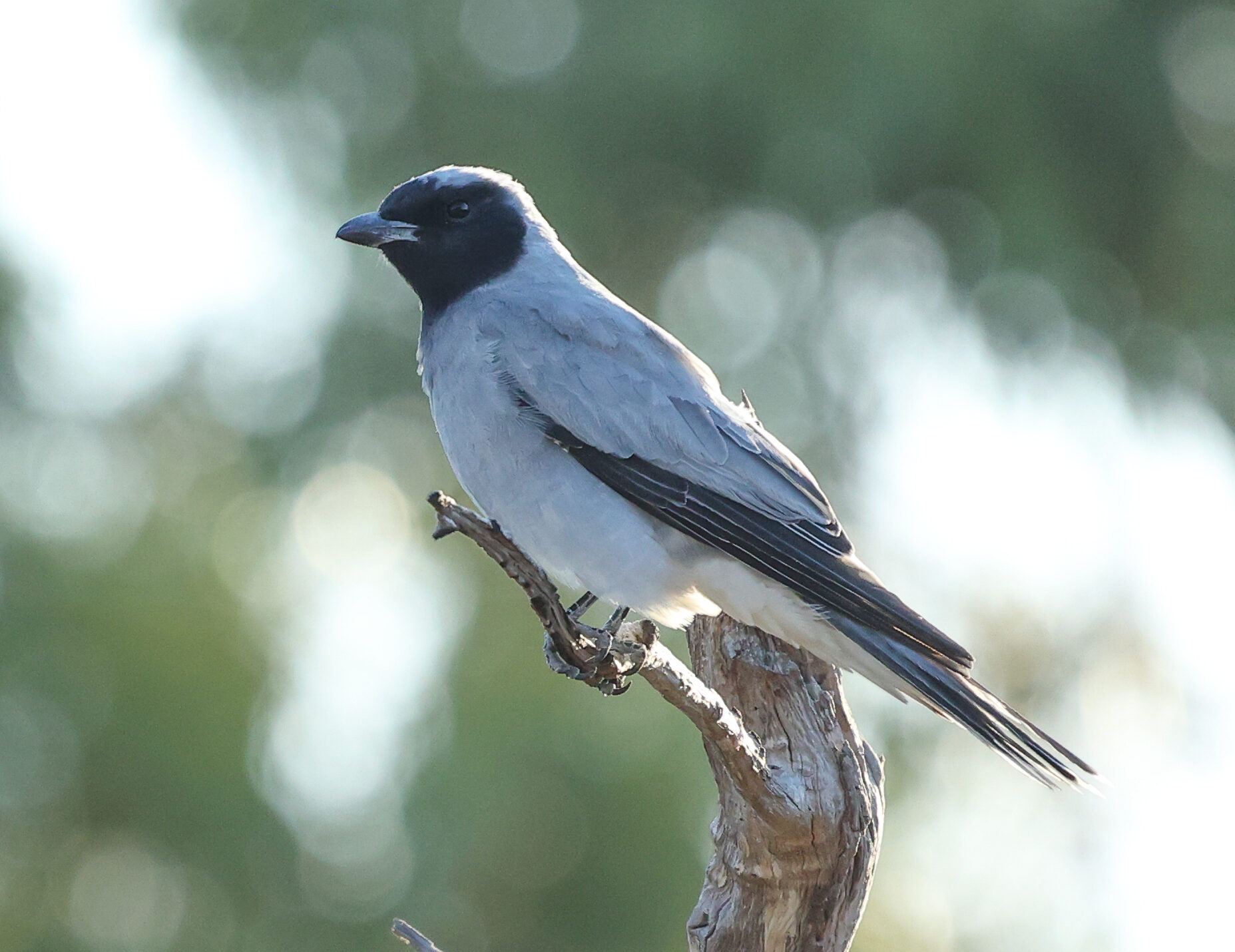
Our first morning in Perth saw us heading to Whiteman Park (-31.834432, 115.947916) on the city’s northern outskirts. Before that, another quick walk through the suburbs of Ellenbrook delivered our first two WA endemics, Carnaby’s Black Cockatoo and Red-capped Parrot. I dipped the Bush Stone-curlews at Whiteman Park that are seen there occasionally (mostly because I didn’t know where to look, but also because I knew we had good chances for the species later on) but still managed to add a few new birds like Black-faced Cuckooshrike, New Holland Honeyeater, Laughing Kookaburra, Scarlet Robin, Rainbow Bee-eater, Weebill and Wedge-tailed Eagle.
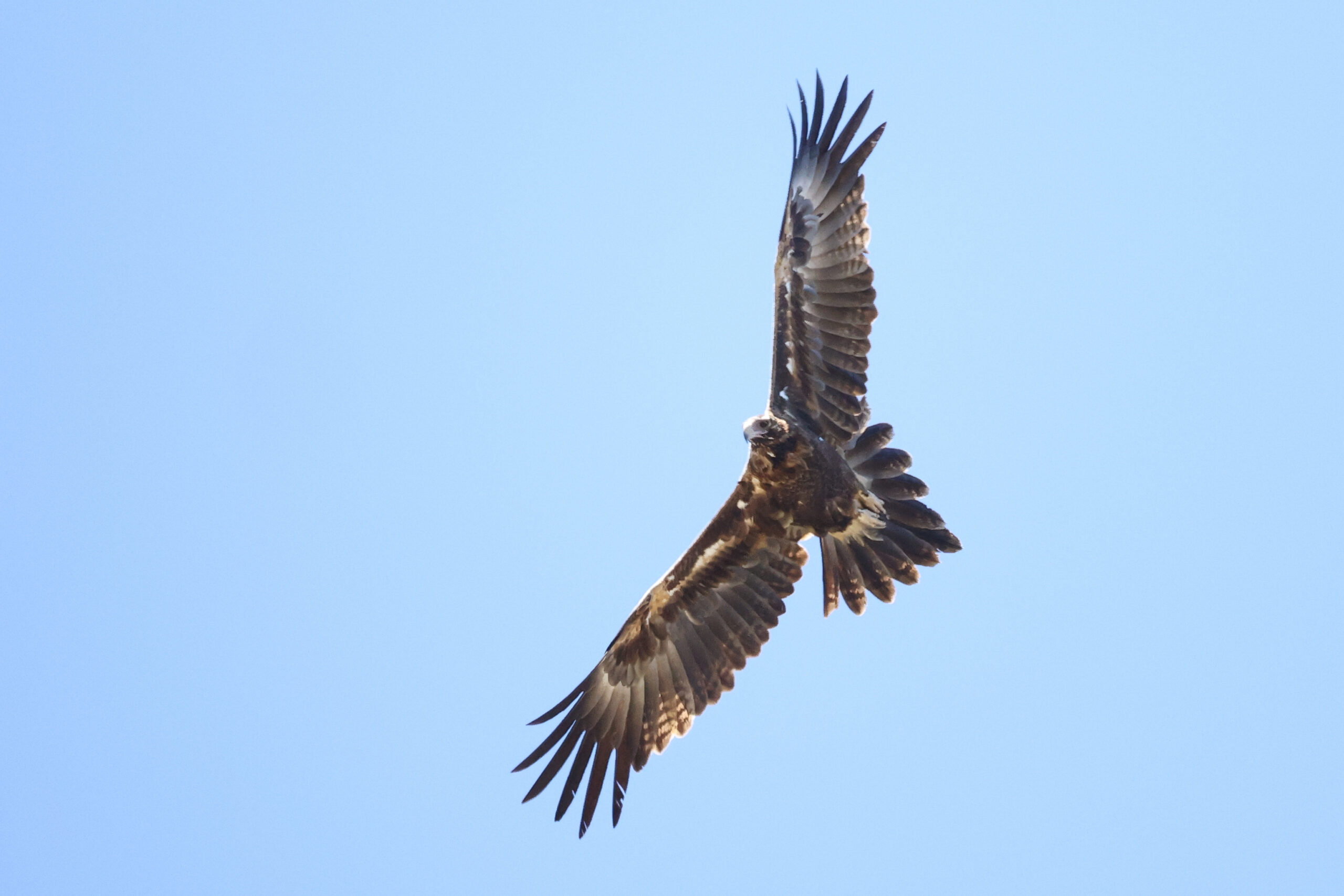
We also connected with our first Western Grey Kangaroos for the trip. The rest of the day and most of the next were primarily occupied with non-birding activities. However, I managed to squeeze in a late-afternoon session on day three at Star Swamp Reserve (-31.858442, 115.760075) in North Beach, which produced the raucous Red-tailed Black Cockatoo as well as Australian Ringneck (“twenty-eight”, subspecies semitorquatus) , Western Gerygone, White-cheeked Honeyeater and our first Caspian Terns of the trip.
28 December 2024
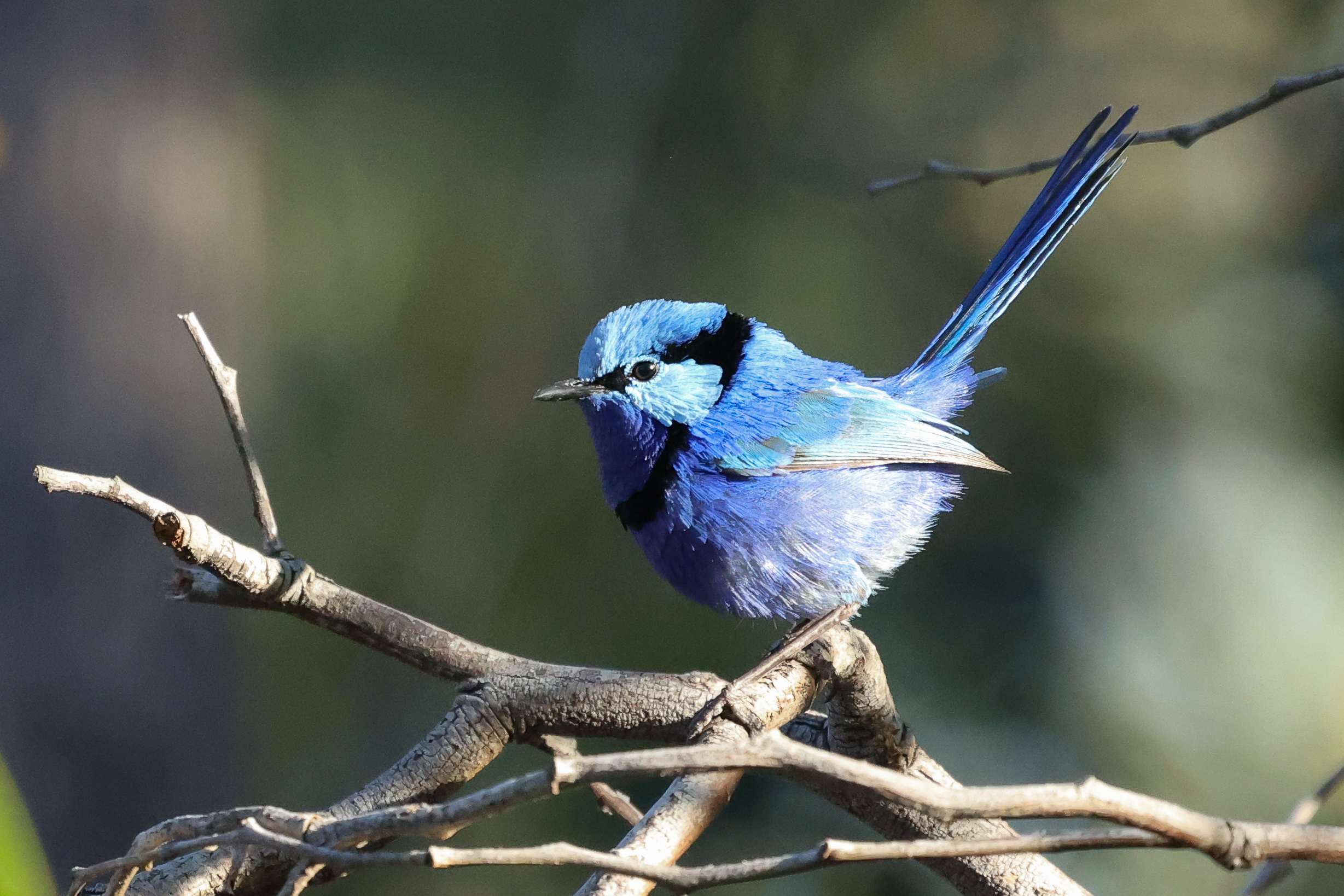
The next day saw us driving 250 km south of Perth to Dunsborough. En route, we popped in at Thompsons Lake Nature Reserve (accessed from the car park at -32.160440, 115.827654) in an unsuccessful attempt to twitch a Masked Lapwing that had been reported there consistently for the past month. This was a bird we wouldn’t have a realistic chance of connecting with on this trip, so it was worth stopping in to look. The sub-par birding didn’t compensate for the dip, but we added the mind-blowing Splendid Fairywren, Striated Pardalote, Whistling Kite and an assemblage of waterbirds including Black Swan, Australian Shelduck, Australian White, Glossy and Straw-necked Ibises, Pied Stilt and White-faced Heron.
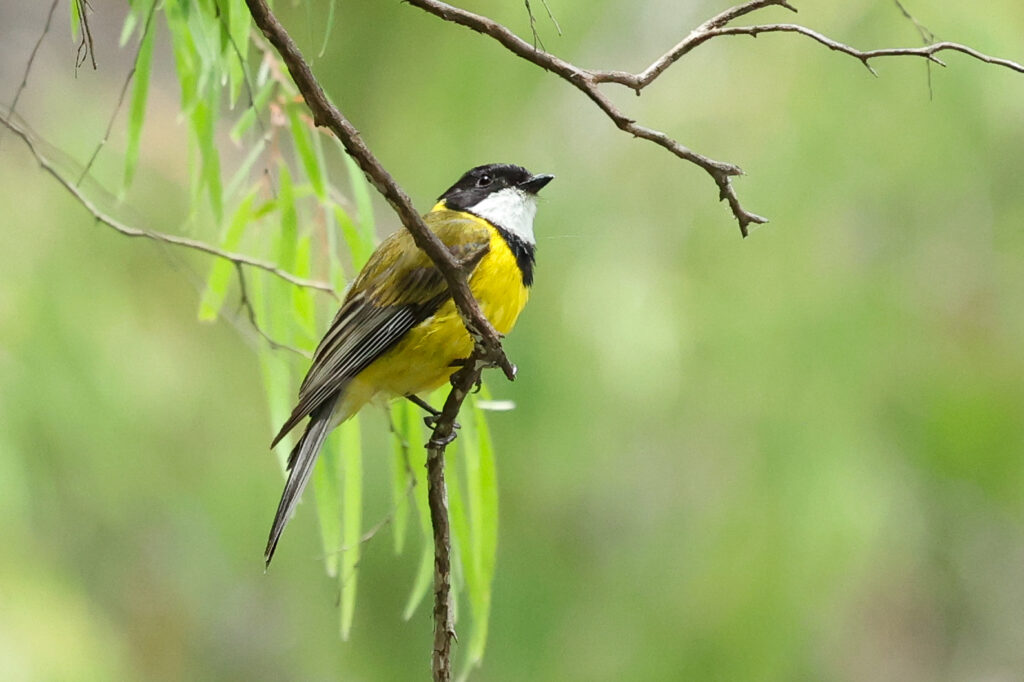
The rest of the drive passed without event, and we enjoyed the scenery of rural southwestern Australia before arriving in the picturesque town of Dunsborough. We would be staying here with family for the next week and using Dunsborough as a base to explore the surrounding area. After dumping our bags, we set out for a productive afternoon session along the Meelup Beach road (-33.575014, 115.084993), where tall Eucalypt forests give way to crystal clear blue waters. Australian Golden Whistler (here of the occidentalis subspecies, endemic to WA and formerly elevated to full-species status), White-browed Scrubwren, and the WA endemic Western Spinebill were new additions to the list. At night, a friendly Western Ringtail Possum came to visit the garden and did so every night for the remainder of our stay in Dunsborough.
29 December 2025
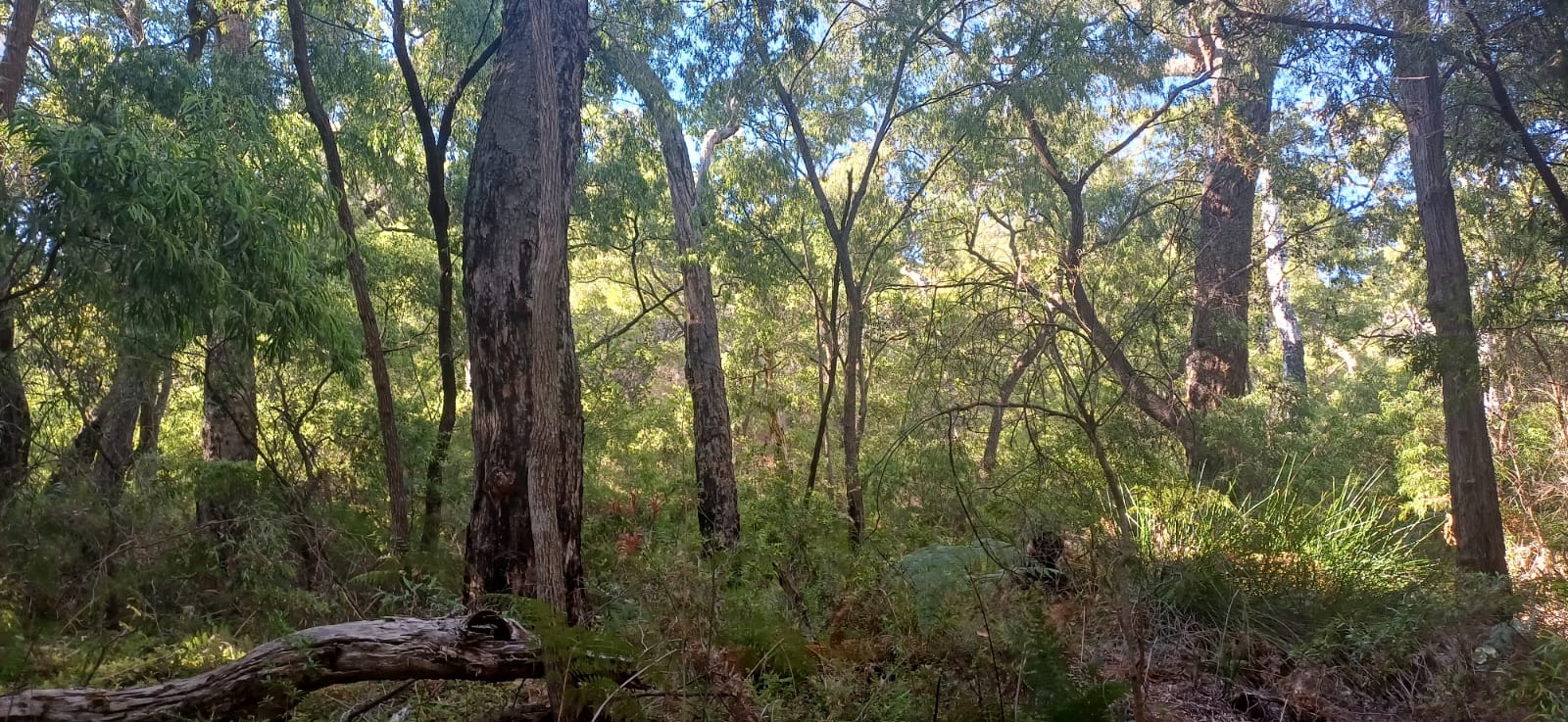
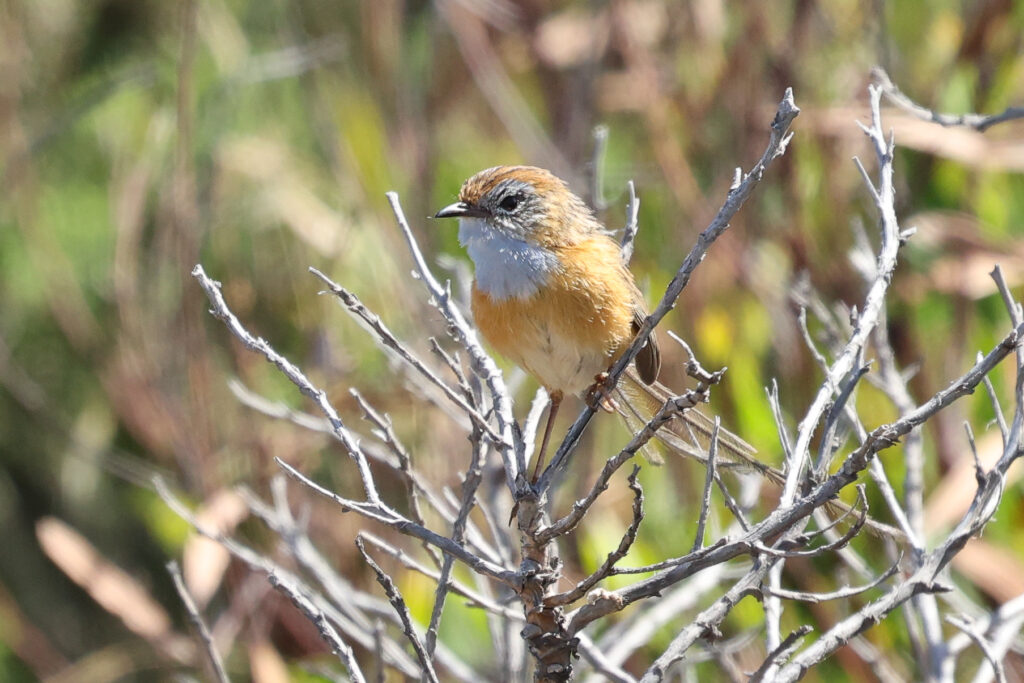
We were up early the following day and birding at Leeuwin-Naturaliste National Park at Cape Leeuwin. We started birding along the dirt road (-33.540680, 115.017946) that runs down to the beach just before the parking lot at the lighthouse. Very quickly, we connected with Southern Emu-wren, more Splendid Fairywrens and the WA endemic White-breasted Robin. We wandered around the trails near the lighthouse, but bird activity was low, and the flies were incessant, so we decided to call it after about an hour and made our way to the delightful town of Margaret River.
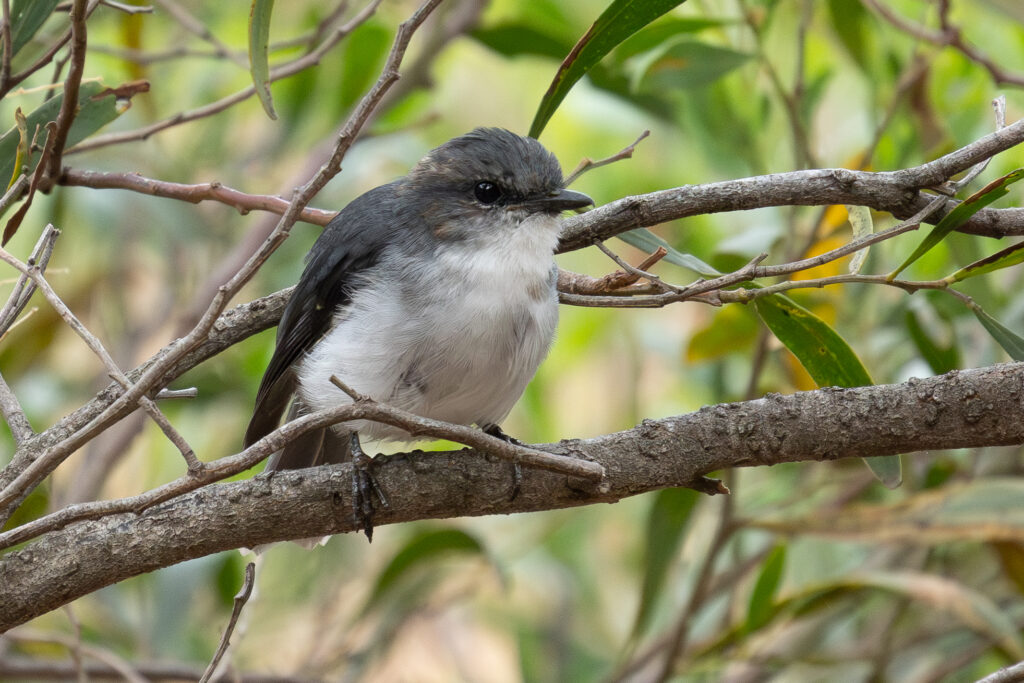
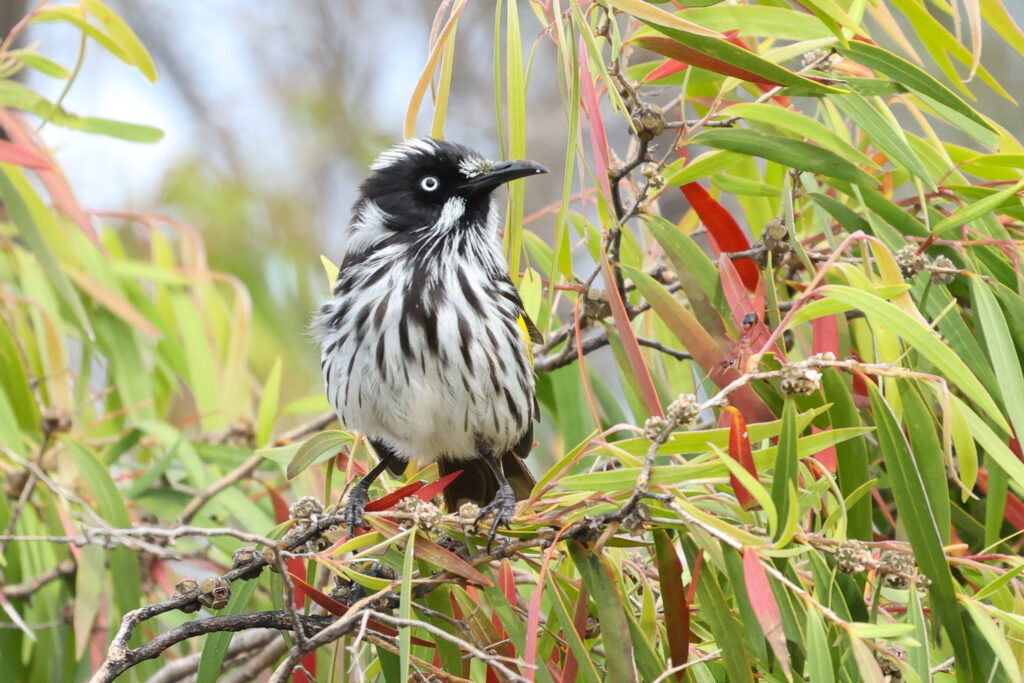
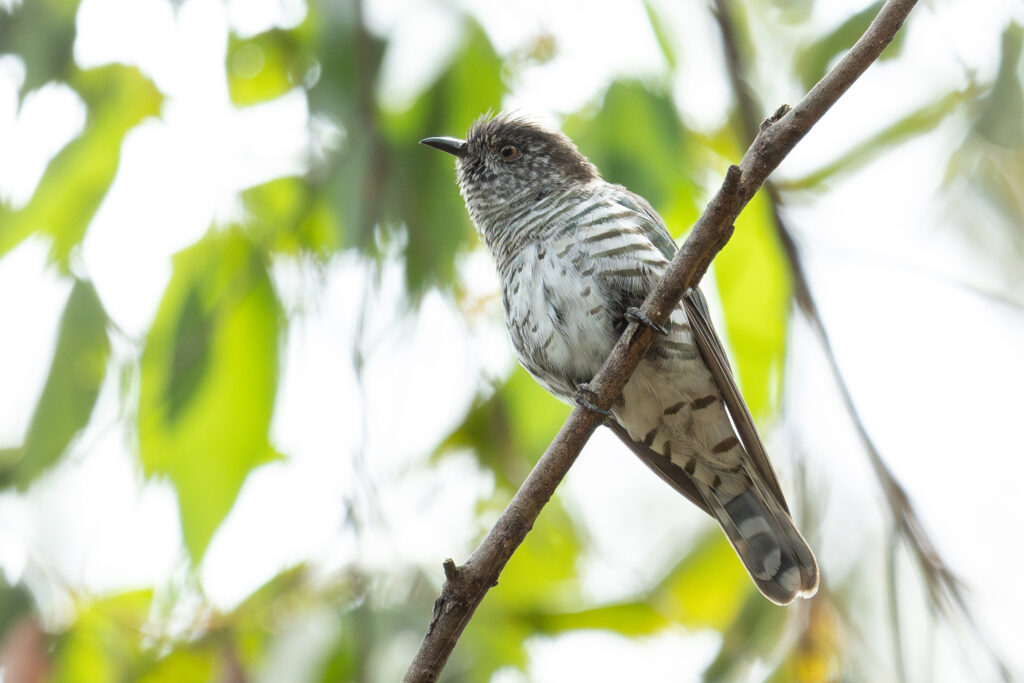
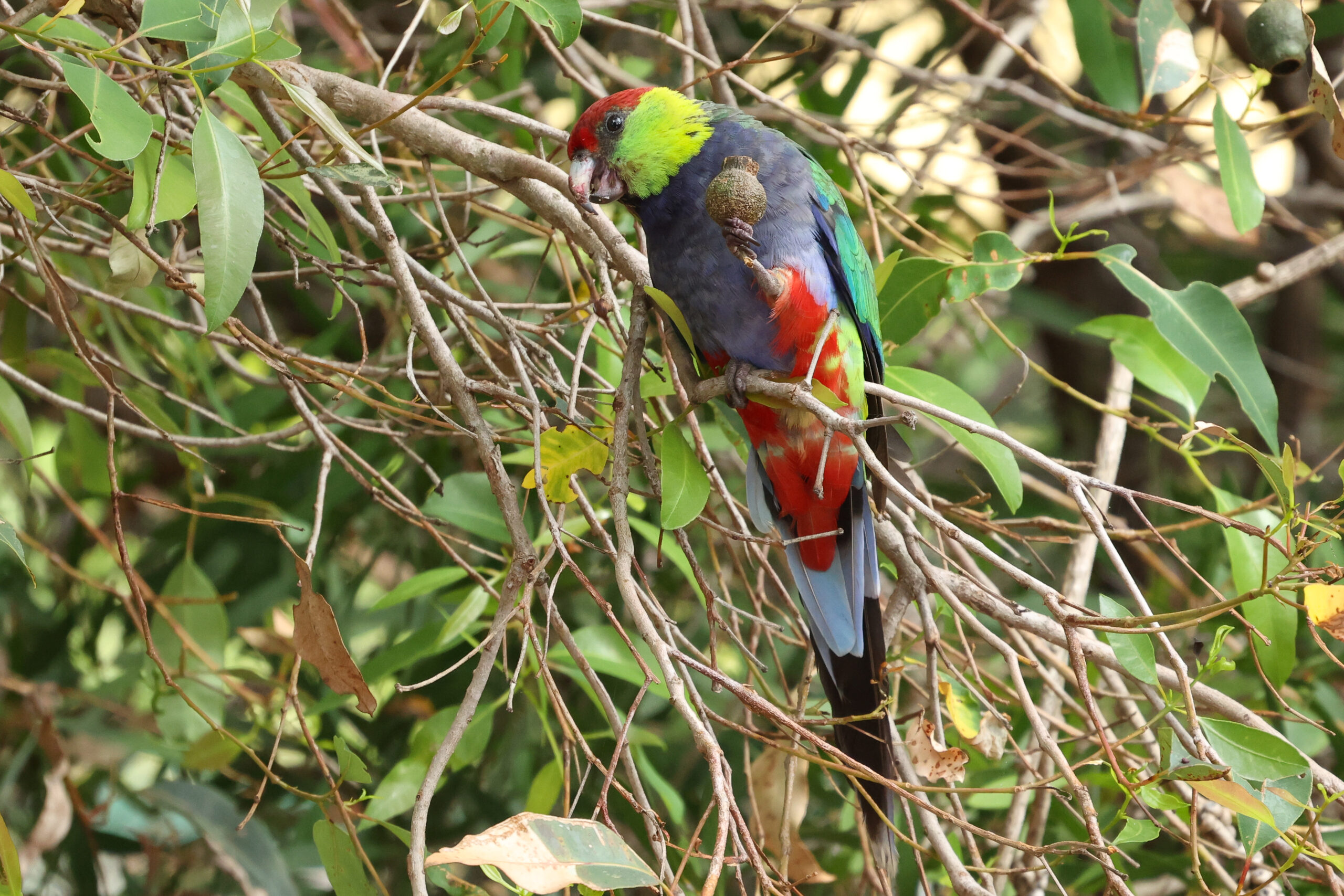
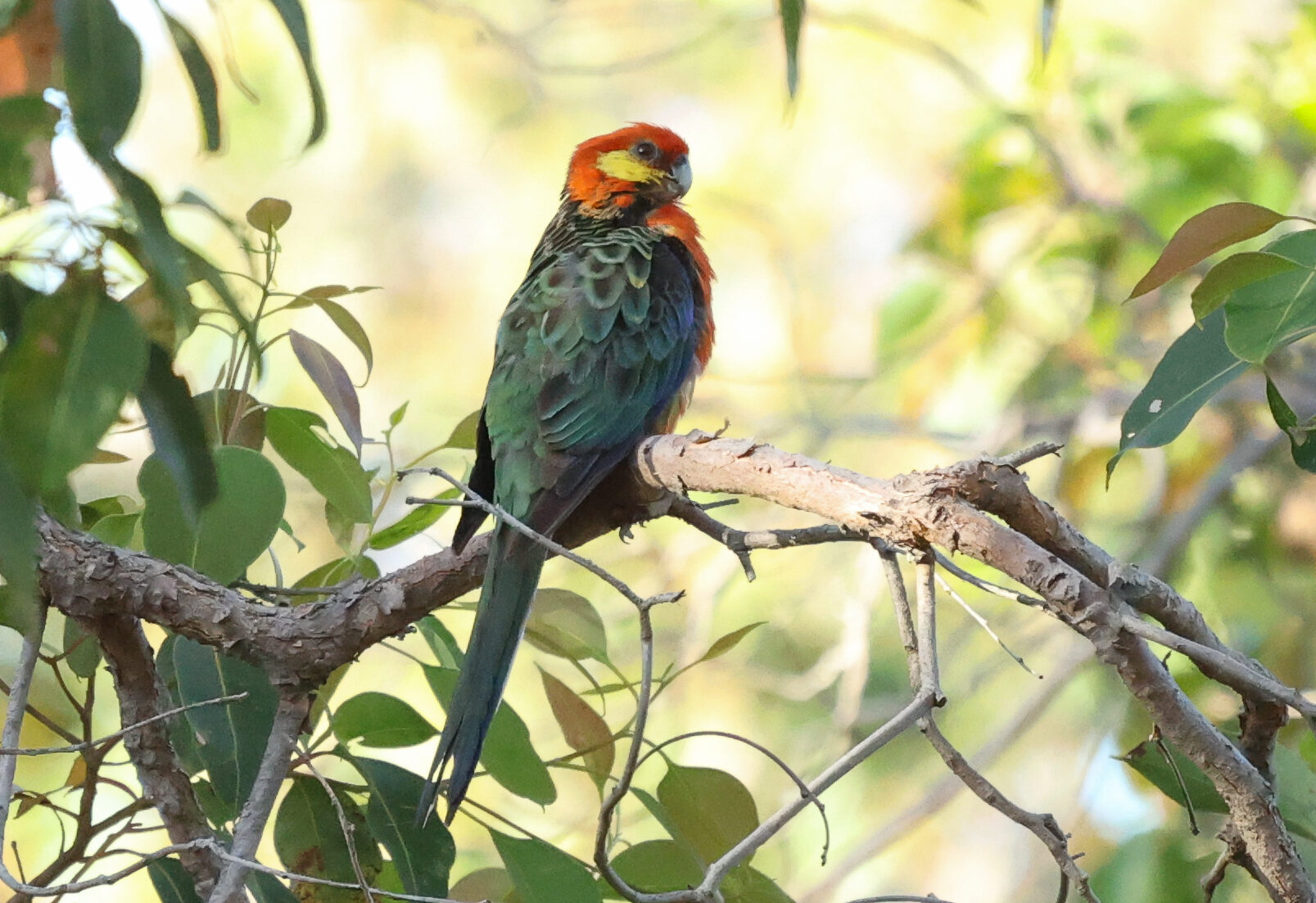
After ambling around the town for a few minutes and picking up a coffee at one of the cafes, we decided to check out Rotary Park (-33.944090, 115.074241) on the main road northbound out of town. The tall eucalyptus forest here was alive with birds, and we saw Shining Bronze Cuckoo, Striated Pardalote, Western Rosella, Red-winged Fairywren, Gilbert’s Honeyeater, Australian Golden Whistler (occidentalis), White-breasted Robin, Red-eared Firetail and Grey Butcherbird, among others. Lifer fix acquired; we headed back to Dunsborough.
30 December 2025
The plan for the next day was to check out Sabina Nature Reserve at the Vasse-Wonnerup Estuary in Busselton. We had no idea how to access the reserve and couldn’t find any instructions online. We ended up driving to Reinscourt (we parked in the cul-de-sac here (-33.645989, 115.408657)) and found ourselves navigating between farmsteads until we reached the estuary (most birds seen from here (–33.645749, 115.401675)). There must be a better way of accessing the estuary, but we made it.
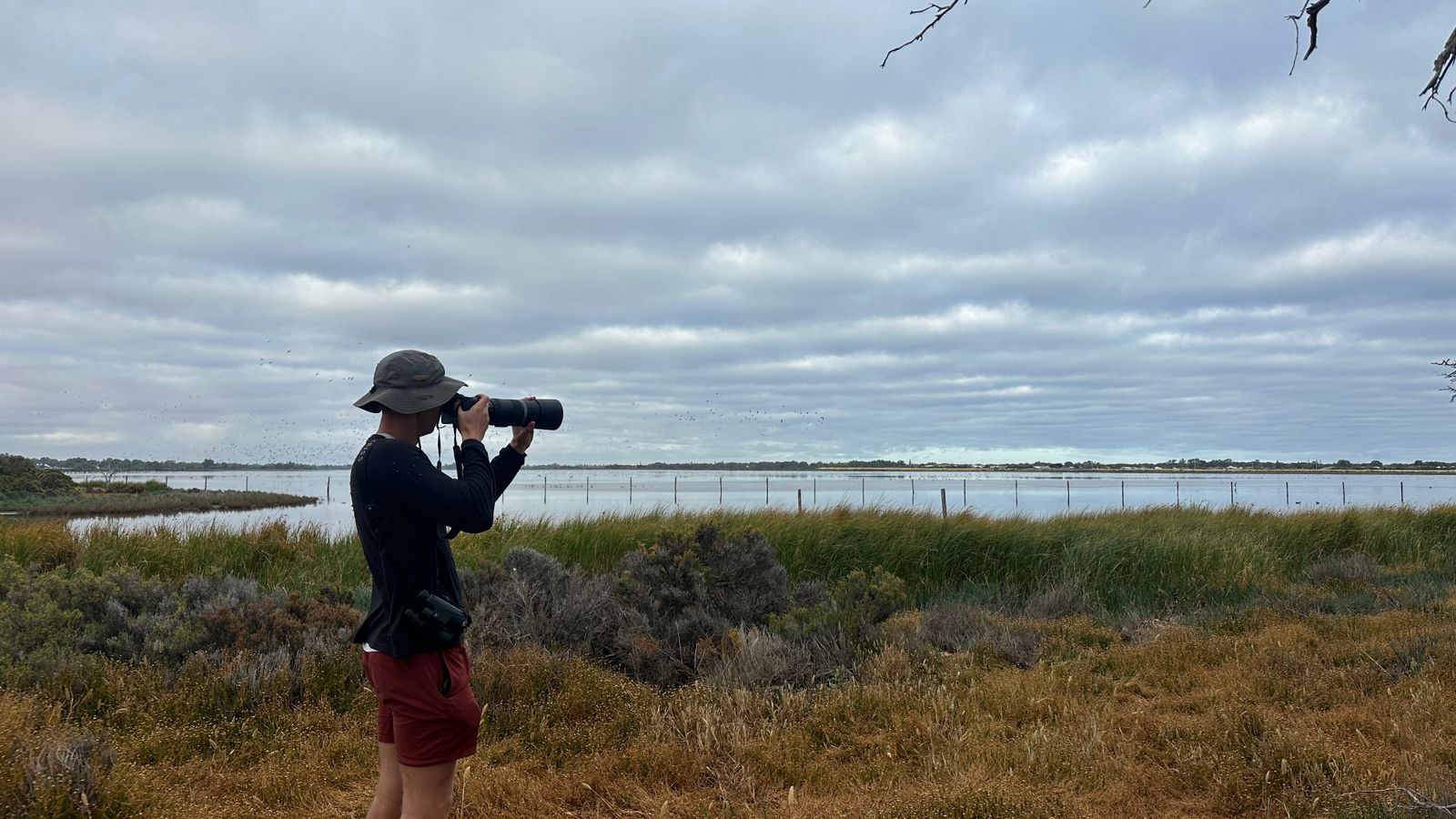
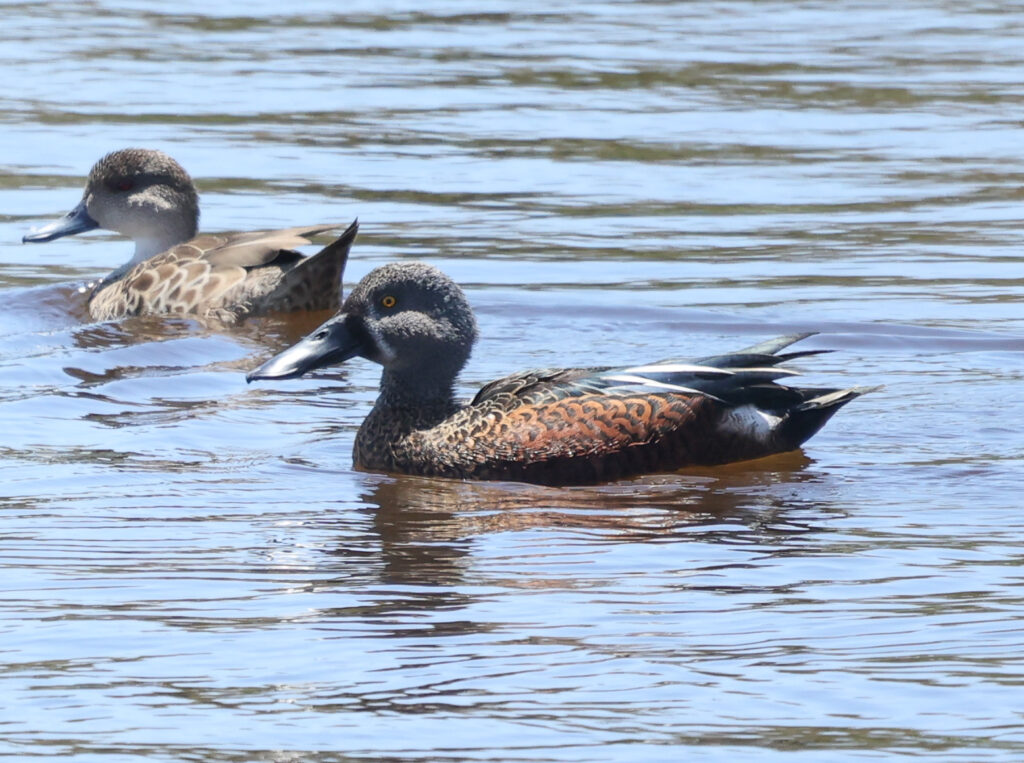
I was hoping to find large numbers of waders, but for some reason, there were barely any, with only Common Greenshank, Pied Stilt, and a bird I was very excited to see – Banded Stilt. There were, however, massive numbers of waterfowl and other waterbirds, including the likes of Nankeen Night Heron (one bird flushed accidentally from a roost and another fly-over), Yellow-billed Spoonbill, Australian Shoveler, Australian Pelican, Grey Teal, Maned Duck and Black Swan to name a few.
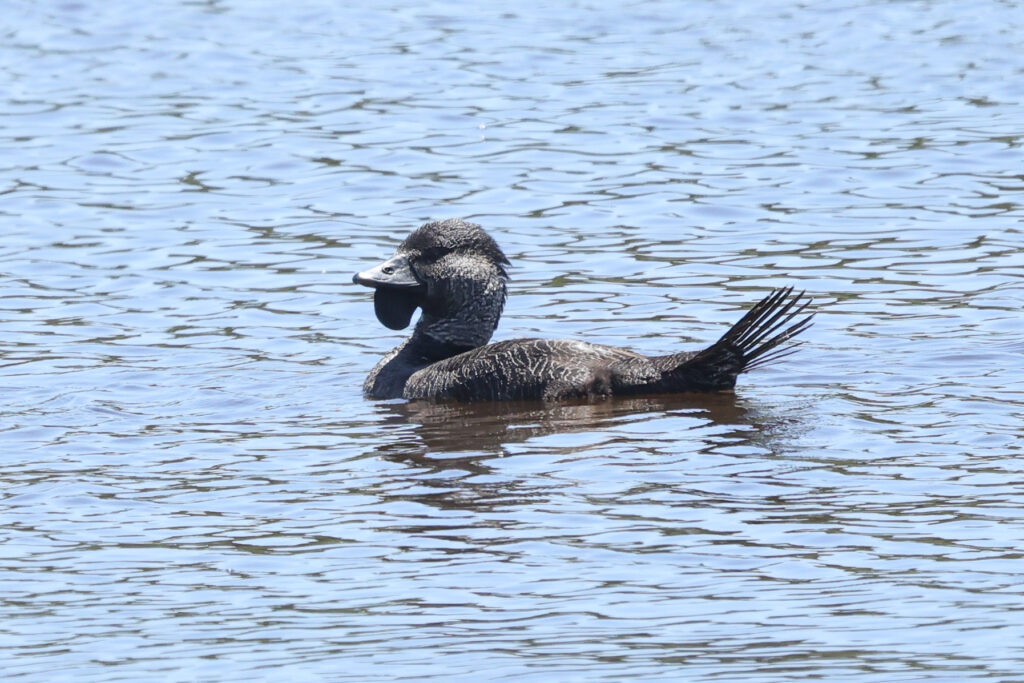
The eucalypts around where we parked the car yielded Sacred Kingfisher and a few species seen earlier in the trip. After Sabina Nature Reserve, we quickly stopped at the Vasse River Delta Bird Hide (-33.653262, 115.353285) in Busselton. Here, we saw our first Pink-eared and Musk Ducks for the trip and a perched Australian Hobby. An afternoon walk on the old golf course in Dunsborough (-33.596736, 115.095146) produced Common Bronzewing, Western Rosella, Red-capped Parrot, Inland Thornbill, Scarlet Robin and our first Dusky Woodswallow.
31 December 2025
The final day of the year was primarily spent with family; however, a quick trip to Sugarloaf Rock (-33.560050, 115.007831) yielded Southern Emu-wren and a large flock of Carnaby’s Black Cockatoos on the way there. Canal Rocks in Yallingup gave us our first Sooty Oystercatchers (-33.670092, 114.995807), and a late-night stroll to a bar in Dunsborough just before midnight produced a Tawny Frogmouth on a lamppost! Happy New Year!
1 January 2025
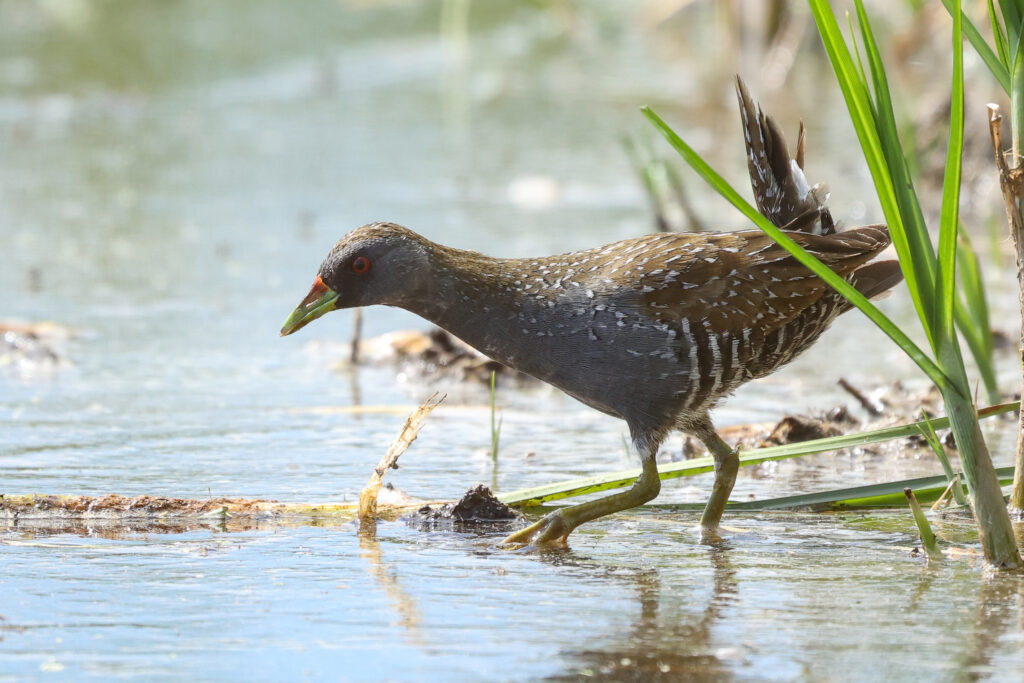
For the first birding of the new year, we decided to return to Busselton. I had caught wind of recent reports of Australian Crakes at a wetland in the Vasse-Wonnerup Estuary and decided it would be worth investigating. The spot was easily accessible as Ford Road in Busselton cuts across the wetland (-33.653033, 115.358838). Within 20 minutes, I had frame-filling views of at least six Australian Crakes as they went about their business foraging in the shallow water. Other new additions were Black-fronted Dotterel and Australian Reed Warbler. Crakes in the bag, we headed over to Malbup Bird Hide (-33.629936, 115.425935), which, despite its impressive numbers of Grey Teals, didn’t produce anything exciting. We did add two trip birds at the hide, Hoary-headed Grebe and Hardhead, both of which we saw on multiple occasions later in the trip.
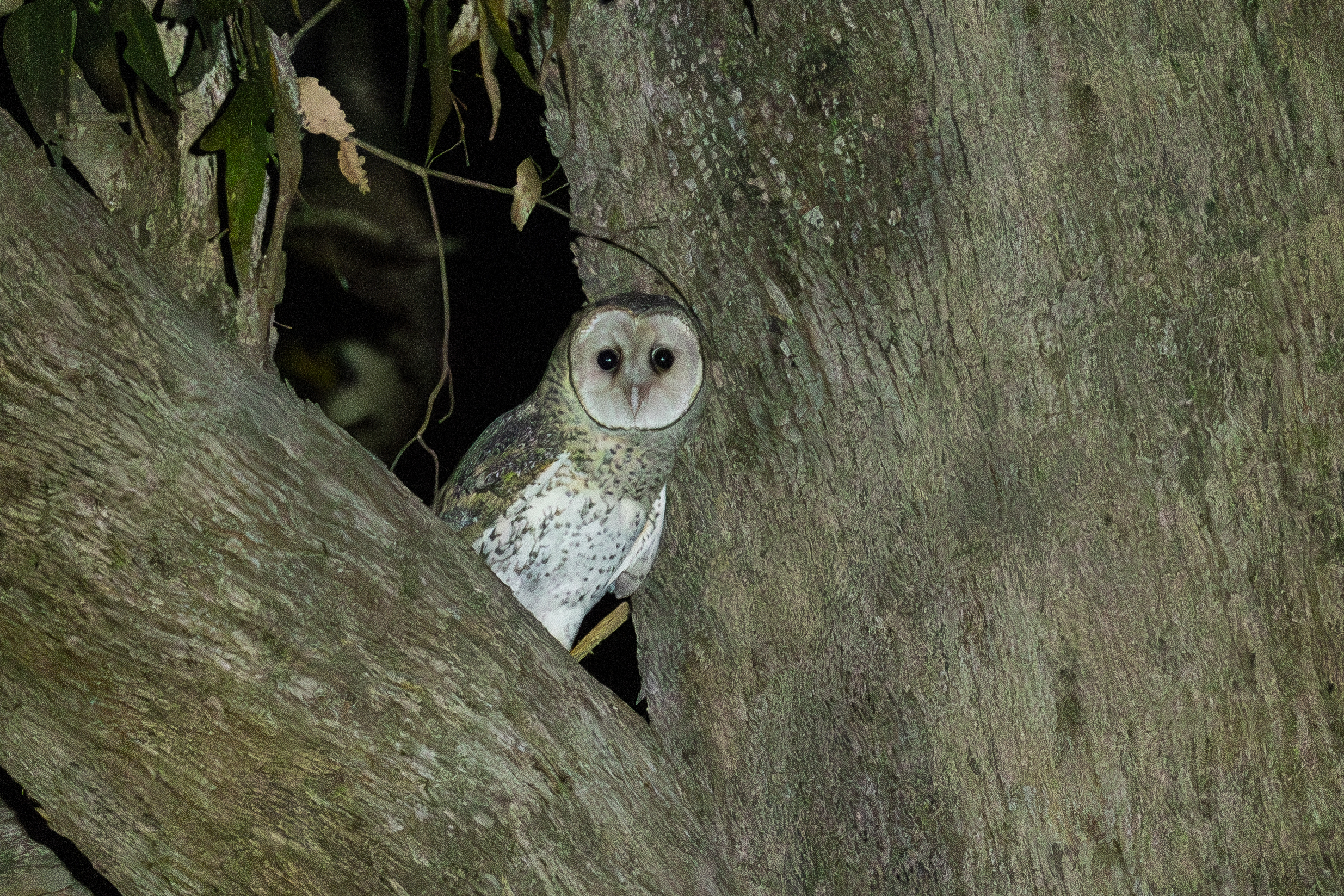
In the evening, we returned to the same area to bird along Tuart Drive in Tuart Forest. I had seen a few reports of Australian Masked Owls from this forest; however, I had read that the species was exceptionally rare in southwestern Australia and there were very few photographed records on eBird from WA. I didn’t have much hope, but I thought it was worth a shot. We waited for sunset along Tuart Drive at a rest stop in the forest.
The first stop was dead, so we drove a few hundred meters along the road and tried again at the turnoff to Simpson Road (-33.614341, 115.461511). A vocal pair of Australian Boobooks kept us company until we heard our first Australian Masked Owl. The bird called only once, and despite my best efforts, I could not get a visual of it. We stopped a few more times without success until we struck gold with a very vocal Australian Masked Owl near the Ludlow Road turnoff (-33.604883, 115.477309) and were rewarded with prolonged views! Success!
2 January 2025
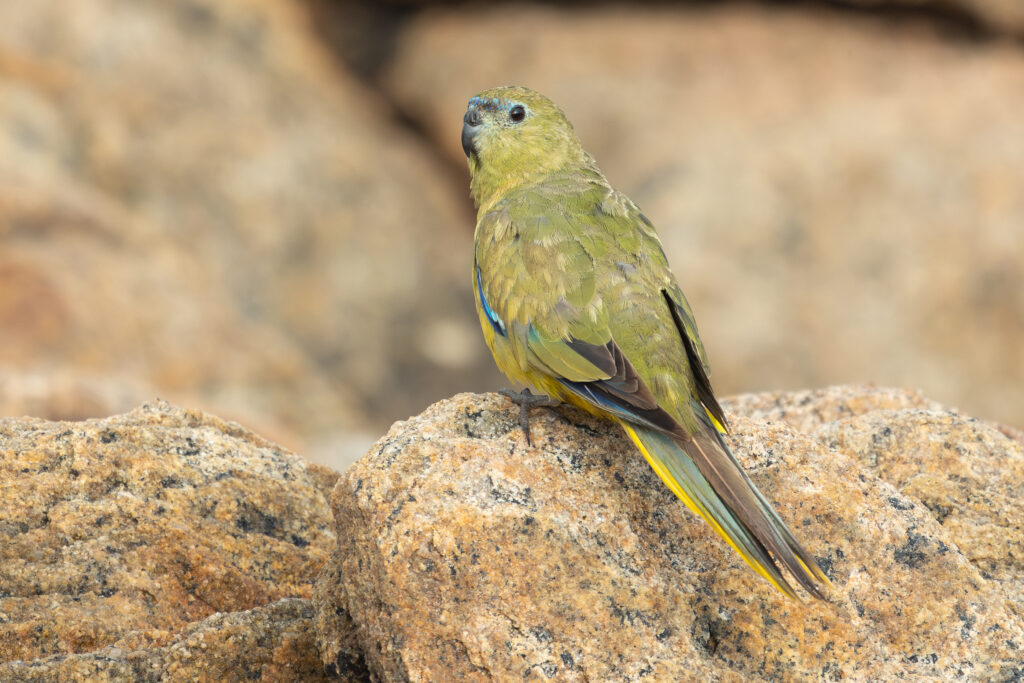
This was to be the second last day before we officially started the trip, and we decided to head south from Dunsborough to Augusta for the morning. The drive was glorious; this part of Australia really is scenically stunning. After an hour, we arrived in Augusta, identified a bakery where we would stop after bagging a few lifers, and made our way to the Cape Leeuwin Lighthouse. We parked the car (-34.371683, 115.136117) and started exploring the rocky shoreline on either side of the peninsula. After no more than five minutes, Amy spotted a small flock of Rock Parrots foraging just above the surf line at the Water Wheel (-34.368640, 115.135361). This unique parrot was one of the two big targets for the morning, and we enjoyed walk-away views at close range.
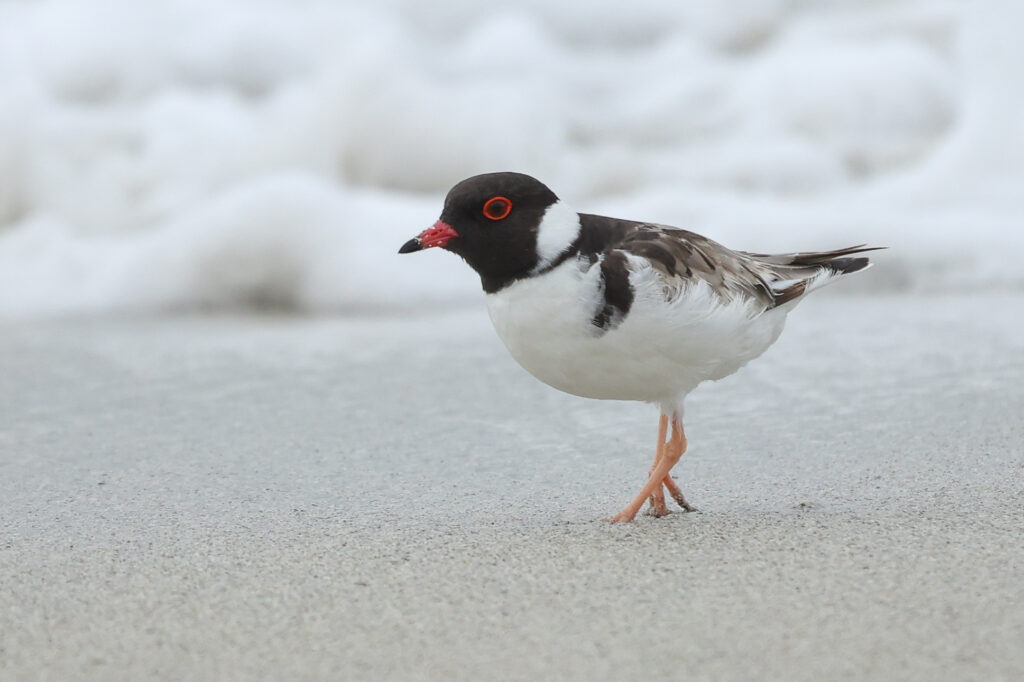
Australian Pipits foraged on the short grassy patches around the parking lot, and the rocks held large numbers of Silver Gulls and a pair of Sooty Oystercatchers. We parked at a pull-off near the public toilet and scanned the beach (-34.369743, 115.136759), which yielded our second big target, the Vulnerable Hooded Plover. I watched a pair foraging between the washed-up kelp until I decided it was time for a celebratory coffee and pastry at the bakery.
We took the scenic route (they all are in this part of WA) back to Dunsborough and added a few good birds, including several Bridled Terns flying out at sea, a Pacific Reef Heron and a Square-tailed Kite at Cosy Corner (-34.255919, 115.027907). A quick stop back at Rotary Park in Margaret River yielded a vocal Western Shriketit and many of the species seen on our previous visit to this wonderful park.
3 January 2025
As this was our last day before leaving Dunsborough and officially starting the birding trip, we spent most of the day with family and stocked up on some supplies for the journey.
WESTERN AUSTRALIA BIRDING TRIP
Day 1. 4 January 2025. Dunsborough to Albany
We set off early this morning for Day 1 of our Western Australian birding adventure. The pre-trip had already been a roaring success, and we had cleaned up a number of challenging targets and WA endemics. The drive from Dunsborough to Albany took us through spectacular eucalyptus forests, and we enjoyed large flocks of Red-tailed Black Cockatoos as roadside distractions. Upon entering Manjimup, a small bird ran across the road and stopped on the road verge – a Buff-banded Rail.
We had an important stop to make along the Muir Highway at Lake Muir Nature Reserve. We looked around Lake Muir Observatory (-34.442160, 116.648753) for our target, but it was already hot, and there was no activity around. After quickly consulting Google Maps and eBird, I decided it might be worth driving along Thompson Road, which runs south on the western side of Lake Muir and after a while, we heard and eventually saw a single Western Corella (-34.472979, 116.637087). Other species seen here were Yellow-rumped Thornbill, Rufous Whistler and a surprise Regent Parrot, which is uncommon in this area. We also stopped at Rocky Gully to look for the corellas but had no luck.
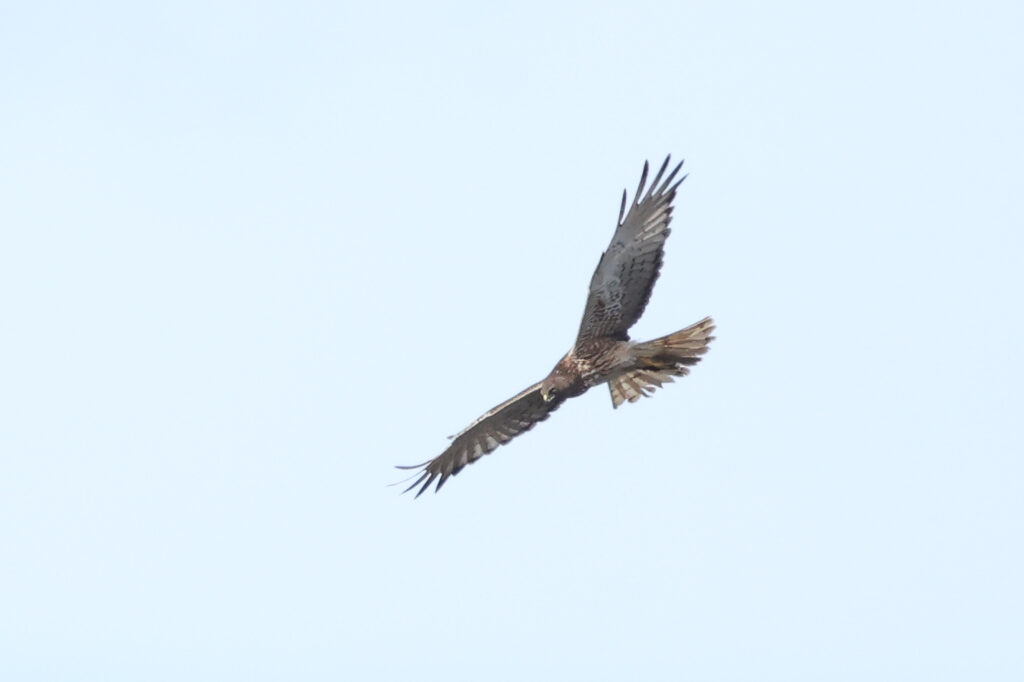
After arriving in Albany, we visited Lake Seppings, which proved to be a very birdy spot. We first parked (-35.011489, 117.917336) on the eastern side of the lake and walked approximately 500 m along the lake’s eastern shore. There were good numbers of waterfowl, including our first Blue-billed Ducks. I was keen to see the Spotless Crakes, which performed well at (-35.009615, 117.914473), and we saw the WA endemic Red-eared Firetail and Red-winged Fairywren again here. We drove around to the other side of the lake (-35.015854, 117.910448), where we saw our first Swamp Harrier. As it was now getting late, we made our way to our accommodation at Kalgan River Caravan Park and Chalets, where we were treated to a large group of Red-tailed and Carnaby’s Black Cockatoos.
Accommodation: Kalgan River Caravan Park and Chalets – we stayed in the cabin; I would not recommend this, either camp (best option anywhere if you want to keep costs down) or select the chalet option. In retrospect, we should have camped here. See my comments about rather staying at Cheynes Beach under the “Route” section of this report.
Day 2. 5 January 2025. Cheynes Beach and Denmark
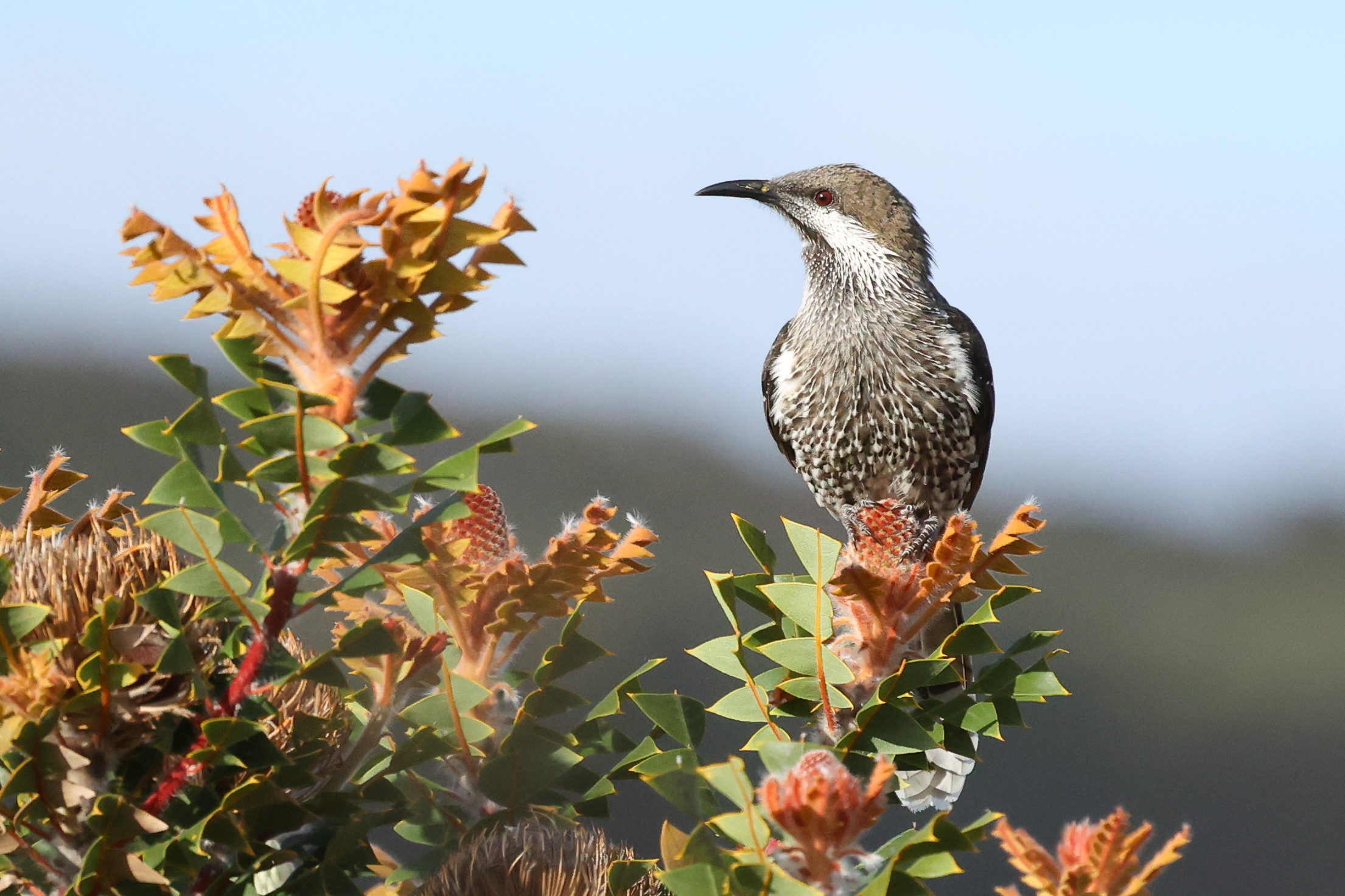
We left our accommodation just after sunrise (I didn’t do much driving at night in Australia as I wasn’t particularly keen on encountering kangaroos on the highway) and made our way to the legendary Cheynes Beach. Cheynes Beach is one of the premier birding sites in southwestern Australia and is home to the infamous “BIG 3”, a trio of skulking and range-restricted WA endemics. We parked our car (-34.883908, 118.406000) and immediately started walking along the sandy road into Arpenteur Nature Reserve (-34.885247, 118.407523). A dense flowering stand of banksias yielded our only Western Wattlebirds of the trip, along with several Western Spinebills, New Holland and White-cheeked Honeyeaters and a single Tawny-crowned Honeyeater.
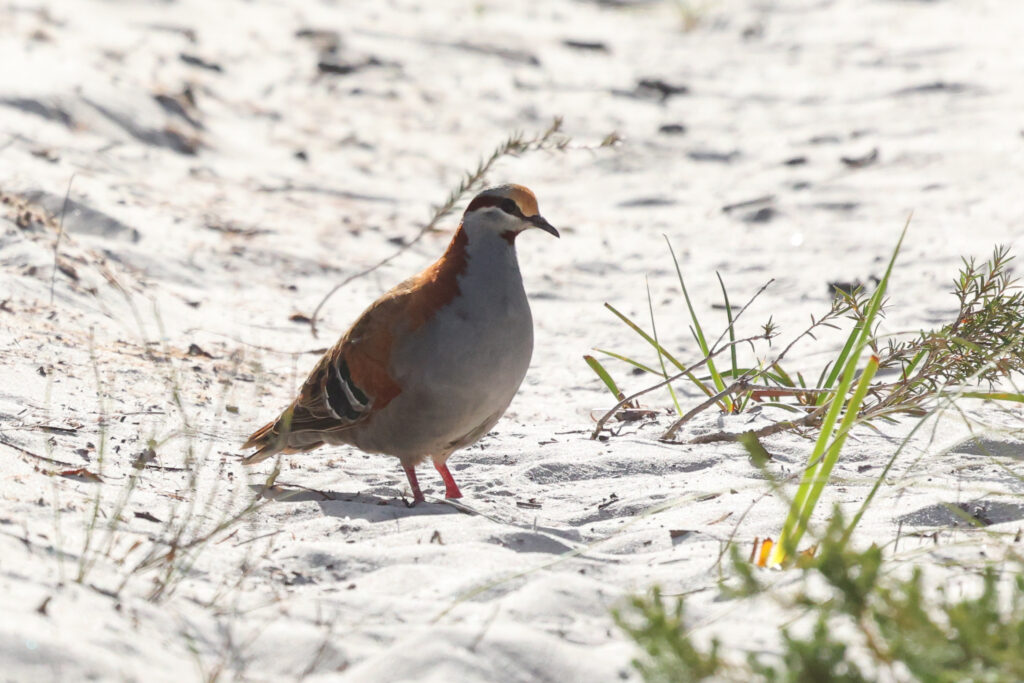
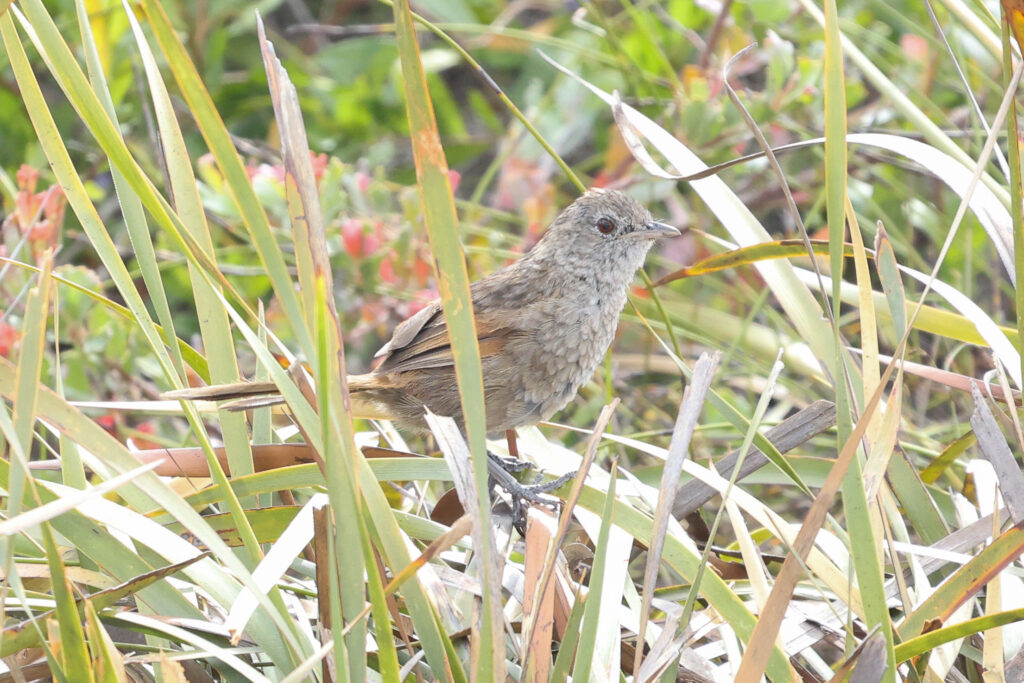
A vocal Black-throated Whipbird was the first of the BIG 3 to reveal its presence; however, it remained heard-only as I somewhat foolishly chose to prioritise the other two. A Brush Bronzewing was a pleasant surprise, and after a lengthy game of cat-and-mouse, the first of the BIG 3 fell – the super skulking Noisy Scrubbird. I only managed a brief glimpse of this bird as it darted across a gap in the foliage less than a meter from me. Next was Western Bristlebird, which was surprisingly obliging, two of three done!
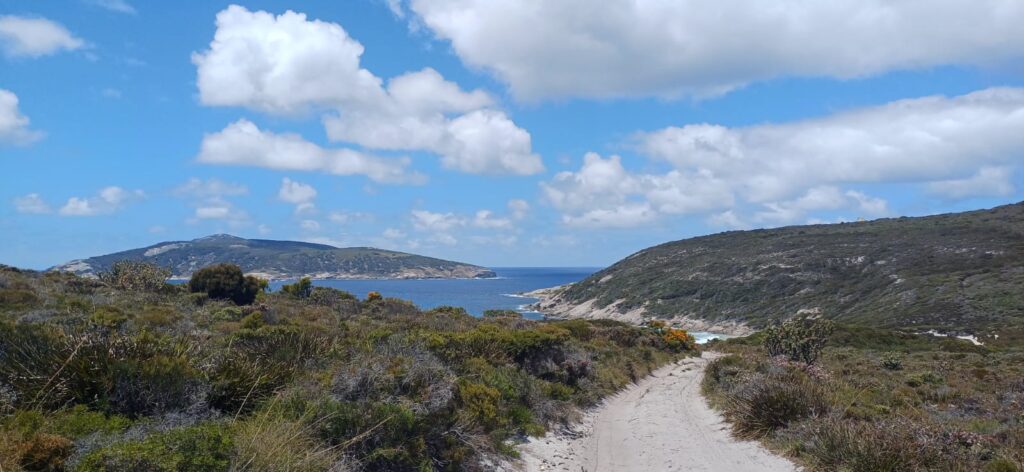
Unfortunately, the temperature rose, and the whipbirds stopped calling; this one would have to wait for later in the trip. The beach at Cheynes (-34.881582, 118.403128) held a nesting pair of Ospreys. After a celebratory coffee, we decided to head to the lovely town of Denmark. We checked out Ocean Beach Estuary (-35.022807, 117.329294) and found Red-capped Plover, Red-necked Stint, Sanderling, Pacific Gull and Greater Crested Tern among the regulars.
Accommodation: Kalgan River Caravan Park and Chalets
Day 3. 6 January 2025. Porongurup and Albany
One of the glaring absences on our trip list was the WA endemic Baudin’s Black Cockatoo, so we decided to head north of Albany to the Porongurup National Park, where there had been a few recent reports on eBird. Again, this was a scenic area with vistas overlooking the Stirling Ranges and farmlands, often with large numbers of Western Grey Kangaroos (we saw this species in good numbers almost every day during our time in the southwest).
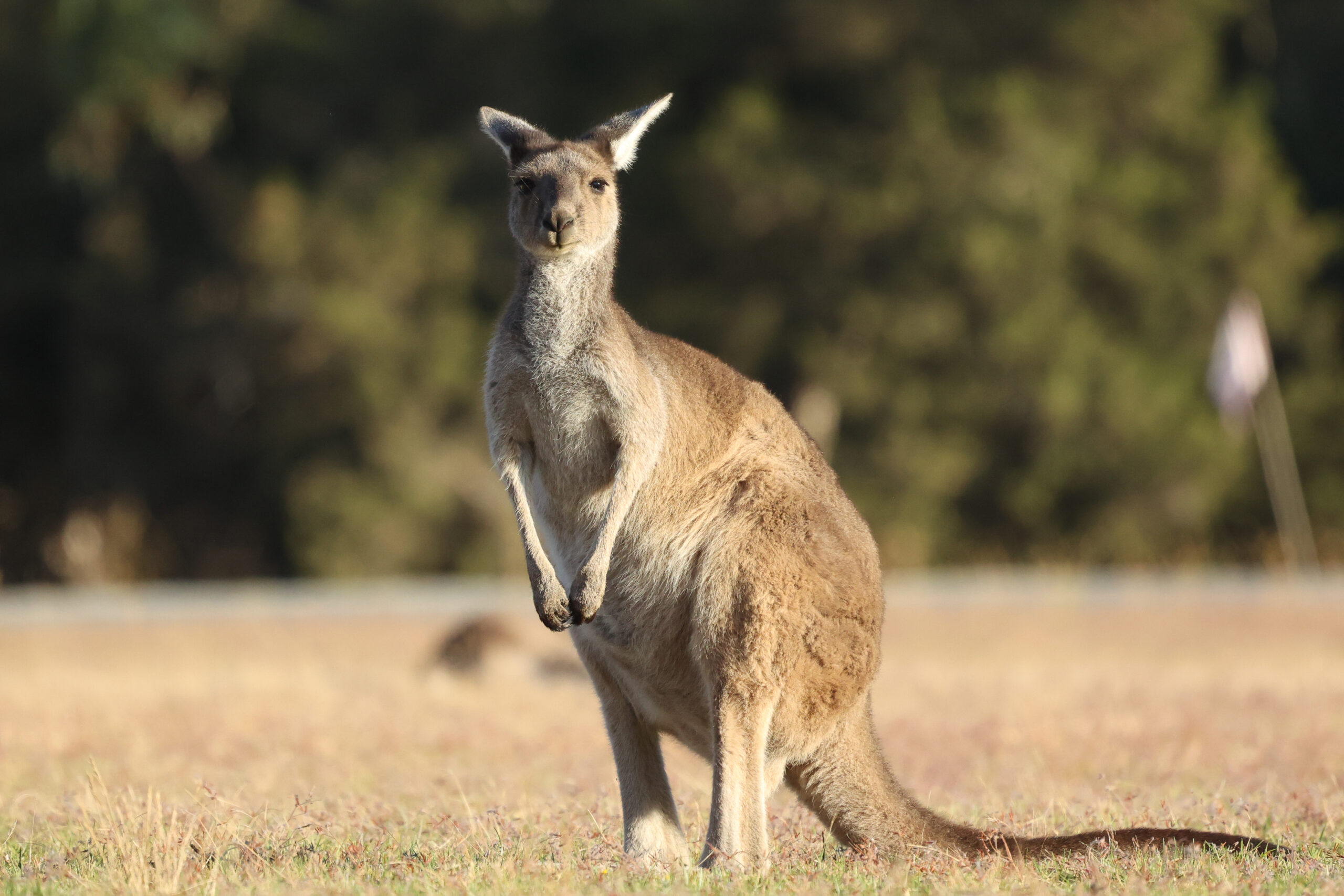
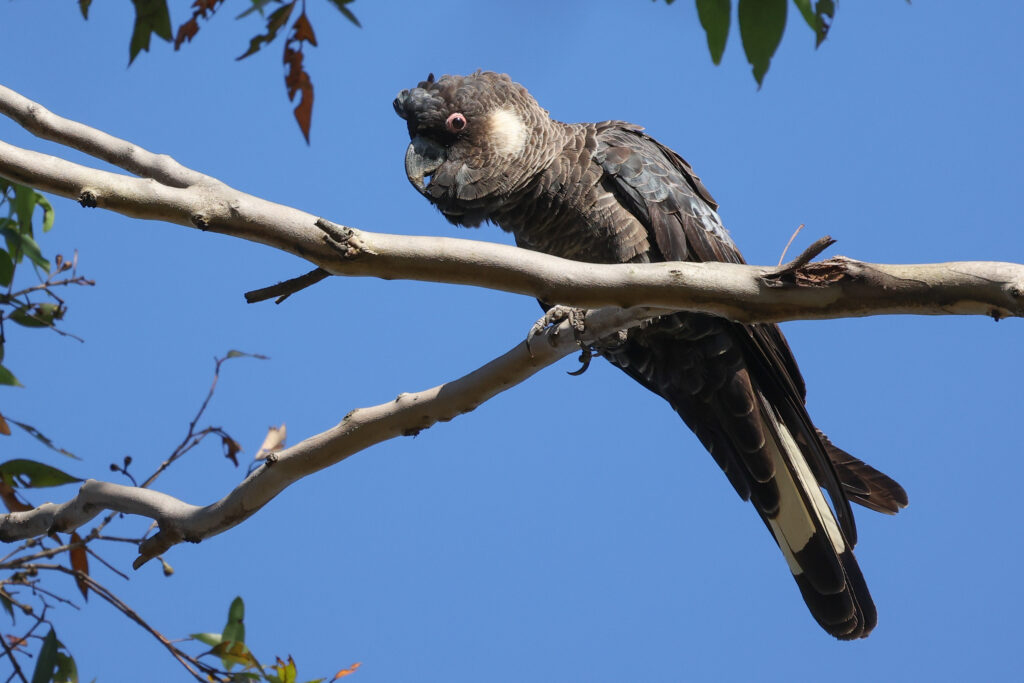
We accessed the national park from the “Tree in the Rock Picnic Area” entrance (-34.670745, 117.883264) and birded along the road to the picnic area (-34.675587, 117.871299). Here, we picked up Western Rosella, Gilbert’s Honeyeater, White-breasted Robin, Australian Golden Whistler (occidentalis), Tree Martin, and our first Grey Shrikethrush. We heard black cockatoos calling and noted that the call sounded more like that of our target than Carnaby’s or Red-tailed. Sure enough, tracking down the call led us to a pair of the Critically Endangered Baudin’s Black Cockatoos perched on the roadside just before the picnic site. We also walked along the trail at the Granite Skywalk (-34.686320, 117.930568) and had a showy pair of Red-winged Fairywrens and more Gilbert’s Honeyeaters.
Upon returning to Albany in the afternoon, we paid Lake Seppings another visit and added a Chestnut Teal to the trip list. We then decided to try for Black-throated Whipbird in the coastal vegetation at Little Beach (-34.972634, 118.194582) in Two Peoples Bay Nature Reserve. Conditions were extremely unpleasant with gale-force winds, and we quickly retreated to our accommodation for an early night.
Accommodation: Kalgan River Caravan Park and Chalets
Day 4. 7 January 2025. Albany to Stirling Range (via Boxwood Hill and Corackerup)
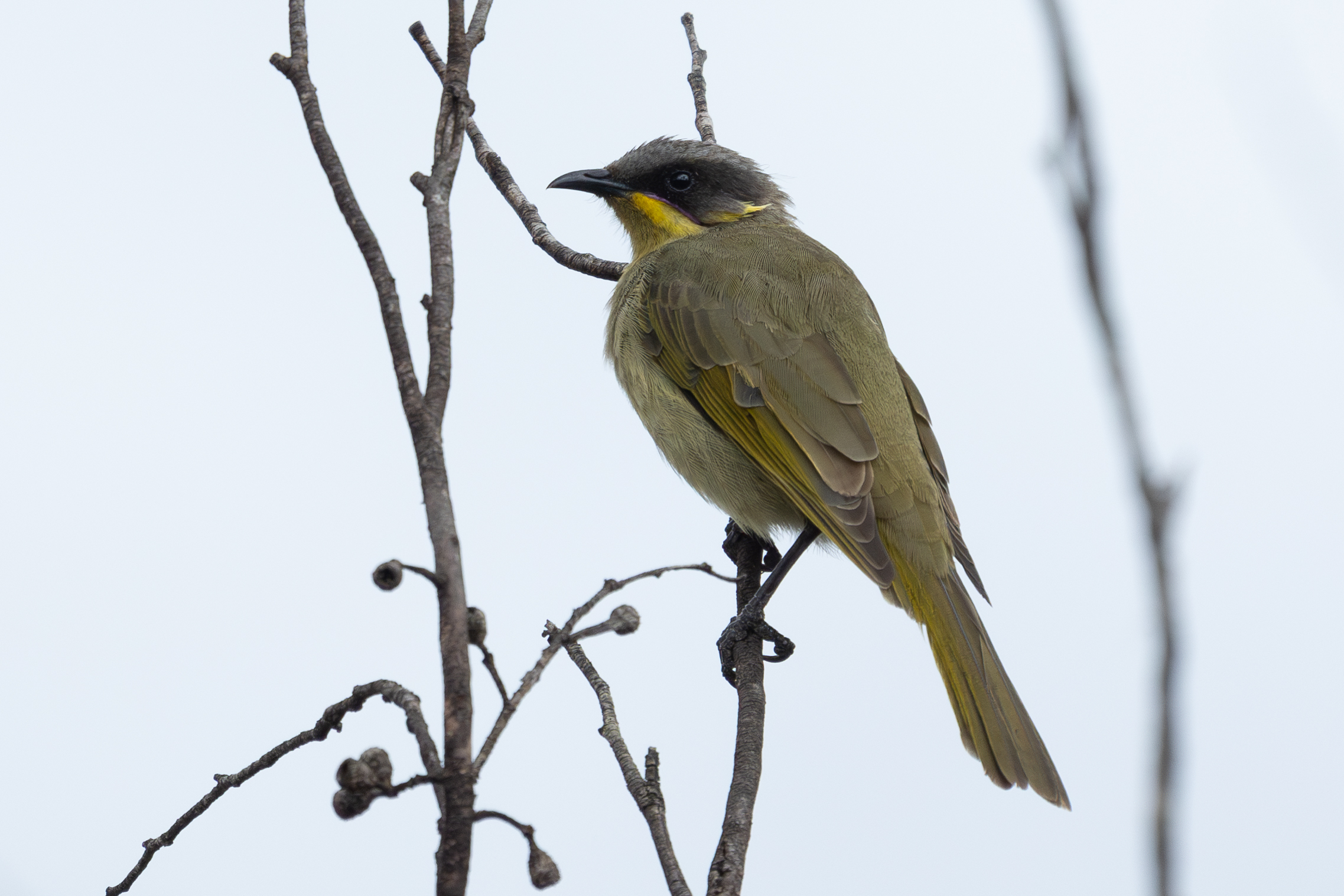
We left our accommodation in Albany just after sunrise and started making our way east towards Boxwood Hill. En route, we picked up our first Grey Currawongs for the trip and started seeing good numbers of Regent Parrots (stunning birds!). The Borden – Boxwood Hill Road passes through some large patches of arid scrub where Malleefowl seems to be seen with some regularity. We worked the area (-34.358344, 118.732210) well. However, soaring temperatures and a massive approaching storm meant that activity was modest at best, and we didn’t see Malleefowl. We decided to try to beat the storm to Corackerup Nature Reserve and drove along the dirt Boxwood Hill – Ongerup Road to get to the entrance of the reserve. En route, we had great views of Wedge-tailed Eagle, Black-faced Woodswallow and our one and only Western Brush Wallaby for the trip.
We parked at (-34.216709, 118.654672), but the storm was almost upon us, and we only managed to see one of our targets here, the attractive Purple-gaped Honeyeater (-34.215786, 118.656711) before rain and lightning forced us back to the car. Torrential rainfall ensued, and we returned to the tar road to avoid getting stuck on the muddy dirt roads. The storm showed no signs of abating, so we decided to ditch Corackerup today and return the following day to try for the remaining targets.
Instead, we went to our accommodation at the delightful Stirling Range Retreat, dropped off our swag and continued to Camel Lake Nature Reserve. We picked up our first Yellow-throated Miner just before arriving at Stirling Range Retreat. The Stirling Ranges are undoubtedly the most impressive mountains we saw in WA, not to mention the superb birding in the area. We parked at (-34.306302, 118.025351) and started working the short, scrubby vegetation for our target. After a little while, we found it, a shy but vocal Western Fieldwren (-34.303429, 118.024752).
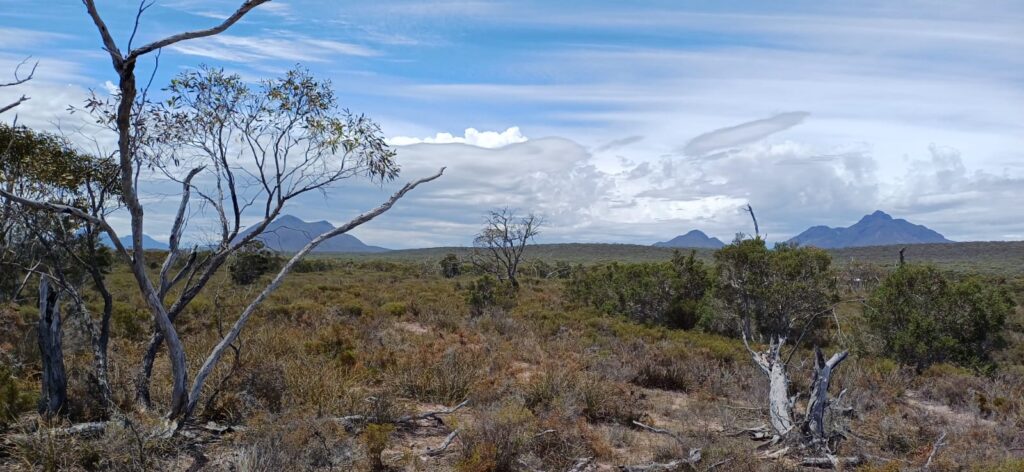
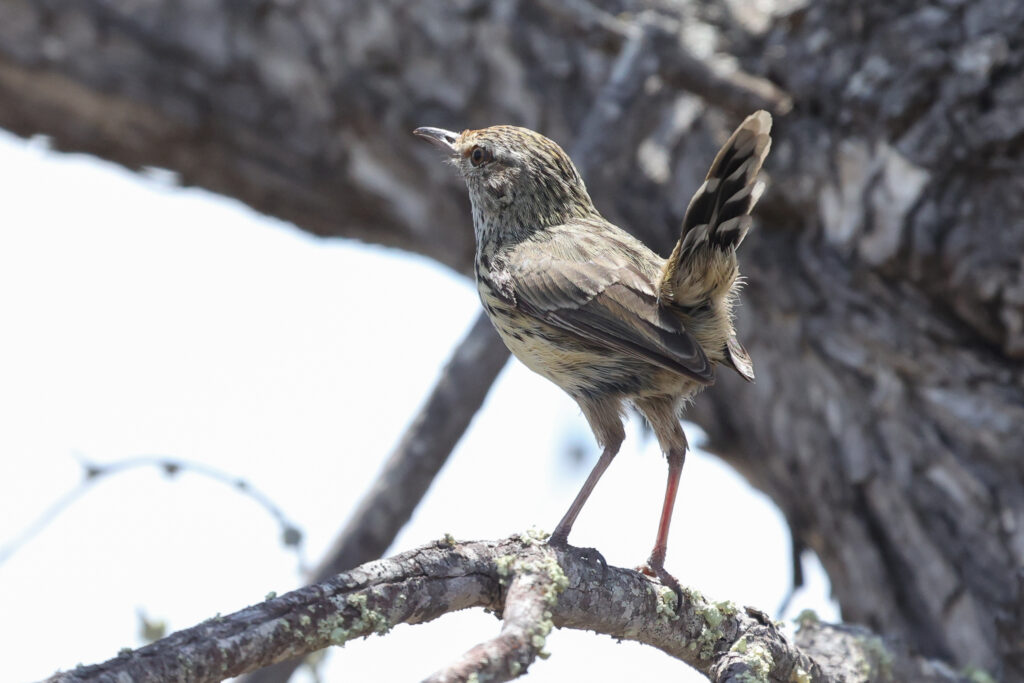
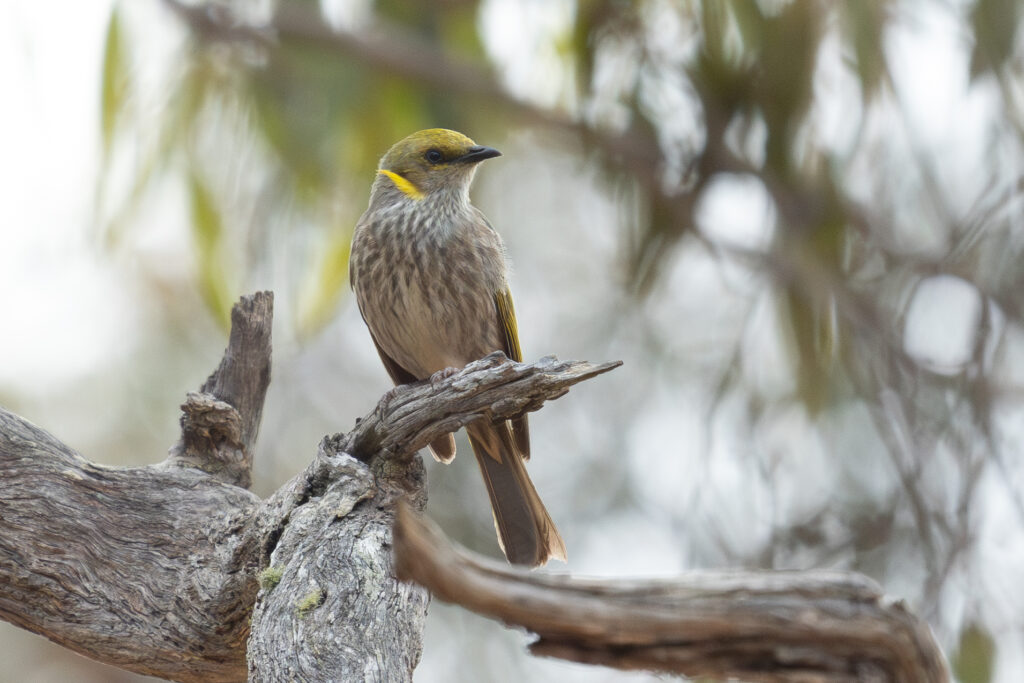
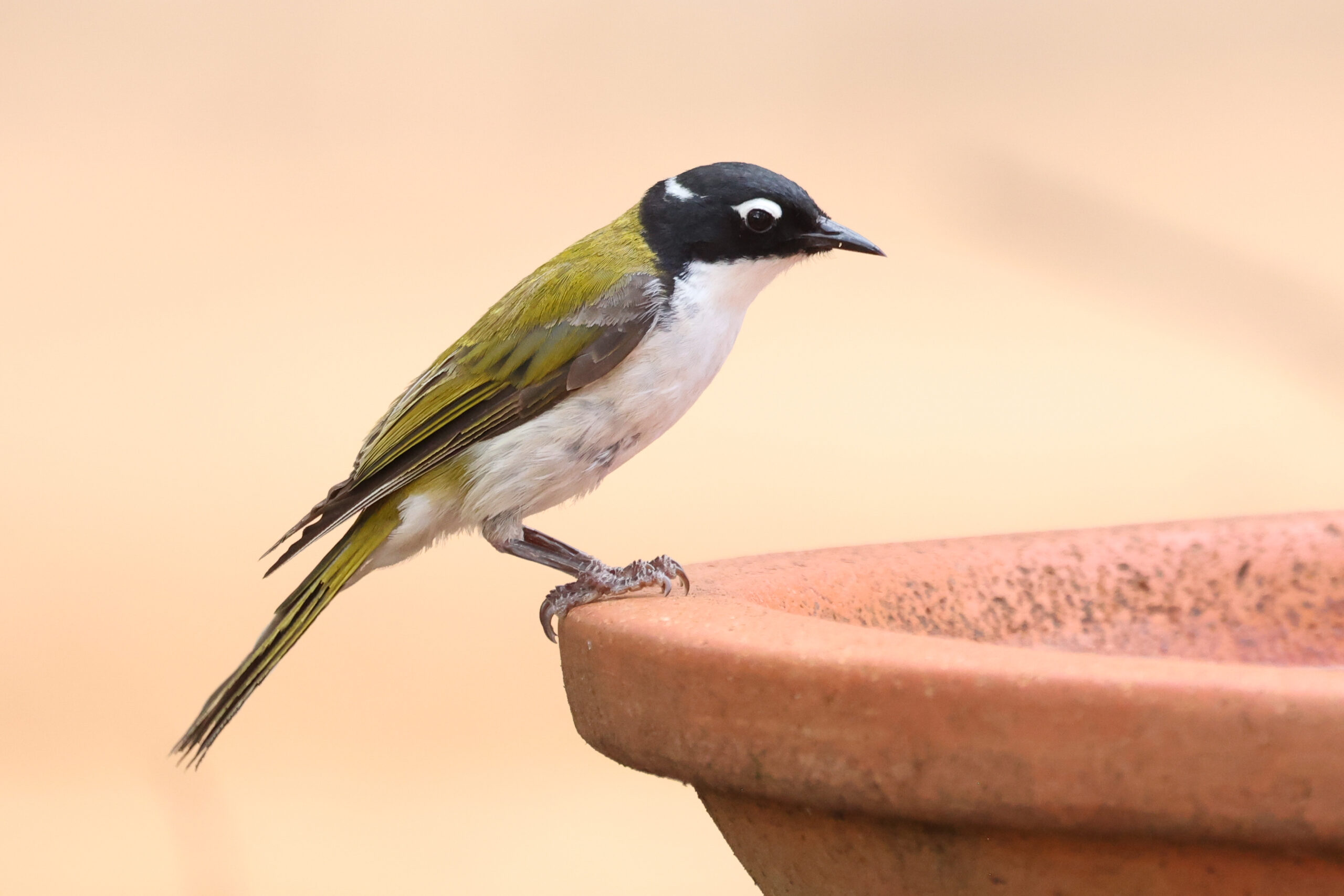
On our way back to Stirling Range Retreat, we tried for Black-throated Whipbird along Mount Trio Road (-34.337989, 118.115589) but had no success. We did see Brown Falcon, Nankeen Kestrel, and Tawny-crowned Honeyeater here. The campgrounds at Stirling Range Retreat are exceptionally birdy. I spent some time during the heat of the day exploring the productive woodlands around the camp, which produced Yellow-plumed Honeyeater, Gilbert’s Honeyeater, and more Regent Parrots.
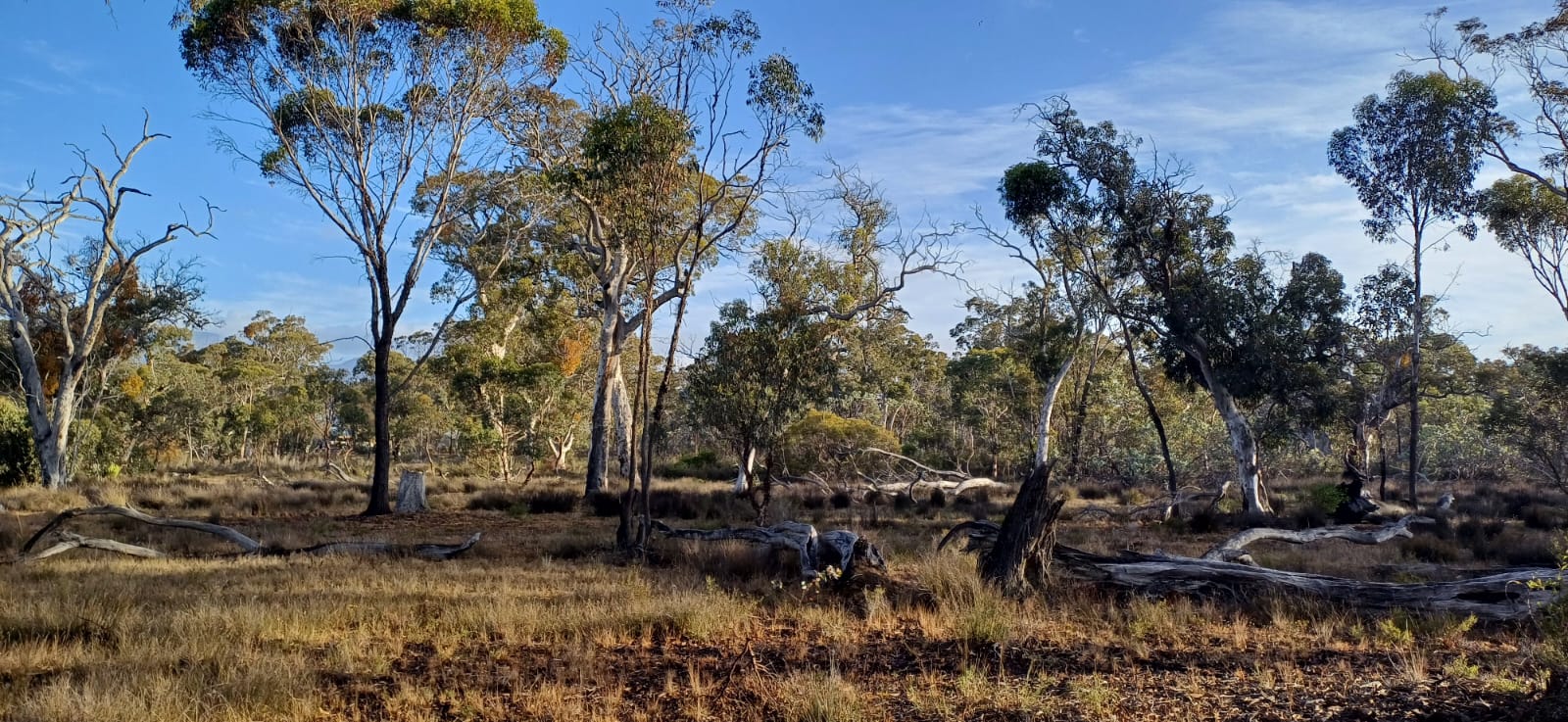
We decided to try again in the late afternoon for the whipbird at Mount Trio, but again, we had no luck. We enjoyed a few large flocks of Carnaby’s Black Cockatoos foraging along the roadside close to our accommodation and were treated to several noisy Purple-crowned Lorikeets as the sun set at Stirling Range Retreat.
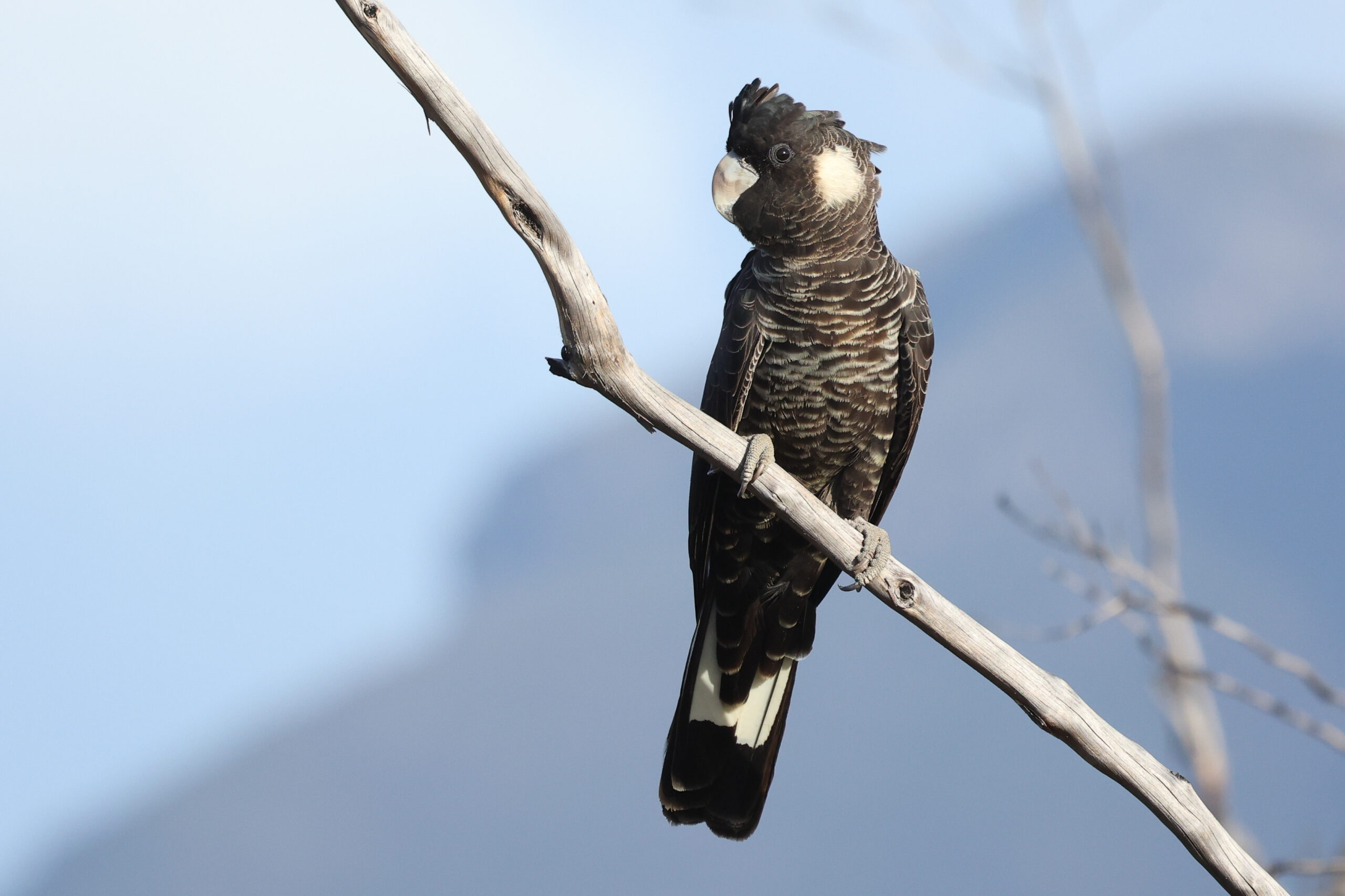
Overnight: Stirling Range Retreat – we stayed in the swag here. I can highly recommend camping here, but the chalets looked great too. You need to stay here if you’re birding the southwestern route, as it is close to key sites and has excellent birding in the camp.
Day 5. 8 January 2025. Stirling Range and Corackerup
Day 5. 8 January 2025. Stirling Range and Corackerup
Once again, we were on the road at sunrise and made it to Corackerup Nature Reserve at 06:00 (a 77 km drive from Stirling Range Retreat). We parked at the same spot as yesterday and walked around the trails for just over two hours. There was a notable improvement in activity this morning. We quickly got onto Brush Bronzewing, Blue-breasted Fairywren, Brown-headed Honeyeater, Southern Scrub Robin, Western Yellow Robin, Australian Golden Whistler (occidentalis), Grey Currawong and Purple-crowned Lorikeet.
We played a lengthy game of cat-and-mouse with a vocal Black-throated Whipbird (-34.220578, 118.659167), but it again refused to show itself. I was beginning to worry about the whipbird, as we would be out of range for this species starting tomorrow. We decided to return to the car and drive along the Boxwood Hill – Ongerup Road, stopping regularly to listen out for the whipbird and hoping to stumble upon a Malleefowl. At long last, we connected with a showy Black-throated Whipbird and one of our other big targets here, Shy Heathwren,at a stand of denser vegetation along the road (-34.232668, 118.680561). A pair of Elegant Parrots also added to the excitement here. At one stage, I managed to get a video with the heathwren and whipbird in the same frame! Crazy stuff!
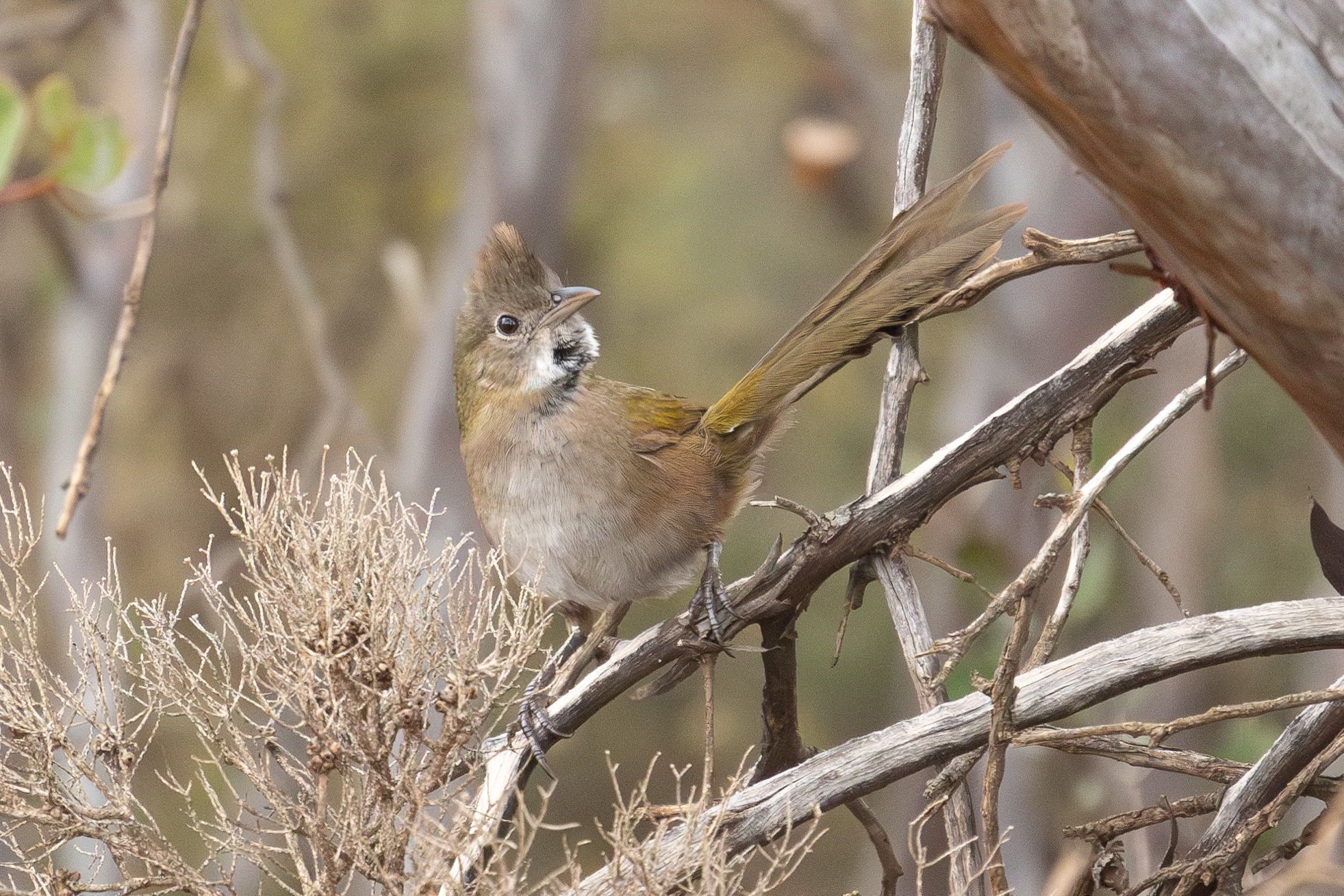
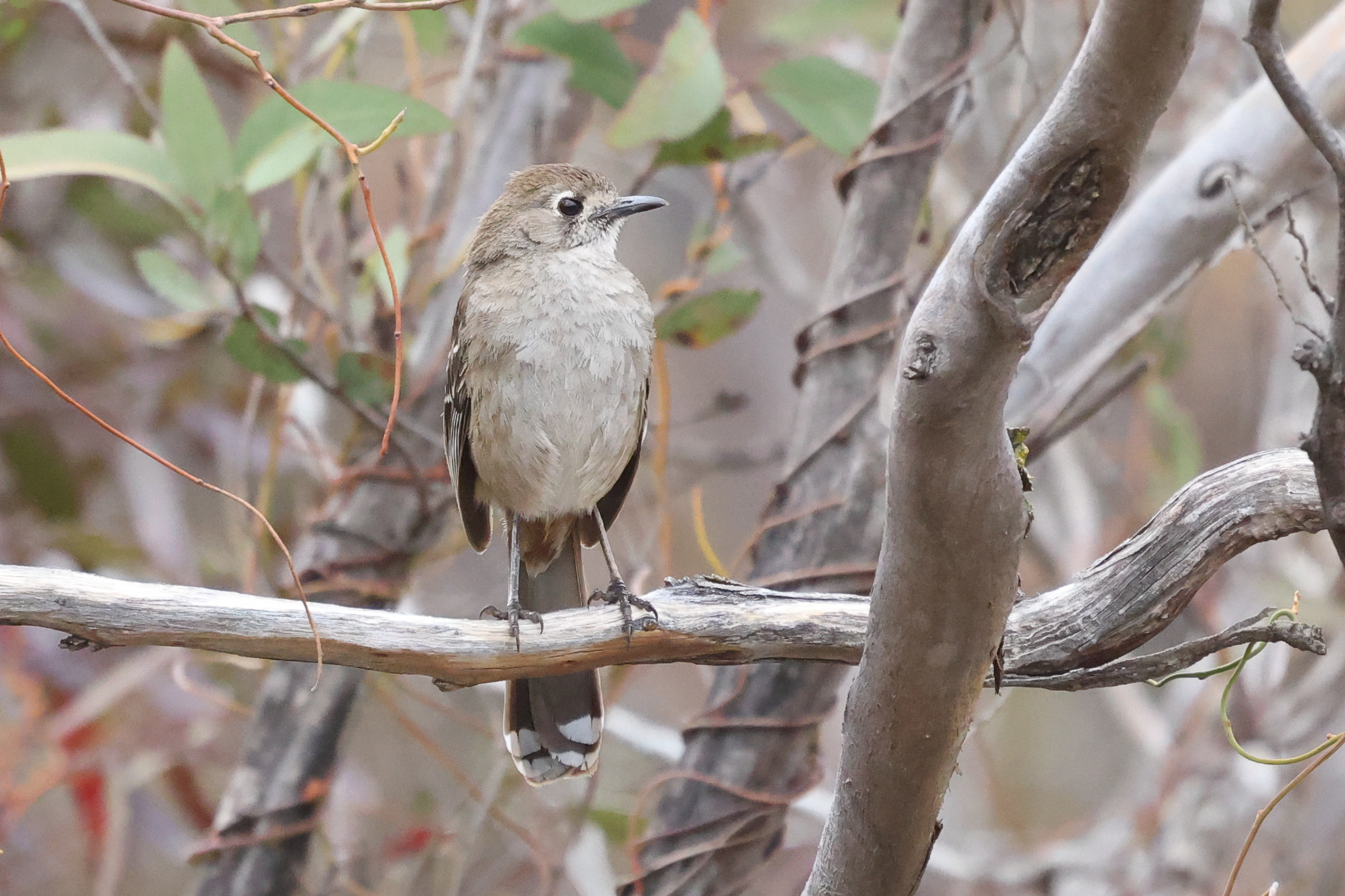
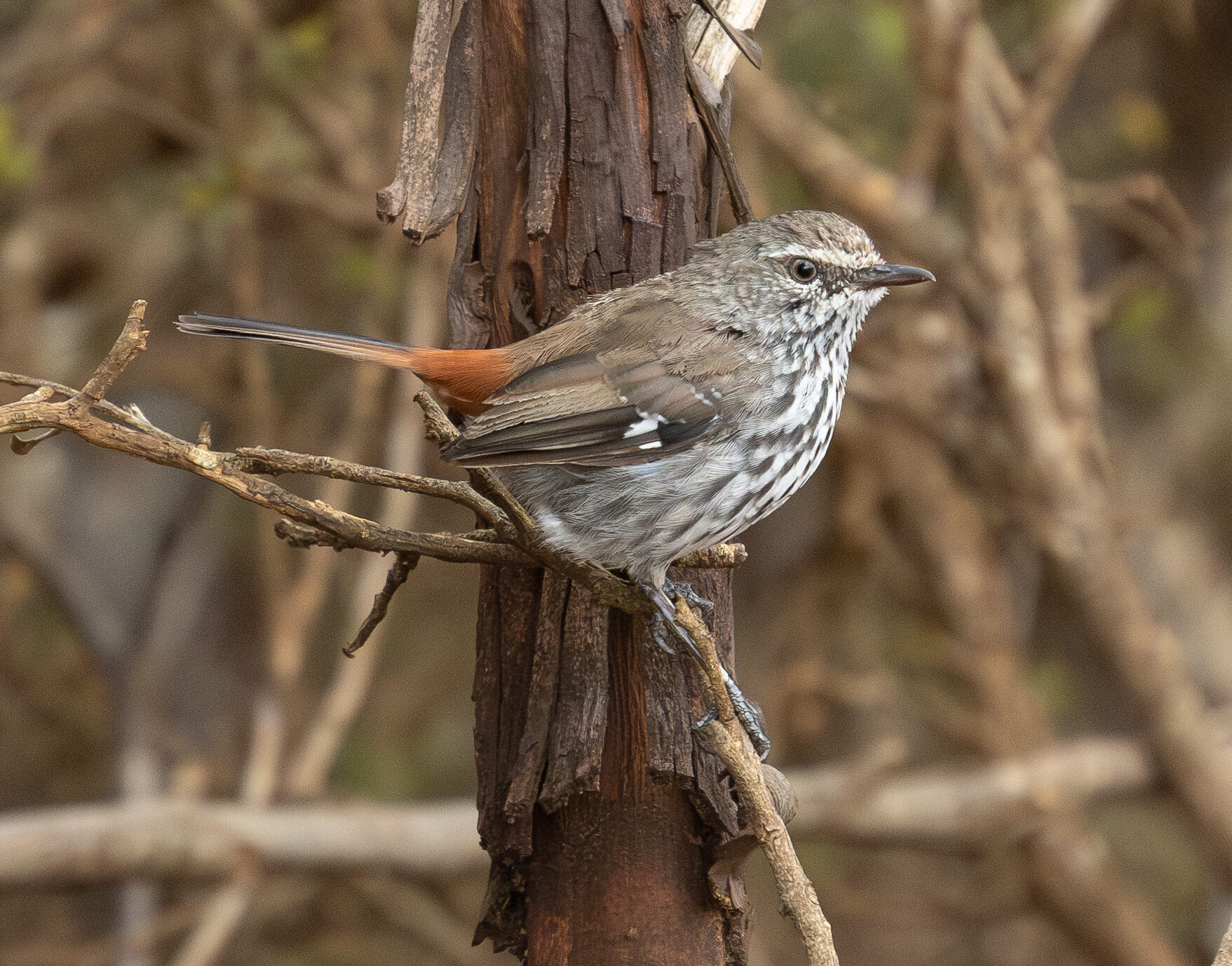
After driving around for a while, we decided to accept the dip on Malleefowl and started making our way back to the tar road. We heard another vocal Black-throated Whipbird (-34.210354, 118.644719) and almost ran over a Painted Buttonquail lying low in the middle of the dirt road (-34.252431, 118.632288). A large family flock of Emu were the final birds before rejoining the tar road and making our way back to Stirling Range. We spent the heat of the day at Stirling Range Retreat, where the bird bath was the place to be with many Yellow-plumed, Gilbert’s and Brown Honeyeaters. It was also great to get prolonged views of another Western Shriketit at the campsite.
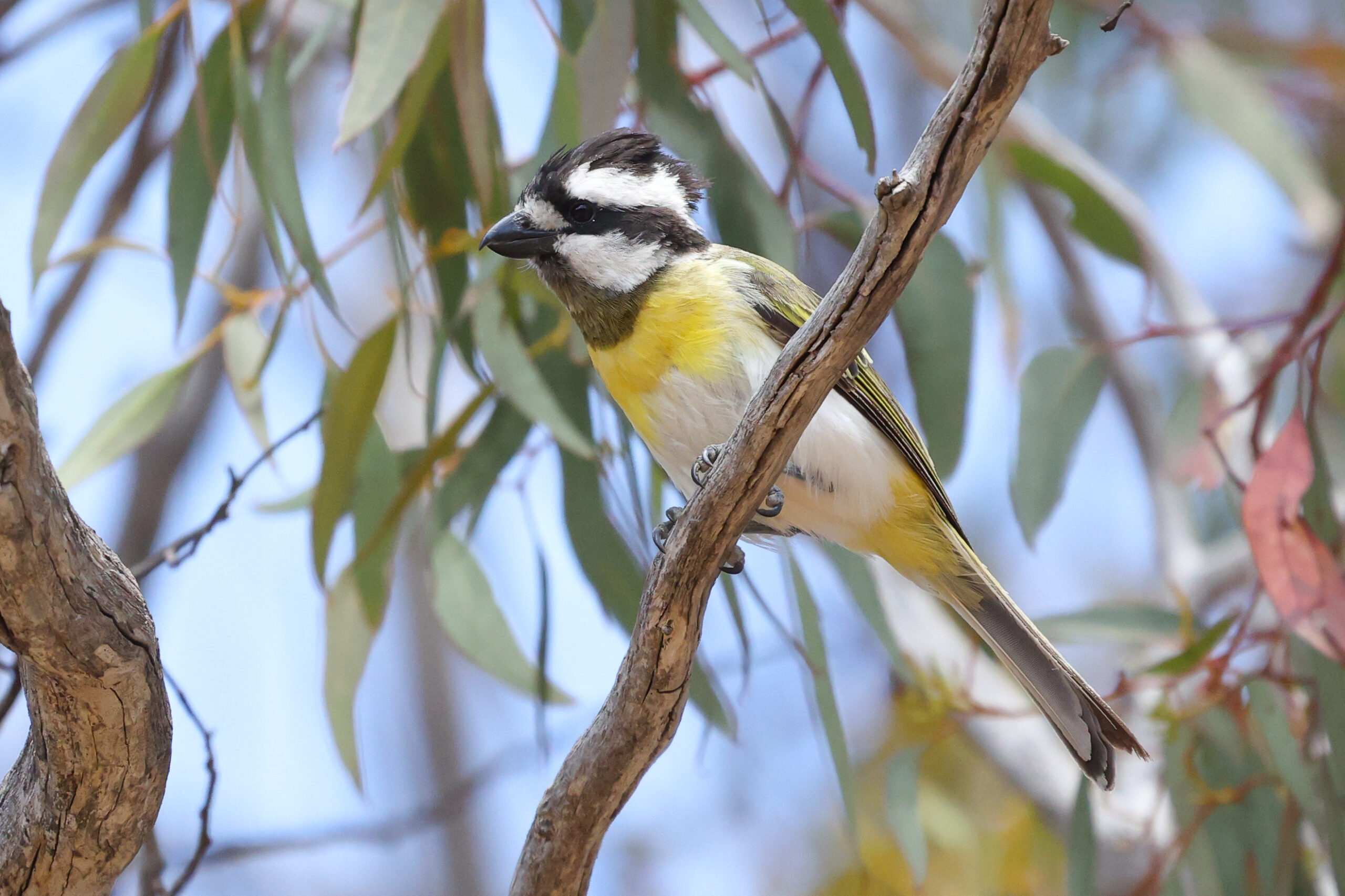
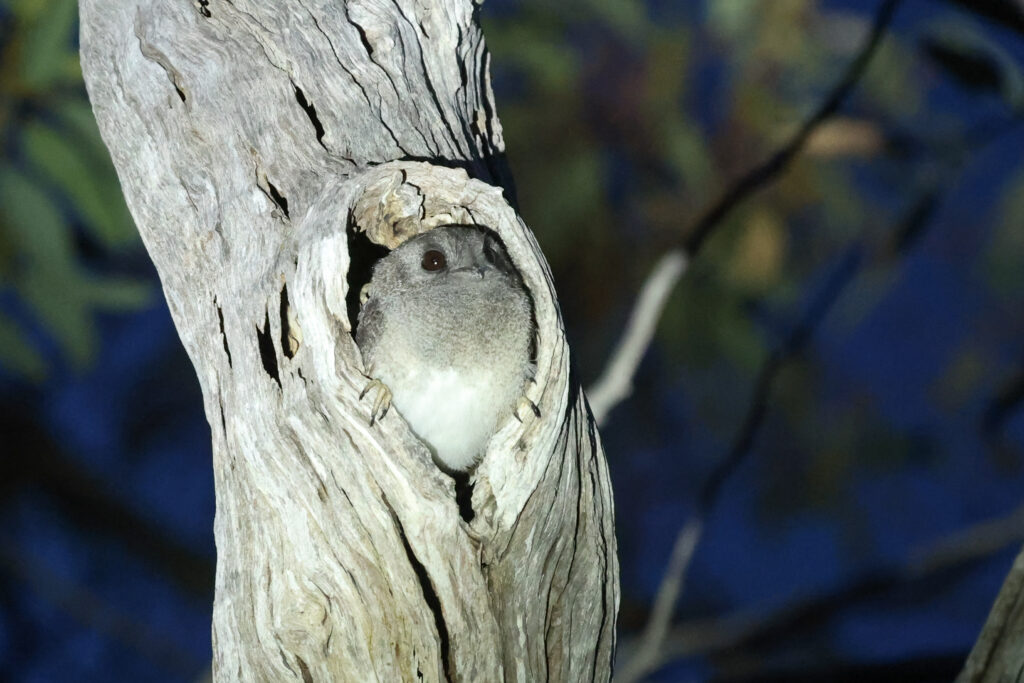
In the afternoon, we pooped into the Western Fieldwren spot at Camel Lake Nature Reserve but had no luck this time. We did, however, hear yet another Black-throated Whipbird (-34.305768, 118.026281)calling here. The remainder of the afternoon was spent strolling around the campgrounds, which yielded many of the same birds as the ones discussed earlier. At dusk, we connected with the adorable Australian Owlet-nightjar as it peered out of its roosting hole in a dead tree in the campgrounds (-34.316787, 118.190760). Eastern Barn Owl was heard at night in the camp.
Overnight: Stirling Range Retreat
Day 6. 9 January 2025. Stirling Range to Dryandra Woodland
We packed up our swag, hit the road just after 07:00, and started the three-hour drive north to Dryandra Woodland. We hadn’t booked any accommodation for the next two nights as we wanted the flexibility to change plans if needed. The result was that when we arrived at Dryandra, we had to figure out where we would stay. We decided against the Lions Dryandra Woodland Village as it was expensive and not particularly good value for money. There are also campsites on the western side of Dryandra. However, these don’t have running water or electricity, so in the end, we decided we would camp in the swag at Narrogin Caravan Park, about 25 minutes from the woodland. Dryandra is open 24/7, so you don’t have to stay in the woodlands.
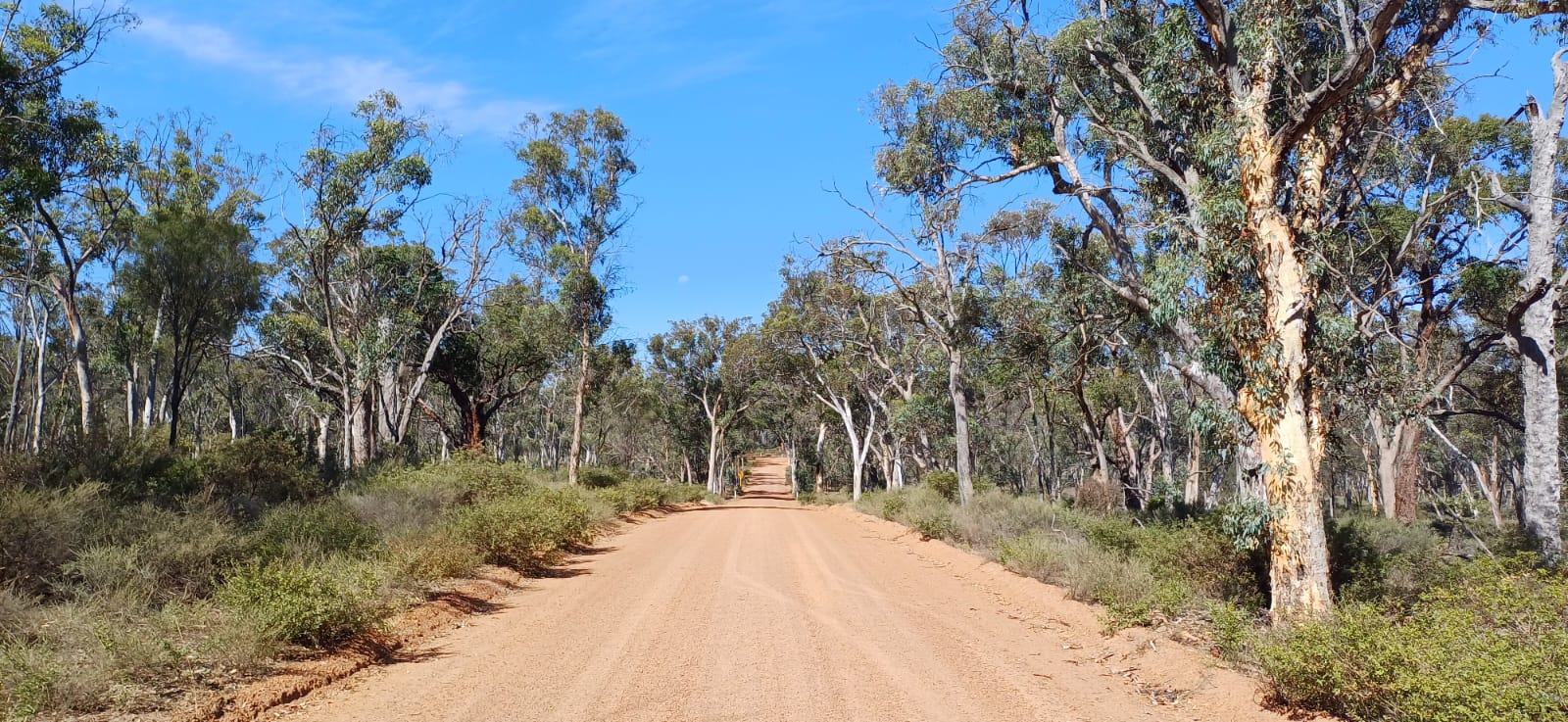
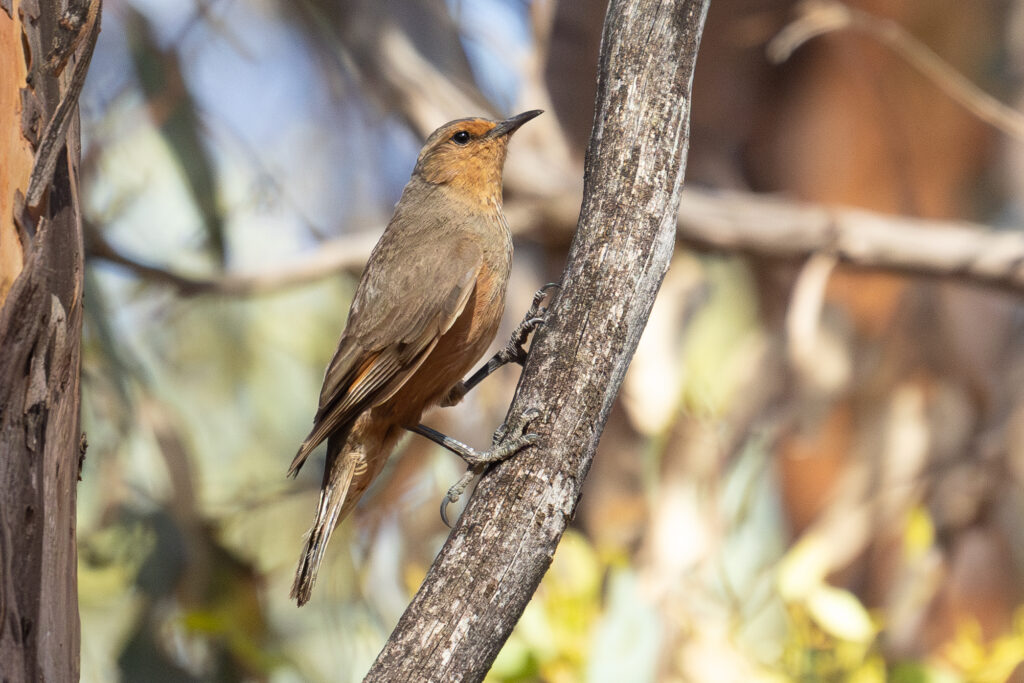
Once the accommodation was sorted out, we headed into the woodland and birded along the Wandoo Walk (-32.784941, 116.967010) in the afternoon. Rufous Treecreepers were abundant here, and their high-pitched calls were a constant feature of the soundscape. We also saw Carnaby’s Black Cockatoo, Rainbow Bee-eater, Yellow-plumed and Singing Honeyeaters, Varied Sitella (what a bird!), Restless Flycatcher, Jacky Winter, Scarlet Robin, and the last of the southwestern Australian endemic targets – Western Thornbill (-32.785461, 116.971050).
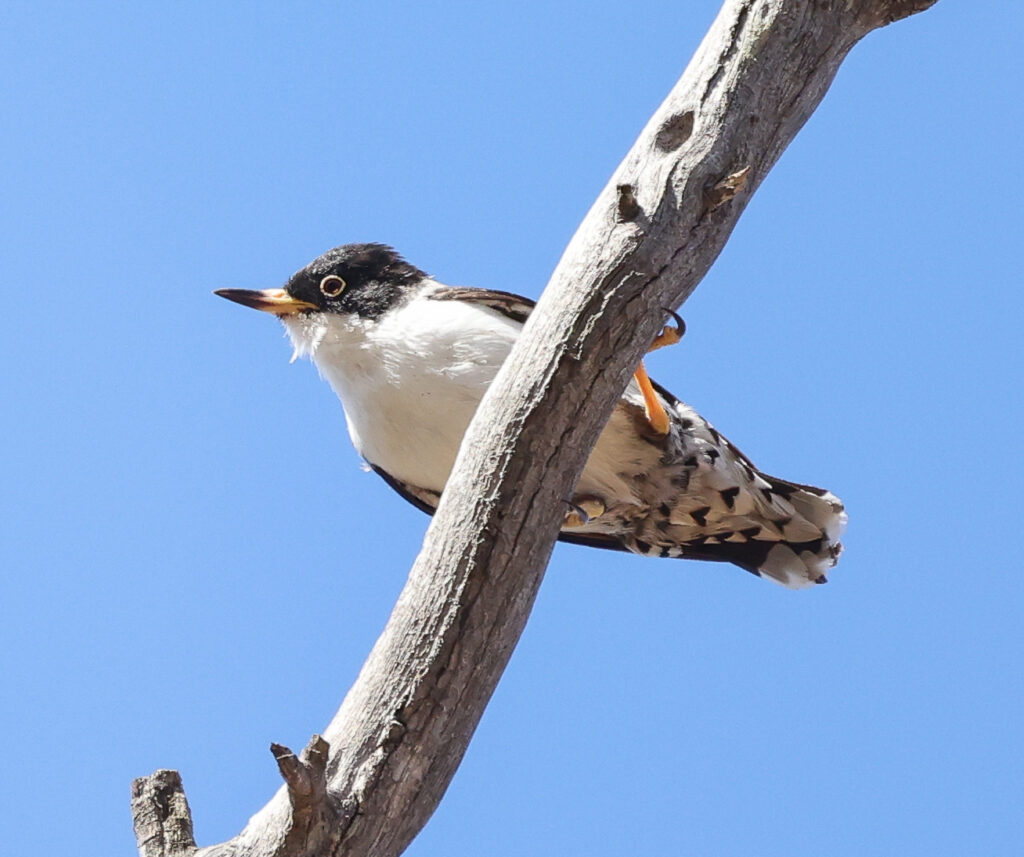
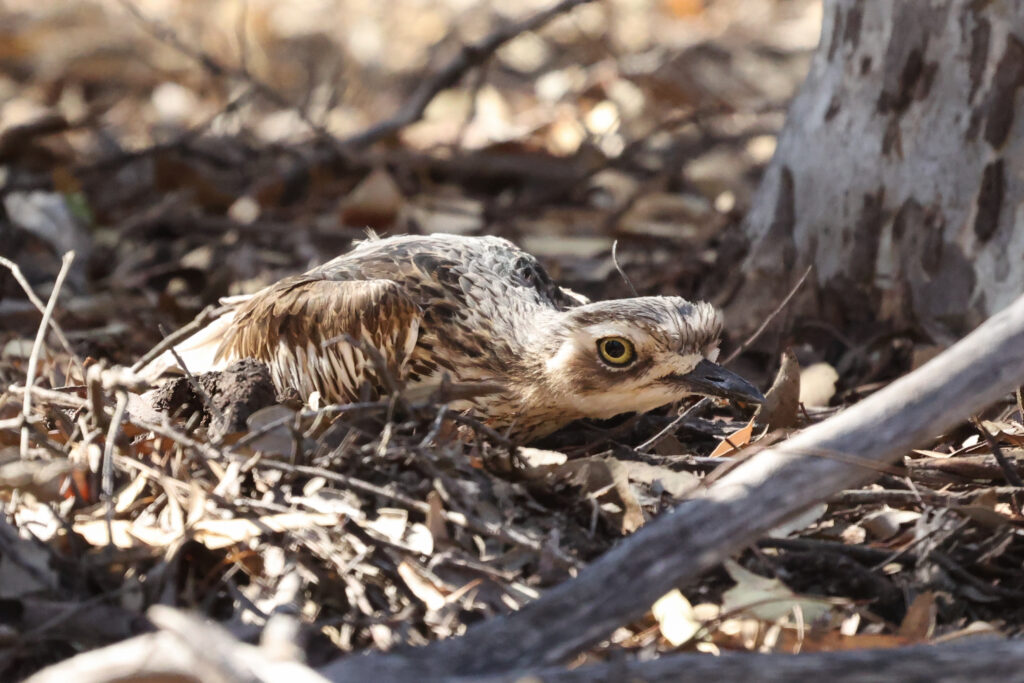
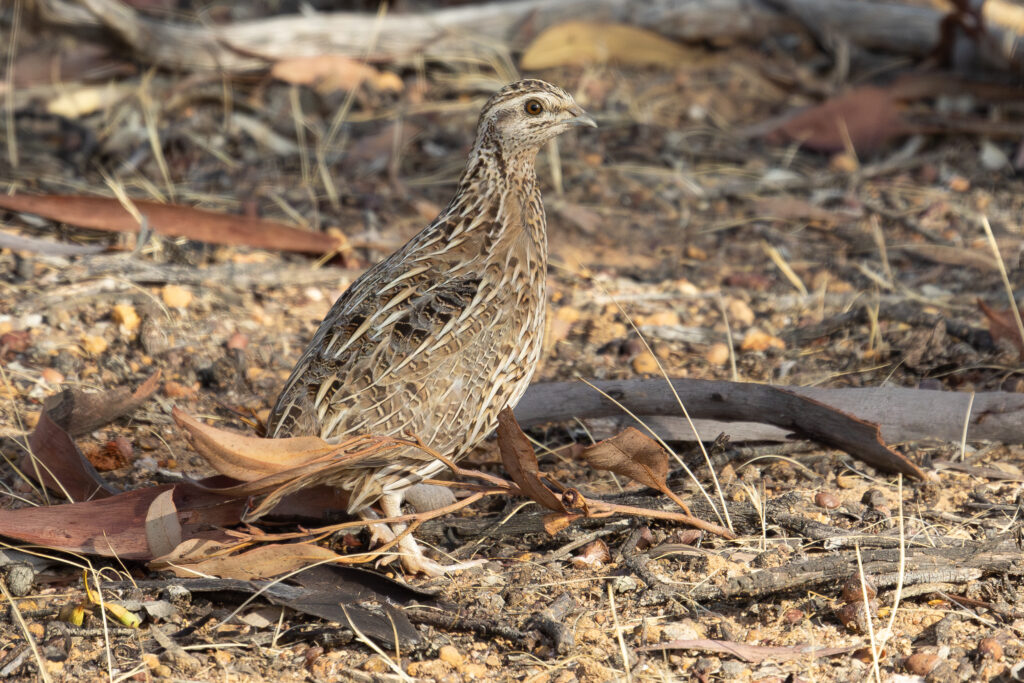
We were constantly on the lookout for Numbat, a global mega mammal, but had no luck this afternoon. A major surprise was a Stubble Quail, which showed exceptionally well along the boundary fence at (-32.790548, 116.965559). The Bush Stone-curlews were roosting in the woodland (-32.784519, 116.970425) close to the Lions Dryandra Woodland Village. On the way back to Narrogin in the dying light, we saw our first Australian Black-shouldered Kite of the trip.
Overnight: Narrogin Caravan Park – We spent next to no time here as we were out early in the morning and back after sunset. With more planning, you could probably find a better place to stay in the area, but it worked well for us.
Day 7. 10 January 2025. Dryandra Woodland
The plan for today was to mop up a few remaining woodland species and to get Numbat. We started birding along the main access road (from the turnoff (-32.778094, 117.000564) to Lions Dryandra Woodland Village) and picked up many of the same birds as yesterday, along with Western Yellow Robin. A quick stop near the Lions Village (-32.783988, 116.967138) produced our only White-eared Honeyeater of the trip and another Western Thornbill. The strategy for Numbat was apparently to drive slowly and scan for movement near large fallen logs. We drove the main Darwinia Drive Trail and stopped to watch a Brown Goshawk as it tore into an unidentified bird. It was at this point that Amy thought she spotted movement on the ground, and I lifted my binoculars to see a Numbat (-32.756679, 116.953177)! We enjoyed exceptional views of this unusual and very rare diurnal mammal.
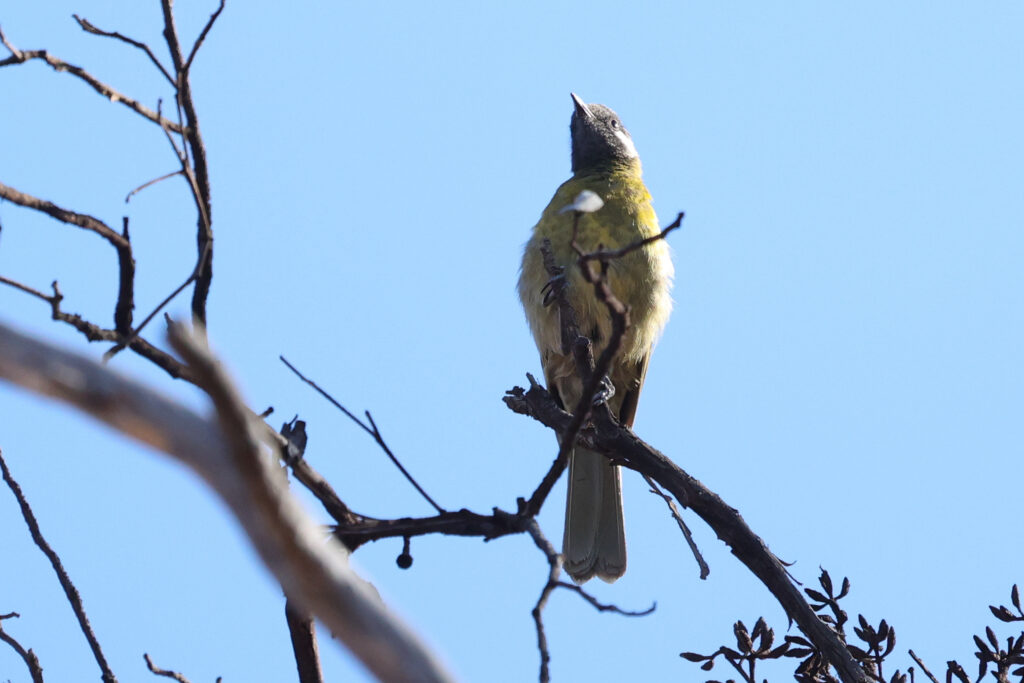
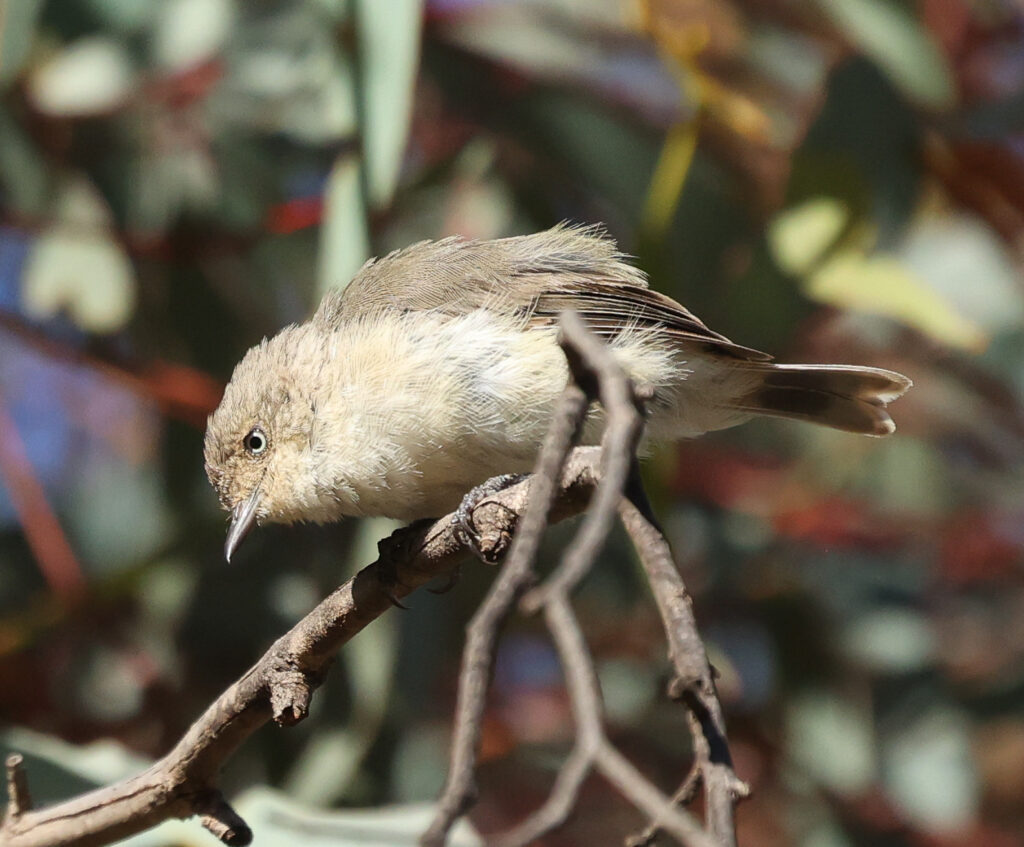
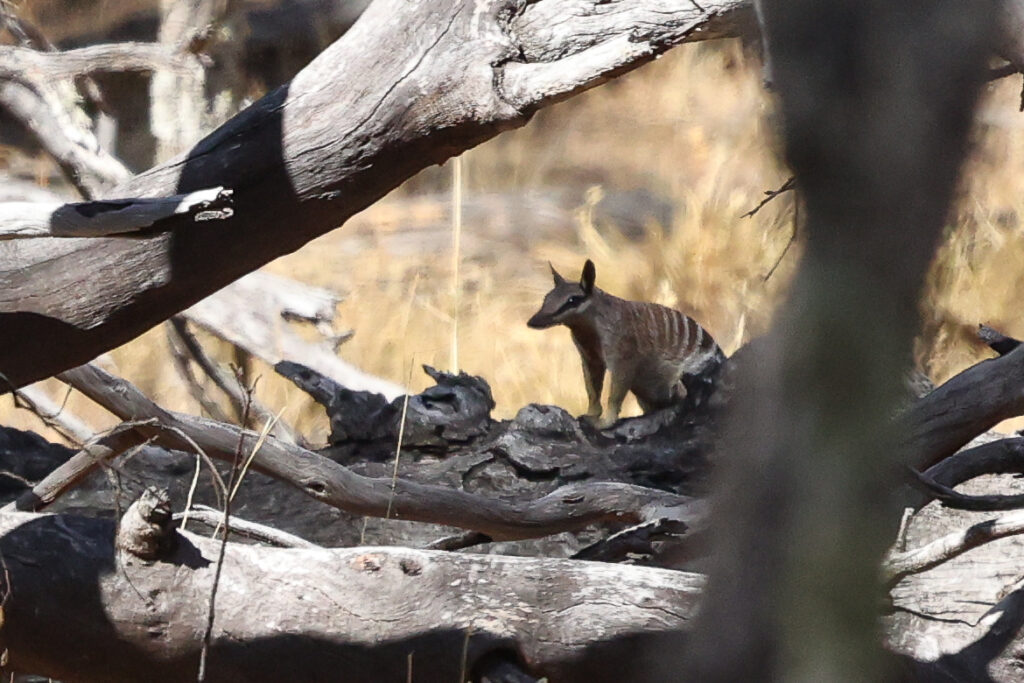
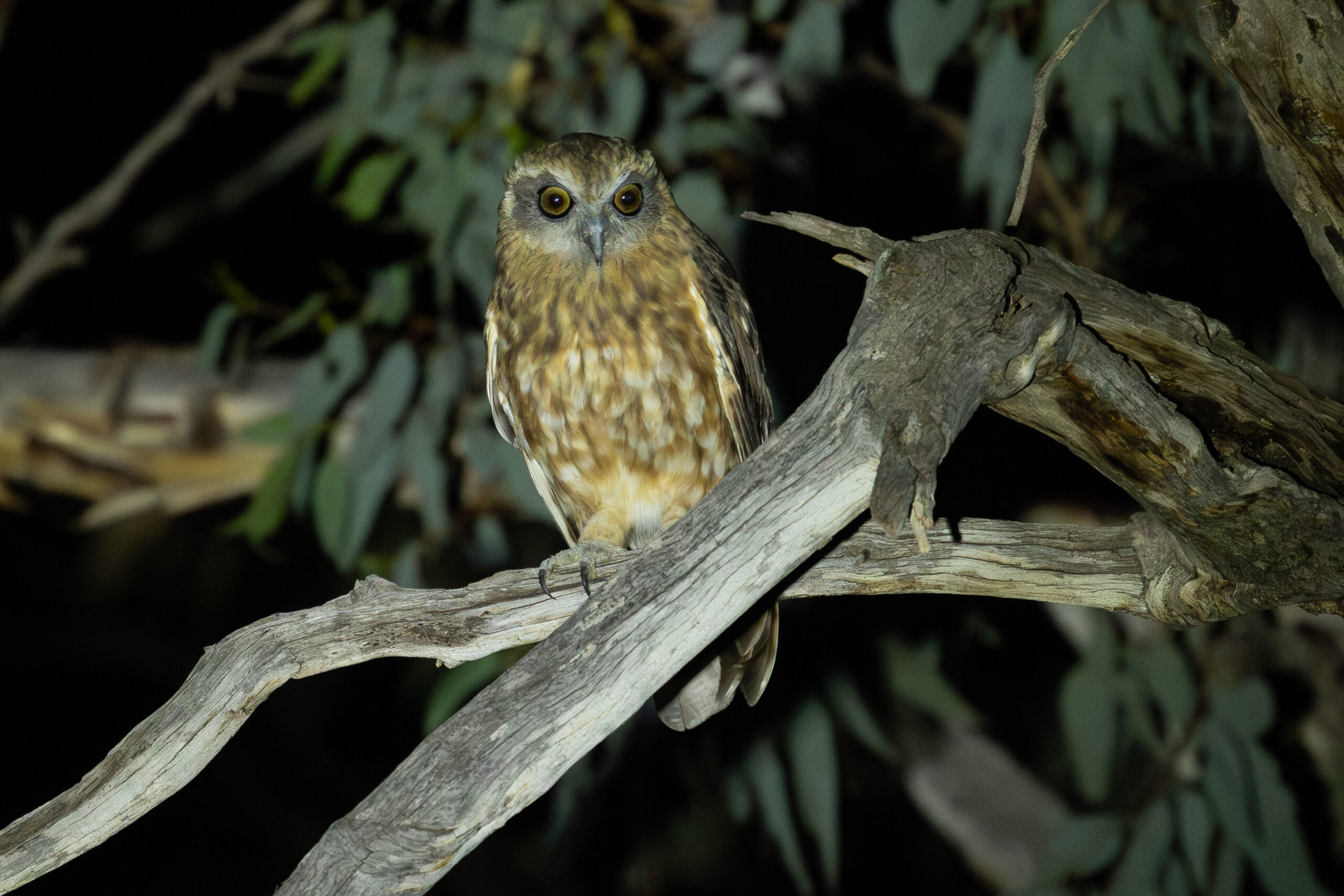
Other birds seen along the way were Brown-headed Honeyeater, Rufous Treecreeper, Inland Thornbill and Jacky Winter, to name a few. We returned to Narrogin for a celebratory coffee over the heat of the day and were back in the afternoon for another session. The afternoon was spent driving along the main road through the woodland (Tomingley Road). Two noteworthy species were Collared Sparrowhawk and a heard-only Horsfield’s Bronze Cuckoo. We decided to stay until after dark to look for mammals and nocturnal birds near the Lions Village (-32.785277, 116.970565). Birds included Eastern Barn Owl, Bush Stone-curlew, and excellent views of Australian Boobook, while on the mammal front, we only saw Common Brushtail Possum, although, admittedly, we were exhausted and returned to Narrogin relatively early.
Overnight: Narrogin Caravan Park
Day 8. 11 January 2025. Narrogin to Perth
We left Narrogin at sunrise as we wanted to be in Perth as early as possible (the drive is about two hours long). We would squeeze in some birding in the morning and spend the rest of the day stocking up before starting the northern leg of our trip. The drive from Dryandra to Perth takes you through the scenic Perth Hills, and we made good time, reaching Perth just after 8 am. The first port of call was Lake Claremont (-31.976966, 115.778043), where a Red-kneed Dotterel had been reported on eBird. I didn’t think we would have much chance of seeing this species later in the trip as observations were sparse, so it was good to get this one down.
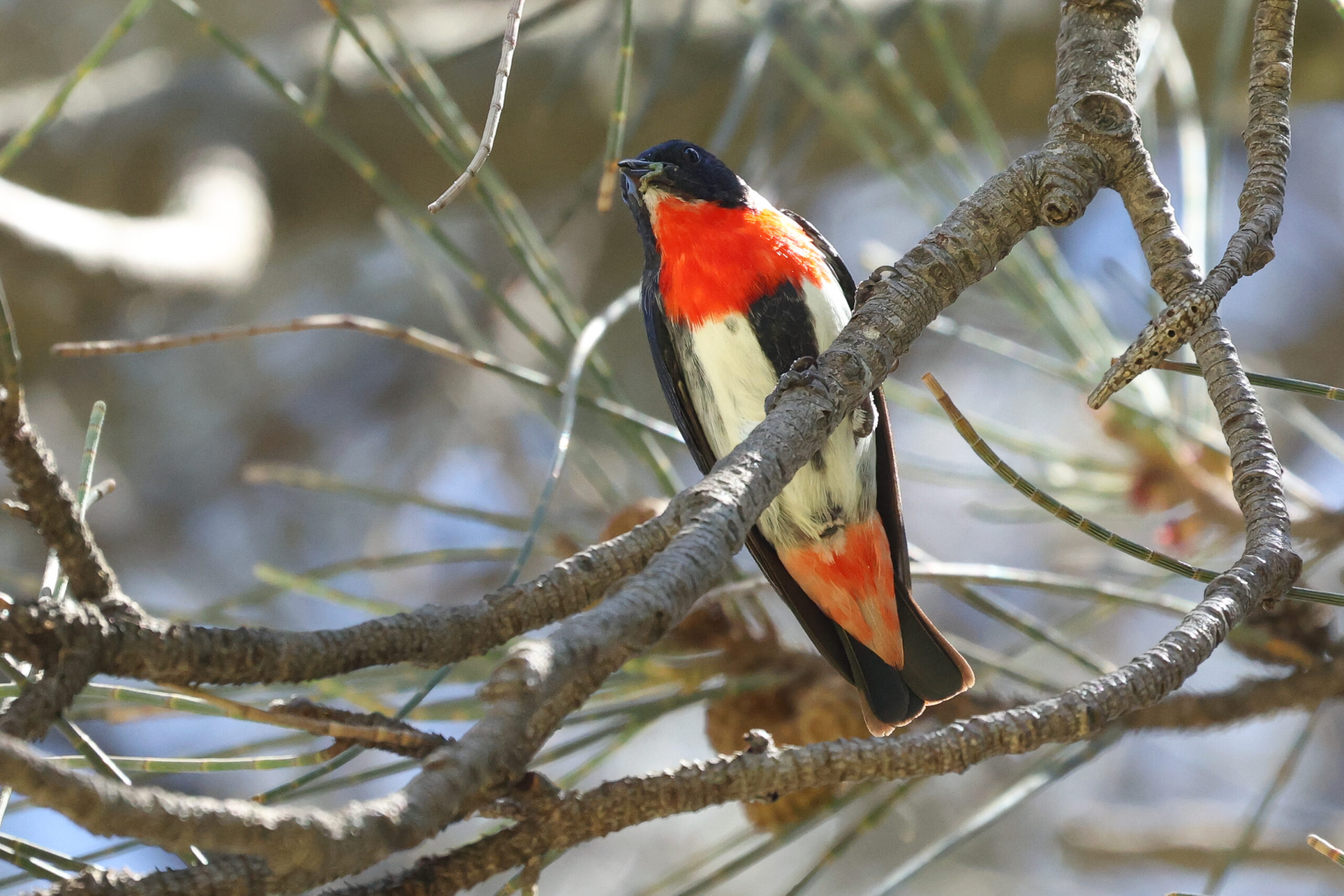
We then shot across to Herdsman Lake (-31.928929, 115.804925), where I picked up our first Fan-tailed Cuckoo for the trip, in addition to other birds like Great Crested and Hoary-headed Grebes, Australian Reed Warbler, Little Pied and Little Black Cormorants, and a few common waterfowl species. We also heard Little Grassbird calling here. The highlight was an unexpected pair of Mistletoebirds (-31.925666, 115.797959), which I found out about after chatting with a very pleasant elderly birder who gave me directions to the tree where they had been hanging out. Our final stop for the morning was Lake Gwelup (-31.880572, 115.788653), where we tried to no avail for Freckled Duck, which had been reported there earlier in the month. There were large numbers of waterfowl, including Black Swan, Australian Shelduck, Maned, Pacific Black and Musk Ducks, Grey Teal, and Hardhead, but nothing out of the ordinary.
The rest of the day was spent preparing for the northern leg of the trip and having a few celebratory beers at a beachfront bar in Scarborough after a successful clean-up of the southwestern endemics and near-endemics. We stayed with family in Perth tonight. Join me for Part 2 of our Western Australia birding adventure as we take on the Outback.